What Muscles Does a Rowing Machine Work?
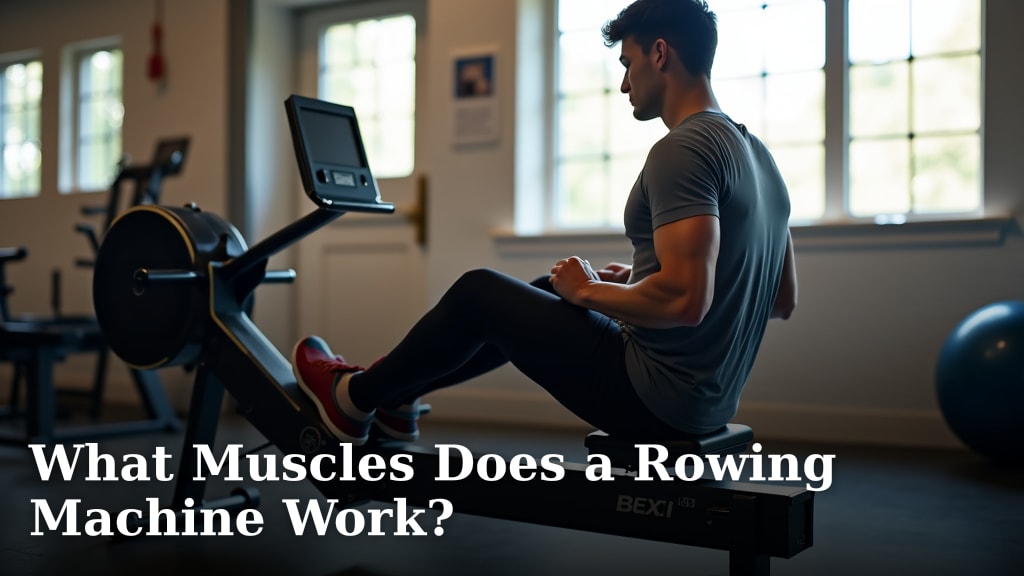
A rowing machine works almost every major muscle group in your body, providing a full-body workout that few other exercises can match. You’ll engage muscles from your legs to your core and arms when you use a rowing machine.
This single piece of equipment offers a fantastic way to build strength and boost your cardio health. We found that rowing machines truly deliver a comprehensive workout experience. Are you ready to see those muscles grow?
- Rowing targets about 86% of your muscles.
- It’s a low-impact cardio and strength exercise.
- Your legs, core, and arms all get a workout.
- Great for building endurance and muscle definition.
Let’s dive into the specifics and explore exactly which muscles benefit most from your rowing machine efforts.
Rowing Machine: A Full-Body Muscle Engagement Breakdown
A rowing machine is a powerhouse for your fitness journey. It truly works almost every major muscle in your body.
You might be surprised by how many muscle groups get in on the action with each stroke. Let’s break it down.
The Powerhouse: Your Legs
Many people think rowing is all about the arms. But we found that your legs do most of the heavy lifting. They initiate the movement and drive the power.
Around 60% of the work in a rowing stroke comes from your lower body.
Thigh Muscles (Quadriceps and Hamstrings)
When you push off the foot stretcher, your quadriceps (the front of your thighs) extend your knees. This powerful push really gets the machine moving.
As you glide back toward the starting position, your hamstrings (the back of your thighs) work to bend your knees. They also help extend your hips, bringing you forward.
Glutes (Buttocks)
Your gluteal muscles, or glutes, are also critical players. They engage strongly as you push back from the catch position. Your glutes help extend your hips and add significant power to your leg drive.
A strong leg drive is often called the “catch” in rowing. It’s where you generate most of the force (American Council on Exercise).
Calves (Gastrocnemius and Soleus)
Don’t forget your calves! Your gastrocnemius and soleus muscles, located in your lower legs, help with ankle extension. They assist in that final push-off from the foot stretcher. They stabilize your foot during the drive.
This engagement helps you maintain balance and transfer power efficiently.
The Core Connection: Your Abdominal and Back Muscles
Your core acts as the bridge that connects your upper and lower body. It’s essential for a smooth, powerful stroke.
A strong core protects your spine and transmits power from your legs to your arms and back.
Abdominal Muscles (Rectus Abdominis, Obliques)
Your abdominal muscles, including your rectus abdominis (your “six-pack” muscles) and obliques (side abs), work to stabilize your torso. They engage in the “finish” phase of the stroke. Here, you lean back slightly. They prevent you from over-extending.
We found that a constant, gentle engagement of your abs is key throughout the entire stroke. This helps keep your body balanced.
Lower Back Muscles (Erector Spinae)
The erector spinae are muscles running along your spine. They help keep your back straight and strong during the stroke. They engage as you hinge at your hips, especially during the drive and recovery phases.
Proper form is crucial here to prevent strain. Always maintain a strong, neutral spine.
The Pulling Force: Your Upper Body
While the legs do most of the work, your upper body plays a vital role in completing the stroke. It brings the handle to your body and controls the recovery.
Your arms and back muscles work together to create a powerful pull.
Back Muscles (Lats, Trapezius, Rhomboids)
Your latissimus dorsi (lats), the large muscles in your middle back, are key for pulling the handle toward your body. They truly get a workout.
Your trapezius (traps) and rhomboids (muscles between your shoulder blades) help stabilize your shoulders. They assist in pulling your shoulder blades together as you finish the stroke.
This back strength provides a significant portion of the “pull” power after your legs have driven the machine back.
Arm Muscles (Biceps and Triceps)
Your biceps, located on the front of your upper arm, flex to pull the handle towards your chest. This happens at the very end of the drive. They are supporting muscles, not the primary movers.
Your triceps, on the back of your upper arm, engage during the recovery phase. They extend your arms to push the handle away from your body as you prepare for the next stroke.
Shoulder Muscles (Deltoids)
Your deltoids (shoulder muscles) also play a role. They help stabilize your shoulder joint throughout the entire movement. They assist in raising and lowering your arms as needed during the stroke.
You’ll notice them engaging subtly as you maintain proper handle height and control.
The Coordinated Symphony of Muscles Working Together
The beauty of rowing is how all these muscle groups work in a seamless, coordinated fashion. It’s not just about isolated strength. It’s about full-body harmony.
The sequence is always legs, then body, then arms (National Institutes of Health).
The Rowing Stroke in Stages
Let’s briefly outline the muscle engagement through each stage of the stroke:
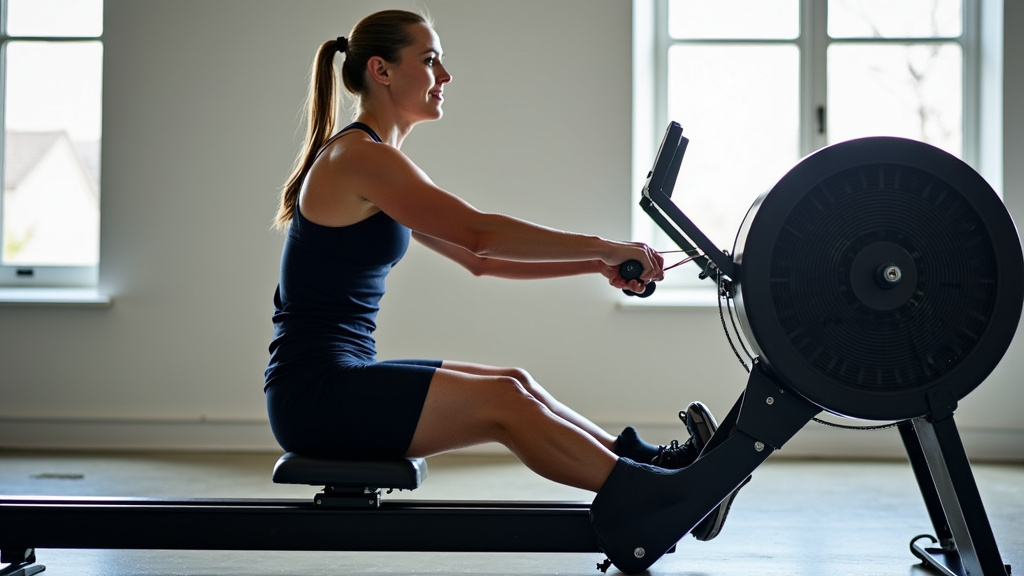
- The Catch: You’re at the front of the machine. Your shins are vertical. Your core is engaged to stabilize.
- The Drive: Push powerfully with your legs (quads, glutes, hamstrings, calves). Your core stays braced. Your back (lats, traps) starts to engage. Your arms stay straight.
- The Finish: Your legs are extended. You lean back slightly using your core (abs, lower back). Your back (lats, rhomboids) pulls the handle toward your lower ribs. Your biceps assist.
- The Recovery: Your triceps extend your arms. Your core controls the forward lean. Your hamstrings contract to bring your body forward as you slide up the rail.
This cyclical movement ensures every major muscle group gets its turn.
Why This Matters For You
Understanding which muscles are working helps you optimize your form. Proper form means a more effective workout and less risk of injury. It also helps you appreciate the full benefits of your rowing machine.
Are you getting the most out of your workout? Here’s a quick checklist to consider:
- Are you driving primarily with your legs? (The powerful push)
- Is your core braced and strong throughout the stroke?
- Are your back muscles initiating the pull, not just your arms?
- Do you feel a good squeeze between your shoulder blades at the finish?
- Are you allowing your arms to extend fully for recovery?
Comparing Rowing to Other Workouts
How does rowing stack up against other popular exercises in terms of muscle engagement? Let’s take a look at a general comparison:
| Exercise | Primary Muscle Groups Worked | Full-Body Engagement |
|---|---|---|
| Rowing Machine | Legs, Glutes, Core, Back, Arms, Shoulders | Very High (approx. 86% of muscles) |
| Running | Legs, Glutes, Core (stabilizing) | Medium |
| Cycling | Legs, Glutes (primarily) | Low to Medium |
| Swimming | Arms, Back, Shoulders, Core, Legs | High |
| Weightlifting (Isolation) | Specific muscles (e.g., biceps curls, leg press) | Low (per exercise) |
As you can see, rowing offers a truly comprehensive workout, engaging more muscle groups than many other single exercises. This makes it an incredibly efficient way to build fitness.
Conclusion
You’ve now seen how the rowing machine truly offers a full-body workout, engaging over 85% of your muscles. From the powerful drive of your legs to the stabilizing force of your core and the pulling strength of your upper body, every stroke is a symphony of coordinated effort. Understanding these muscles helps you refine your technique and get the most out of every session.
So, next time you hop on your rower, remember the detailed muscle engagement we’ve discussed. Focus on proper form and feel each muscle group working. Your body will thank you for this efficient, effective, and low-impact exercise.
Frequently Asked Questions
Is rowing a good way to lose weight?
Yes, rowing is an excellent tool for weight loss. It burns a high number of calories due to its full-body engagement and cardio benefits. Combining rowing with a balanced diet can effectively contribute to your weight loss goals.
How often should I row for good results?
For good results, aim for 3-5 rowing sessions per week. Each session can range from 20-60 minutes, depending on your fitness level and goals. Listen to your body and allow for rest days to prevent overtraining.
Can rowing build muscle mass?
Rowing primarily builds muscular endurance and tones muscles. While it strengthens and builds definition, it’s not the primary exercise for significant muscle hypertrophy (bulk). For more muscle mass, combine rowing with dedicated strength training.
Is rowing bad for your knees or back?
When performed with proper form, rowing is a low-impact exercise that is generally good for your knees and back. It can even strengthen the muscles supporting these areas. Incorrect form, especially rounding your back, can lead to strain, so always prioritize technique.
What’s the best way to get started with rowing if I’m a beginner?
Start with shorter, low-intensity sessions to focus on mastering your form. Watch instructional videos and perhaps even record yourself to check your technique. Gradually increase your duration and intensity as your fitness and confidence grow.