Is a Rowing Machine Better Than a Treadmill?
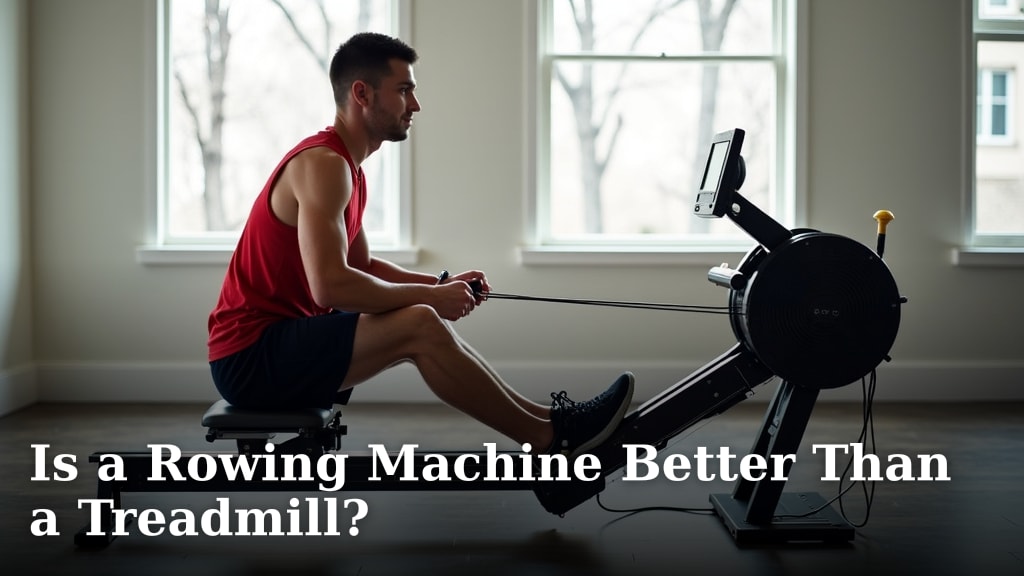
When comparing Is a rowing machine better than a treadmill, the answer depends entirely on your fitness goals and preferences. However, rowing machines generally offer a more comprehensive full-body workout compared to the treadmill’s lower-body focus.
You’ll find that both machines excel at providing excellent cardiovascular benefits. Treadmills are fantastic for running and walking, while rowing engages about 85% of your body’s muscles. Many people choose one over the other based on their impact preferences or space availability.
- Rowing offers full-body training and low impact.
- Treadmills are great for cardio and lower-body workouts.
- Your fitness goals really decide the “winner.”
- Consider impact levels and muscle engagement.
Let’s dive into the specifics of each machine. We’ll help you decide which one might be your perfect fitness partner.
Rowing vs. Treadmill: Which is Right For Your Fitness Routine?
Choosing between a rowing machine and a treadmill often comes down to understanding what each can offer your body. Both provide excellent cardiovascular exercise, but they activate your muscles in very different ways. Let’s explore how they stack up.
Understanding the Workout: Muscle Engagement
When you think about working out, what muscles do you want to target? This is a key question in deciding between these two machines. They have distinct approaches to muscle engagement.
Treadmill Muscle Activation
The treadmill primarily focuses on your lower body. When you walk or run, you’re engaging major muscle groups in your legs. These include your quadriceps, hamstrings, glutes, and calves (Mayo Clinic). Your core also provides stability, but it’s not the primary mover.
Think of it this way: every stride on a treadmill is a repetition for your leg muscles. It’s fantastic for building endurance and strength in your lower half. If your goal is to improve running performance or simply get your steps in, a treadmill is incredibly efficient.
Rowing Machine Muscle Activation
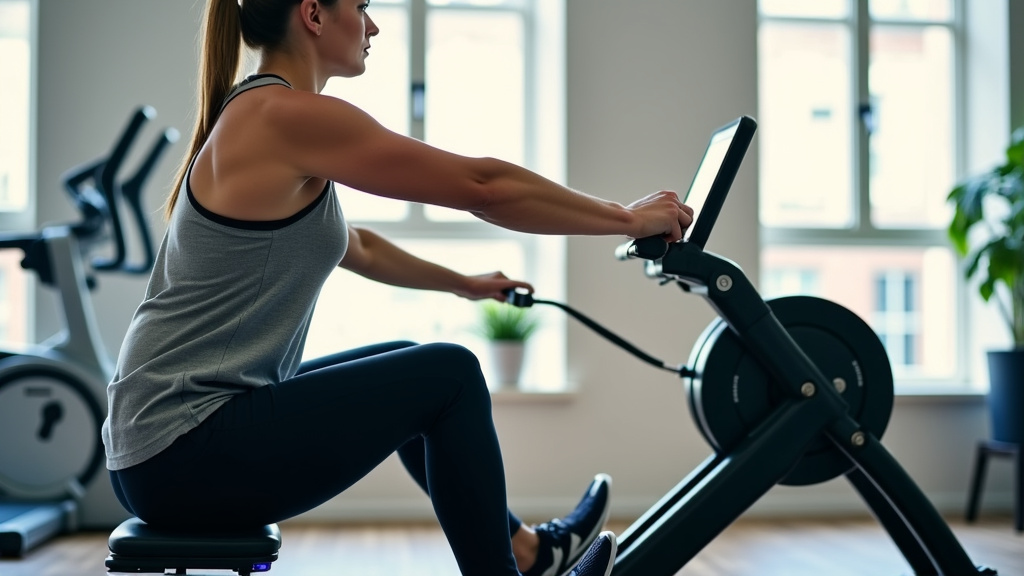
A rowing machine offers a much broader muscle engagement. We found that a single rowing stroke activates about 85% of your body’s muscles. This includes your legs, core, back, and arms. That’s a significant difference!
During the drive phase of a row, your legs powerfully push off, engaging glutes, quads, and hamstrings (American Council on Exercise). As you lean back, your back muscles (lats, rhomboids) and biceps kick in. Your core remains engaged throughout, providing stability and transferring power. It’s a true full-body experience.
This means you’re getting strength and endurance benefits across nearly every major muscle group. It’s like hitting the gym for several different exercises all at once.
Cardiovascular Benefits: Getting Your Heart Pumping
Both rowing machines and treadmills are champions for cardiovascular health. They elevate your heart rate, improve circulation, and strengthen your heart. The question isn’t whether they provide cardio, but how they do it and what intensity you can achieve.
Treadmill for Cardio
On a treadmill, you can easily control your heart rate by adjusting your speed and incline. Walking at a brisk pace or running at a high intensity will quickly get your heart rate up. Many people find the treadmill familiar and easy to use for interval training or steady-state cardio sessions (CDC).
It’s very straightforward: the faster you go, the harder your heart works. You can simulate hills with the incline feature, adding another dimension to your cardio workout. This helps build stamina and endurance for activities like hiking or running races.
Rowing Machine for Cardio
Rowing is also excellent for cardiovascular fitness. Because it uses so many muscle groups, your heart has to work harder to pump blood to them all. This can lead to a very rapid increase in heart rate, especially during intense intervals.
A rowing workout can be incredibly challenging, combining strength and cardio in one movement. You can maintain a steady pace for endurance or perform powerful sprints for high-intensity interval training (HIIT). Many users report feeling a deeper engagement with their breath during rowing, making it a powerful tool for lung capacity improvement.
Impact Levels: Protecting Your Joints
This is where many people make their decision, especially if they have joint concerns or previous injuries. The impact of exercise on your body can make a big difference in how you feel the next day.
Treadmill Impact
Running on a treadmill is a high-impact activity. With every step, your joints – particularly your knees, hips, and ankles – absorb the shock of your body weight. While treadmills often have some cushioning, it doesn’t eliminate the impact entirely.
For some, this impact is part of what makes running effective for bone density (NIH). However, for others, especially those with arthritis or recovering from injuries, it can be problematic. Even walking can be high-impact for some individuals. If you have sensitive joints, this is a significant factor to consider.
Rowing Machine Impact
Rowing, by contrast, is a very low-impact exercise. Your body stays seated, and the movement is smooth and fluid. There’s no pounding or jarring on your joints. This makes it an ideal choice for people with joint pain or those looking for a gentler alternative to high-impact cardio.
The resistance comes from the machine, not from your body striking a surface. This allows you to get an intense workout without stressing your knees or ankles. Many physical therapists recommend rowing for rehabilitation due to its low-impact nature, making it a safe choice for various fitness levels and ages.
Energy Expenditure: How Many Calories Will You Burn?
When you exercise, you’re burning calories. Both machines are effective at this, but the exact number depends on your intensity, duration, and body weight. Generally, higher muscle engagement means more calories burned.
Because rowing uses so many large muscle groups simultaneously, it can be a very efficient calorie burner. You’re simply moving more of your body, which requires more energy. A high-intensity rowing session will likely burn more calories than a comparable treadmill session, especially if the treadmill workout is just walking.
However, running at a high speed on a treadmill is also a major calorie burner. It’s difficult to give specific numbers without knowing your effort level. What’s important is that both machines offer pathways to significant calorie expenditure, supporting weight management and overall fitness goals.
Which Machine Fits Your Goals and Lifestyle Best?
Okay, so we’ve looked at the technical stuff. Now, let’s make it personal. What are you trying to achieve? Your goals are the compass here.
Here’s a quick checklist to help you decide:
- Are you training for a race that involves running? Treadmill.
- Do you want a full-body workout that builds strength and cardio? Rowing machine.
- Do you have joint pain or prefer low-impact exercise? Rowing machine.
- Is your main goal to improve endurance for walking or hiking? Treadmill.
- Do you enjoy an exercise that feels like “working out” every muscle? Rowing machine.
- Are you short on space and need something relatively compact? (Both can be, but some rowers fold up nicely!)
Space, Cost, and Noise Considerations
Beyond the workout itself, practical matters often play a role in your decision. Where will the machine go? How much does it cost? Will it wake up the whole house?
Treadmill: Space and Sound
Treadmills can take up a fair amount of space. Even foldable models still have a pretty large footprint when in use. They can also be quite noisy, especially if you’re running at higher speeds. The thud of footsteps can be bothersome in an apartment or quiet home environment.
Price-wise, treadmills vary greatly, from budget-friendly options to professional-grade models with all the bells and whistles. We found that quality treadmills start around $700-$1000 for home use.
Rowing Machine: Space and Sound
Rowing machines also come in various sizes, but many are designed to be stored vertically or fold in half, making them more space-efficient than some treadmills. The noise level depends on the type of resistance.
Air rowers can be loud due to the fan noise, while magnetic or water rowers tend to be quieter. Many quiet models are available if noise is a concern. The average cost for a decent home rowing machine is comparable to a treadmill, ranging from $500 to $1500 for quality units.
Consider your living situation: do you have neighbors below you? Is a quiet workout essential for your household? These factors can guide your choice.
Comparing the Essentials: A Quick Look
To help you visualize the comparison, here’s a handy table summarizing the key aspects.
| Feature | Rowing Machine | Treadmill |
|---|---|---|
| Primary Muscle Focus | Full-body (85% of muscles) | Lower-body (legs, glutes, calves) |
| Impact on Joints | Very Low-Impact | High-Impact (can be adjusted by walking) |
| Cardio Benefits | Excellent, whole-body effort | Excellent, highly adjustable intensity |
| Calorie Burn | High (due to widespread muscle use) | Moderate to High (depends on speed/incline) |
| Space Requirements | Can often be stored vertically/folded | Larger footprint, some fold |
| Noise Level | Varies (air louder, water/magnetic quieter) | Higher (footsteps, motor) |
| Skill Barrier | Requires learning proper form | Intuitive (walk/run) |
As you can see, each machine has its distinct advantages. There’s no one-size-fits-all answer. Your personal fitness journey dictates the best fit.
Conclusion
Choosing between a rowing machine and a treadmill comes down to your personal fitness journey. If you need a full-body, low-impact workout that builds strength and cardio, the rower is a fantastic choice. For improving running performance or high-impact cardio, the treadmill excels.
Both are excellent tools for getting your heart pumping and burning calories. Consider your body’s needs, space limits, and what kind of exercise you truly enjoy. The “better” machine is the one you’ll use consistently to reach your fitness goals.
Frequently Asked Questions
Is it okay to use a rowing machine every day?
Yes, you can use a rowing machine daily, especially if you vary your intensity. Listen to your body and incorporate rest days or lighter sessions. Rowing is a low-impact exercise, making it suitable for frequent use without excessive joint stress.
Can a treadmill help me lose belly fat specifically?
While a treadmill is great for burning overall calories and contributing to fat loss, no exercise can “spot reduce” belly fat. Consistent cardio, like treadmill workouts, combined with a healthy diet, will help reduce body fat percentages across your entire body.
Do you need special shoes for rowing?
You don’t need special shoes for rowing. Any comfortable athletic shoe with a flat, firm sole will work well. Avoid overly cushioned or bulky shoes, as they can sometimes interfere with proper foot placement on the foot stretchers.
How can I make my treadmill workout more challenging without running faster?
To increase your treadmill challenge without speeding up, try using the incline feature. Walking or power walking on a steep incline significantly increases muscle activation and cardiovascular effort. You can also incorporate interval training with varying inclines and speeds.
Is rowing good for building muscle mass?
Rowing is excellent for building muscle endurance and improving muscular definition across many major groups, especially your legs, back, and core. While it won’t build bulk in the same way heavy weightlifting does, it provides functional strength and a well-balanced physique due to its full-body engagement.