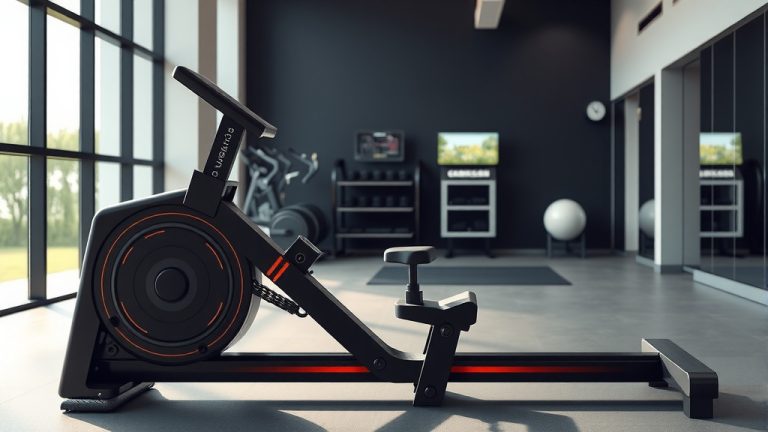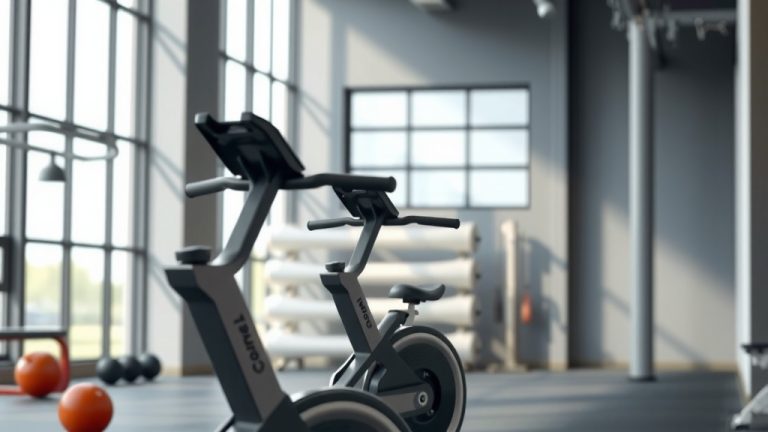
Is a Rowing Machine Better Than a Stationary Bike?

Comparing a rowing machine and a stationary bike for your workouts? Rowing machines generally offer a more complete, full-body workout compared to stationary bikes. This makes them a great option for overall conditioning and muscle engagement.
While both machines are excellent for cardio, rowing works about 85% of your muscles. A stationary bike mainly focuses on your lower body. We found that your fitness goals and available space might help you decide which machine is best for you.
TL;DR:
- Rowing machines engage more muscles.
- Stationary bikes are great for lower-body cardio.
- Both offer excellent cardiovascular benefits.
- Consider your fitness goals and space when choosing.
Ready to figure out if a rowing machine or a stationary bike fits into your fitness routine? Let’s break down everything you need to know to make your best choice.
Let’s dive into the specifics of these two popular fitness machines. You’ll soon discover which one aligns best with your unique fitness aspirations.
Comparing Rowing Machines and Stationary Bikes for Your Fitness Journey
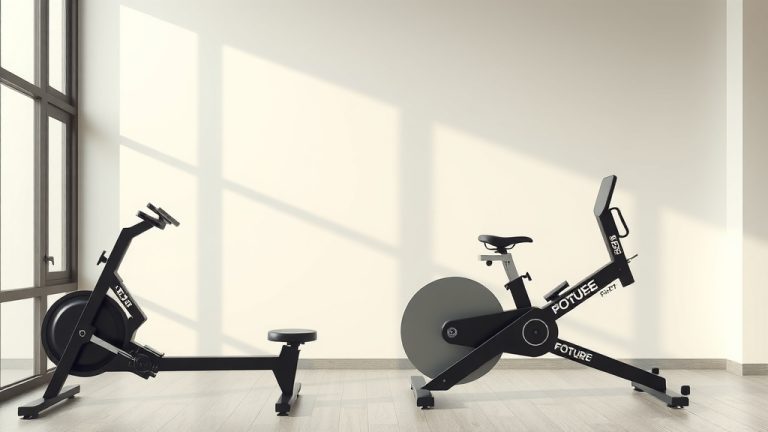
Generally, a rowing machine offers a more comprehensive, full-body workout by engaging multiple muscle groups. A stationary bike prioritizes lower body and cardiovascular fitness.
Full Body vs. Lower Body Focus
When you choose a workout machine, you’re essentially choosing which parts of your body will do most of the work. Think about what kind of exercise you’re hoping to achieve.
The All-Inclusive Rowing Experience
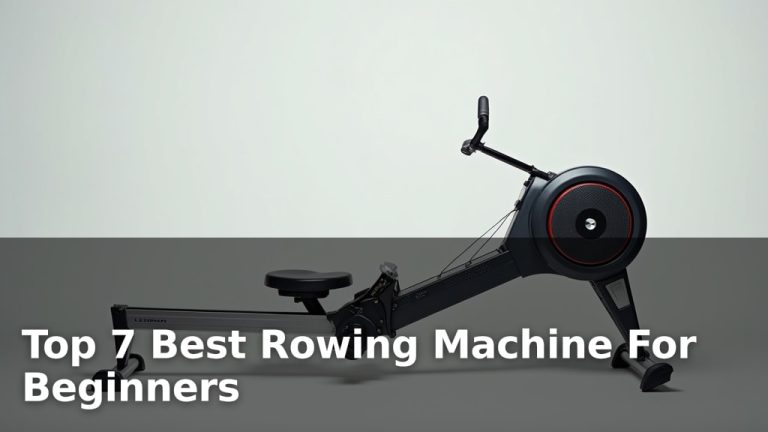
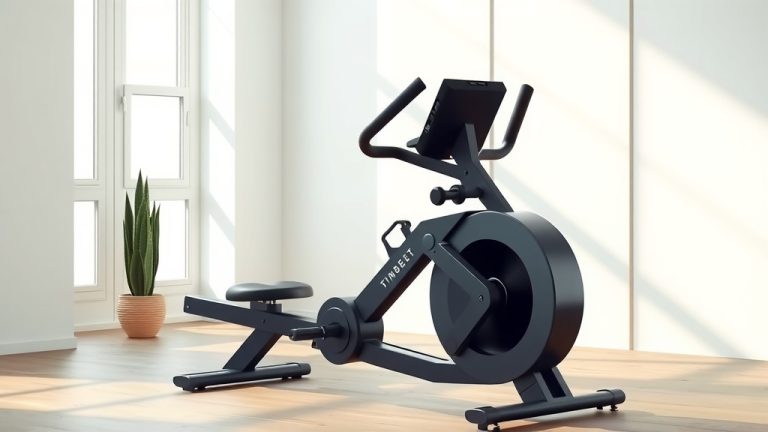
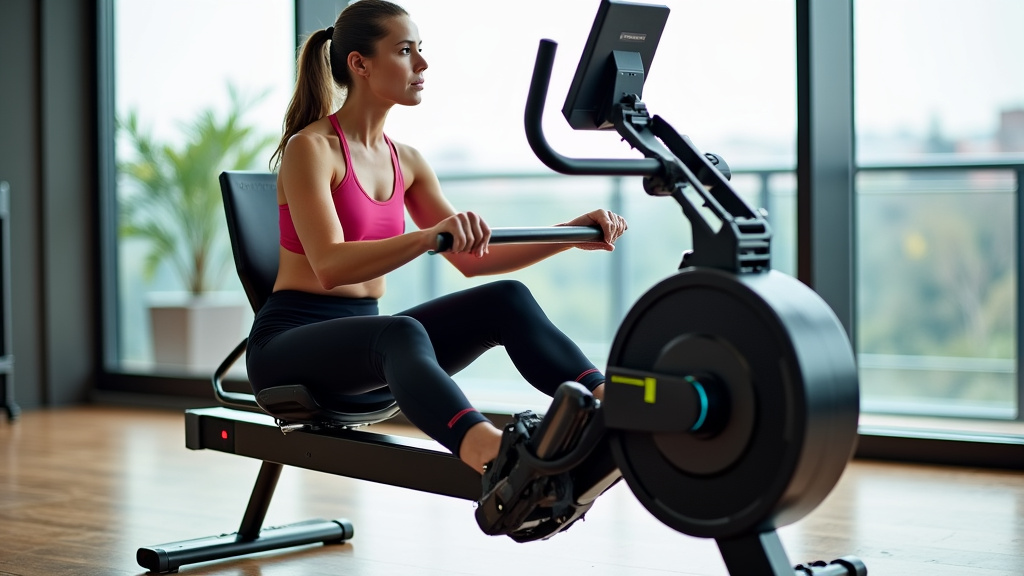
A rowing machine is often called a full-body workout, and for good reason. From the moment you push off with your legs until you pull the handle towards your core, almost every major muscle group is engaged. We found that rowing can work up to 85% of your body’s muscles.
- Legs: Quadriceps, hamstrings, and glutes propel you back.
- Core: Abdominals and back muscles stabilize your torso throughout the stroke.
- Arms and Shoulders: Biceps, triceps, lats, and deltoids are active in pulling the handle.
This muscle engagement is remarkable. It means you’re not just getting cardio; you’re also building strength simultaneously. You’ll notice it in your back, your arms, and even your stomach muscles. It’s like getting two workouts in one.
Stationary Bikes: Targeting the Lower Half
A stationary bike, on the other hand, is a powerhouse for your lower body. It primarily focuses on your legs and glutes. This makes it fantastic for building endurance and strength in that area.
- Legs: Quadriceps and hamstrings are heavily involved in pedaling.
- Glutes: Your gluteal muscles help power each pedal stroke.
- Calves: Provide support and stability.
While your core gets some light work for stabilization, and your arms hold the handlebars, the upper body contribution is minimal. This isn’t a bad thing at all! If your goal is to strengthen your legs and boost cardiovascular health without straining your upper body, a stationary bike is an ideal choice.
Cardiovascular Health Benefits
Both machines are champions when it comes to improving your heart health. They offer excellent cardiovascular workouts that can help lower your risk of heart disease and improve your overall fitness. How do they compare, though?
Aerobic Prowess of Rowing
Because rowing engages so many muscles, it can elevate your heart rate quickly and sustain it effectively. This makes it an incredibly efficient aerobic exercise. You’ll often find yourself breathing harder and sweating more, sooner, than on a bike. A study cited by the American Council on Exercise (ACE) showed rowing can achieve high caloric expenditure and significant cardiovascular benefits.
The Steady Burn of Cycling
Stationary bikes are fantastic for sustained aerobic activity. You can often maintain a steady, moderate pace for longer periods, which is excellent for building cardiovascular endurance. Spinning classes, for example, demonstrate how intensely you can push your heart and lungs on a bike. It’s a great option if you enjoy longer, more consistent cardio sessions (Mayo Clinic).
Impact on Joints and Injury Risk
Joint health is a big deal, especially as we get older or if we have pre-existing conditions. You want a workout that challenges you without putting undo stress on your body.
Rowing: Low-Impact, High Reward
Rowing is considered a very low-impact exercise. Your body moves smoothly through the stroke, with minimal jarring on your joints. This makes it an excellent option if you have knee, hip, or ankle issues. The seated position Reduces stress on your lower body joints dramatically compared to activities like running. Even though it’s vigorous, it’s gentle on your body.
Stationary Bikes: Joint-Friendly Pedaling
Stationary bikes are also very joint-friendly. The circular motion of pedaling is smooth and doesn’t involve impact. This is particularly beneficial for your knees, as the controlled movement can even help strengthen the muscles around them. For people with knee arthritis or those recovering from certain injuries, a stationary bike is often a recommended form of exercise (Cleveland Clinic).
Calorie Burn and Weight Management
Many of us are looking to burn calories as part of our fitness goals. Both machines are effective, but there are some differences due to the muscle groups involved.
Rowing’s Calorie Scorching Potential
Because rowing engages so many muscles, it tends to burn a significant number of calories in a shorter amount of time. The more muscles you activate, the more energy your body needs. This makes rowing a highly efficient choice if calorie expenditure is a top priority.
Cycling for Sustained Calorie Burn
While a rowing machine might offer a higher calorie burn per minute during intense exercise, a stationary bike allows for longer, more sustained workouts. If you can comfortably cycle for an hour, you’ll still burn a large number of calories. It often depends on your intensity and duration. You can adjust resistance to crank up the calorie burn on a bike too.
Space Requirements and Cost Considerations
Let’s be real, your living situation and budget play a huge role in choosing home fitness equipment. You don’t want a machine that takes over your entire living room or breaks the bank.
Footprint of a Rower
Rowing machines can be quite long. While many models are designed to fold up or stand upright for storage, they still require a good amount of space when in use. You’ll need enough room for the rail to extend fully. Consider the dimensions carefully if your exercise space is compact.
Stationary Bike’s Compact Advantage
Stationary bikes, especially upright and spin bikes, tend to have a smaller footprint. Recumbent bikes are longer but still often more compact than a full-size rower. They are generally easier to fit into tighter spaces and can often be rolled into a corner when not in use. This makes them a popular choice for apartments or smaller home gyms.
Comparing Price Tags
The cost for both types of machines varies widely based on features, brand, and build quality. You can find basic models for a few hundred dollars or high-end versions for several thousands. Generally, entry-level stationary bikes might be slightly more affordable than entry-level rowing machines. However, the price gap isn’t always significant in the mid-range.
Which Machine is Right for Your Goals?
Now that we’ve broken down the pros and cons, how do you decide? It really comes down to what YOU want to achieve and what fits your lifestyle.
Consider these points:
- Overall Fitness and Strength: If you’re aiming for a comprehensive full-body workout that builds strength and endurance across many muscle groups, a rowing machine is likely your best bet.
- Lower Body Focus and Endurance: For targeting your legs, glutes, and boosting cardiovascular endurance with less upper body involvement, a stationary bike shines.
- Joint Sensitivity: Both are excellent low-impact options. If you have significant upper body issues, a bike might be more comfortable. If lower body impact is your main concern, both are great.
- Space Available: Do you have a long, clear space for a rower, or do you need something more compact like an upright bike?
- Workout Variety: Some people find rowing more engaging due to the full-body movement. Others prefer the steady rhythm of cycling, perhaps while watching TV or reading.
Let’s look at a quick comparison to summarize:
| Feature | Rowing Machine | Stationary Bike |
|---|---|---|
| Main Muscle Focus | Full Body (85%) | Lower Body Primarily |
| Calorie Burn Potential | Very High (efficient) | High (sustained) |
| Joint Impact | Very Low | Very Low |
| Space Needed | More (lengthy) | Less (compact) |
| Upper Body Engagement | High | Minimal |
| Core Engagement | High | Light |
Your Personal Fitness Checklist
To help you make the best decision for your home gym, ask yourself these questions:
- Do you want to work your entire body at once?
- Is building leg strength your main priority?
- Do you have enough linear space for a long machine?
- Are you looking for an exercise that’s very easy on your joints?
- Do you prefer a workout where you can watch TV comfortably (e.g., sitting upright)?
- What’s your budget range for fitness equipment?
Answering these questions honestly will guide you toward the right choice. Remember, the best machine is the one you’ll actually use consistently.
Conclusion
Choosing between a rowing machine and a stationary bike really boils down to your personal fitness journey. If you’re looking for a powerful full-body workout that builds strength and cardio at once, a rower is often the winner. If your focus is strong legs, boosted endurance, or you need something more compact, a stationary bike is an excellent choice. Both options provide fantastic, low-impact cardiovascular benefits. Consider your specific goals, available space, and budget. The best machine for you is the one you’ll use consistently and enjoy.
Frequently Asked Questions
Can I build muscle with a stationary bike?
Yes, you can certainly build muscle with a stationary bike, primarily in your lower body. It targets your quadriceps, hamstrings, and glutes. Varying resistance and incorporating interval training can help increase muscle engagement and strength in these areas.
Is rowing better for fat loss than cycling?
Rowing often burns more calories in a shorter amount of time because it engages more muscle groups, making it highly efficient for fat loss. However, consistent and longer-duration cycling sessions can also lead to significant calorie burn and support fat loss. It depends on your intensity and workout duration.
Which machine is quieter for home use?
Generally, magnetic resistance stationary bikes and rowers tend to be the quietest. Air resistance rowers can be louder due to the fan sound. If noise is a big concern for your home environment, we recommend checking reviews for specific models and their sound levels.
Can I watch TV easily while using either machine?
Many people find it easier to watch TV or read on a stationary bike, especially on a recumbent model, because the upper body is less engaged. While possible on a rower, the dynamic full-body movement means your focus is often more on the exercise itself, making passive entertainment a bit trickier.
Do I need special shoes for rowing or cycling?
For rowing, comfortable athletic shoes are typically sufficient as your feet are securely strapped in. For stationary bikes, especially spin bikes, clip-in shoes (SPD or Delta cleats) can offer better power transfer and efficiency, but regular athletic shoes are fine for casual use.