Is Rowing Better Than Cycling for Cardio?

For cardio, rowing is generally better than cycling because it works more muscle groups, offering a full-body workout. Cycling primarily focuses on your lower body, while rowing engages both your upper and lower body for a more comprehensive cardiovascular challenge.
You want an efficient workout that maximizes your time, right? We found that while both exercises boost your heart health, rowing often leads to greater calorie burn and improved muscle development across your entire body. So, if you’re looking for a single exercise to truly challenge your cardiovascular system and build strength, rowing might be your best bet.
- Rowing offers a full-body cardio workout.
- Cycling mainly targets your lower body.
- Rowing burns more calories per session.
- Both improve heart health.
- Choose based on your fitness goals.
Let’s dive deeper into why rowing often wins the cardio contest and help you decide which exercise is right for your fitness journey.
Rowing vs. Cycling: Which Cardio Exercise Reigns Supreme?
You’re looking for the best way to get your heart pumping, right? Let’s break down how rowing and cycling stack up for your cardiovascular health and overall fitness.
Full-Body Workout vs. Lower-Body Focus
When you choose an exercise, do you want to work just some of your muscles or nearly all of them? This is a key difference between rowing and cycling.
The All-Inclusive Power of Rowing
Imagine using your legs, core, back, and arms all at once. That’s rowing for you! It’s a true full-body engagement, often activating around 85% of your body’s muscles (American Fitness Professionals & Associates).
You start with a powerful leg drive, then lean back with your core, and finish with a strong pull from your arms and back. This sequence ensures a balanced workout, building strength and endurance across your entire physique. It’s like getting several workouts in one efficient session.
Cycling’s Lower-Body Dominance
Cycling, whether on a stationary bike or outdoors, primarily targets your lower body. Think about it: your quads, hamstrings, glutes, and calves do most of the work. While cycling is fantastic for building leg strength and endurance, it doesn’t offer the same upper-body and core engagement as rowing.
You might feel your heart racing, but your upper body isn’t getting the same workout. If you want to balance your muscle development, you’d need to add separate upper-body exercises to your routine.
Calorie Burn and Weight Management
Are you trying to shed a few pounds or just maintain a healthy weight? Calorie expenditure is often a big factor in choosing your cardio.
Generally, exercises that engage more muscles will burn more calories. Since rowing uses a larger percentage of your body, it often leads to a higher calorie burn per session compared to cycling at a similar intensity (Harvard Health Publishing).
For example, a person weighing 155 pounds might burn around 260-310 calories in 30 minutes of moderate cycling. That same person could burn 310-370 calories in 30 minutes of moderate rowing. More muscles working means more energy used, which translates to more calories burned. This can be a game-changer if weight management is a primary goal for you.
Impact on Joints and Injury Risk
Nobody wants to get hurt while exercising, right? Considering the impact on your joints is smart, especially as you get older or if you have pre-existing conditions.
Low-Impact Rowing for Joint Health
Rowing is a remarkably low-impact exercise. Your body stays seated, and the movement is fluid and controlled. This means less stress on your knees, hips, and ankles. It’s an excellent choice if you have joint issues or are recovering from certain injuries (Journal of Sports Sciences).
The rhythmic motion helps lubricate your joints without the pounding that can come from exercises like running. You can get a tough workout without the wear and tear.
Cycling’s Joint Considerations
Cycling is also considered low-impact, which is a big plus. Your feet stay on the pedals, reducing direct impact on your joints. However, improper bike fit or poor form can sometimes lead to knee pain or lower back issues. We found that adjusting your seat height and handlebar position is crucial for comfort and preventing injury (Sports Health).
While generally safe for joints, paying attention to your body mechanics is especially important with cycling.
Accessibility, Equipment, and Cost
What’s practical for your lifestyle and budget? The type of equipment you need and how accessible it is can influence your decision.
Rowing Machine Considerations
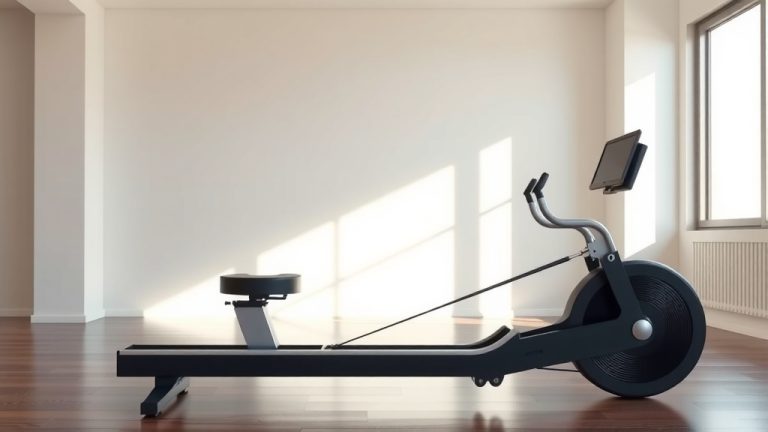
To row, you typically need a rowing machine, also known as an ergometer. These machines can be a significant upfront investment, ranging from a few hundred to over a thousand dollars. However, many gyms have them, making them accessible there.
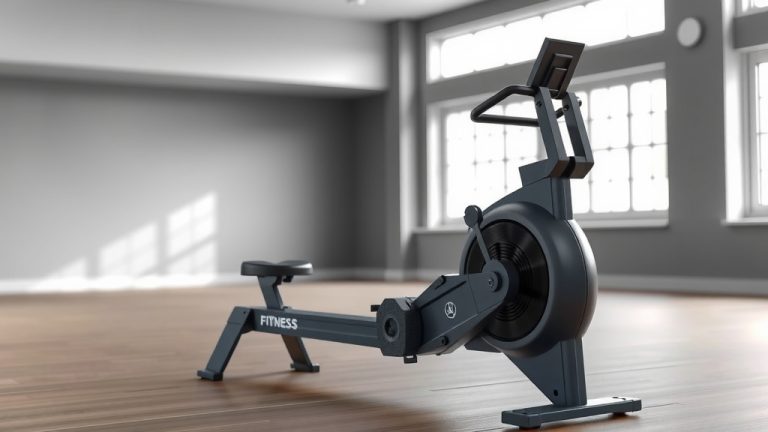
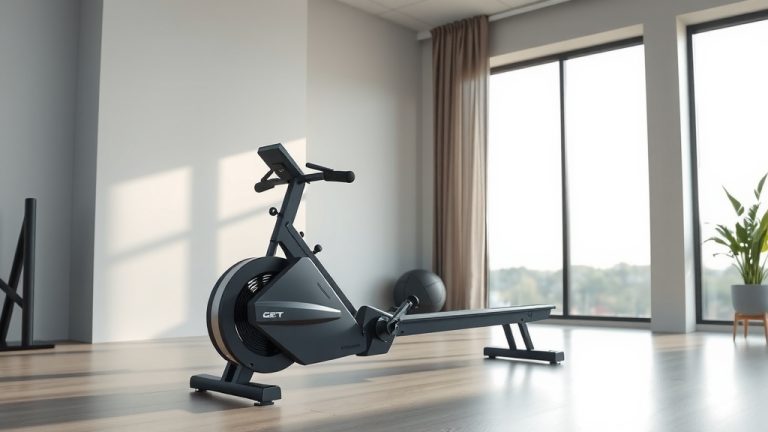
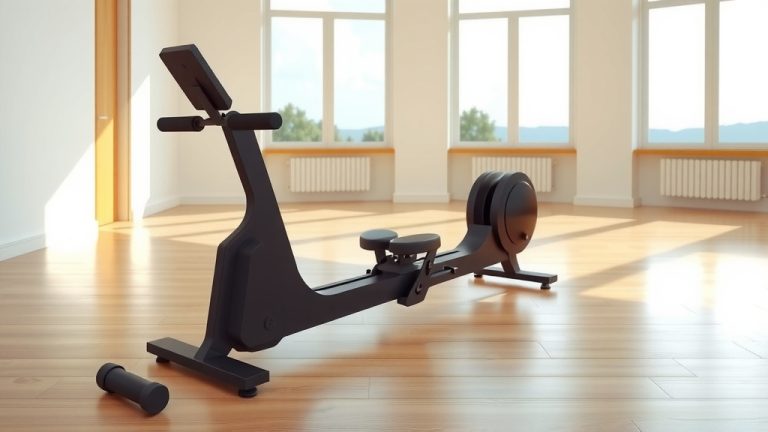
Rowing machines also take up a fair amount of floor space. If you’re looking for a home gym solution, you’ll need to consider where it will fit. We’ve seen some models that fold up, which can be a space-saving benefit.
Cycling Options: Bikes and Spin Classes
Cycling offers more variety in terms of equipment. You can buy a road bike, mountain bike, or hybrid for outdoor use, which can range widely in price. Stationary bikes for home use also vary in cost, similar to rowing machines.
Many gyms offer spin classes or have stationary bikes available. This provides a communal, motivating environment for some. The accessibility of bikes for outdoor riding also means you don’t always need a gym membership or dedicated equipment at home. You can simply hop on a bike and go!
Cardiovascular Benefits for Your Heart Health
Ultimately, both exercises are fantastic for your heart. They both elevate your heart rate, strengthen your heart muscle, and improve your body’s ability to use oxygen. This means a healthier heart and better stamina for everyday activities.
Many experts say that engaging in regular cardiovascular exercise, like rowing or cycling, can significantly reduce your risk of heart disease, stroke, and type 2 diabetes (CDC). You’re making a great choice no matter which one you pick.
Here’s a quick comparison to help you visualize the differences:
| Feature | Rowing | Cycling |
|---|---|---|
| Muscles Engaged | Full-body (legs, core, back, arms) | Primarily lower-body (quads, hamstrings, glutes) |
| Calorie Burn | Generally higher per session | Moderate to high, depending on intensity |
| Joint Impact | Very low | Low |
| Cardio Benefit | Excellent | Excellent |
| Skill/Form | Requires proper technique for efficiency | Easier to learn, but form still matters |
| Space Needed | Dedicated space for machine | Can be done indoors/outdoors, less dedicated space |
Choosing the Right Exercise for Your Goals
So, how do you decide which one is right for you? It really comes down to what you want to achieve from your workouts and what fits your lifestyle best.
When to Lean Towards Rowing
If you’re aiming for a single exercise that gives you the most bang for your buck in terms of muscle activation and calorie burn, rowing is a strong contender. It’s perfect if you want to build strength across your entire body while getting an amazing cardio workout. It’s also ideal if you need a very low-impact option.
- You want a full-body workout.
- You’re looking to maximize calorie burn.
- You prefer a very low-impact exercise.
- You want to build balanced strength.
When Cycling Might Be Your Best Bet
Cycling shines if your main goal is to improve lower-body endurance and strength. It’s also great if you love outdoor activities or the social aspect of group classes. If you have limited space at home, a bike might be easier to manage than a rowing machine.
- You want to focus on lower-body strength.
- You enjoy outdoor exercise.
- You’re looking for a social workout (spin classes).
- You might have limited space for equipment.
Ultimately, the “better” exercise is the one you will consistently do and enjoy. Both rowing and cycling offer significant health benefits. Think about what excites you, what feels good for your body, and what you can stick with over the long term. Consistency is the real key to success in any fitness journey.

Conclusion
Choosing between rowing and cycling for cardio ultimately depends on your personal goals and preferences. If you’re seeking a full-body workout that maximizes calorie burn and builds balanced strength, rowing is often the superior choice. Its low-impact nature also makes it ideal for joint health.
However, cycling excels for lower-body conditioning, outdoor enjoyment, and social interaction. Both offer excellent cardiovascular benefits. We encourage you to consider what you’ll enjoy most and stick with consistently. The best exercise is the one you love to do!
Frequently Asked Questions
Is rowing a good way to lose belly fat?
Yes, rowing can be very effective for losing belly fat as part of an overall weight loss strategy. Because it engages many muscles and burns a high number of calories, it helps create the calorie deficit needed for fat loss across your entire body, including your midsection.
Can I build significant muscle with just rowing or cycling?
You can definitely build muscle tone and endurance with both. Rowing provides more comprehensive muscle development due to its full-body engagement. Cycling primarily strengthens your lower body. For significant muscle mass, you’d typically want to add dedicated strength training.
Which is better for improving lung capacity?
Both rowing and cycling are excellent for improving your lung capacity and cardiovascular endurance. Any exercise that consistently elevates your heart rate and challenges your breathing will strengthen your heart and lungs, allowing them to work more efficiently.
Is one exercise safer than the other for beginners?
Both are generally safe for beginners due to their low-impact nature. However, proper form is key for both. Rowing might require a bit more learning to master the technique, while cycling can sometimes lead to knee issues if your bike fit isn’t correct. Start slow and focus on form.
Can I combine rowing and cycling in my fitness routine?
Absolutely! Combining rowing and cycling can be an excellent strategy. You’d get the full-body benefits of rowing and the lower-body focus and outdoor enjoyment of cycling. This approach can lead to a well-rounded fitness regimen and prevent boredom.