
What Is SPM in Rowing?
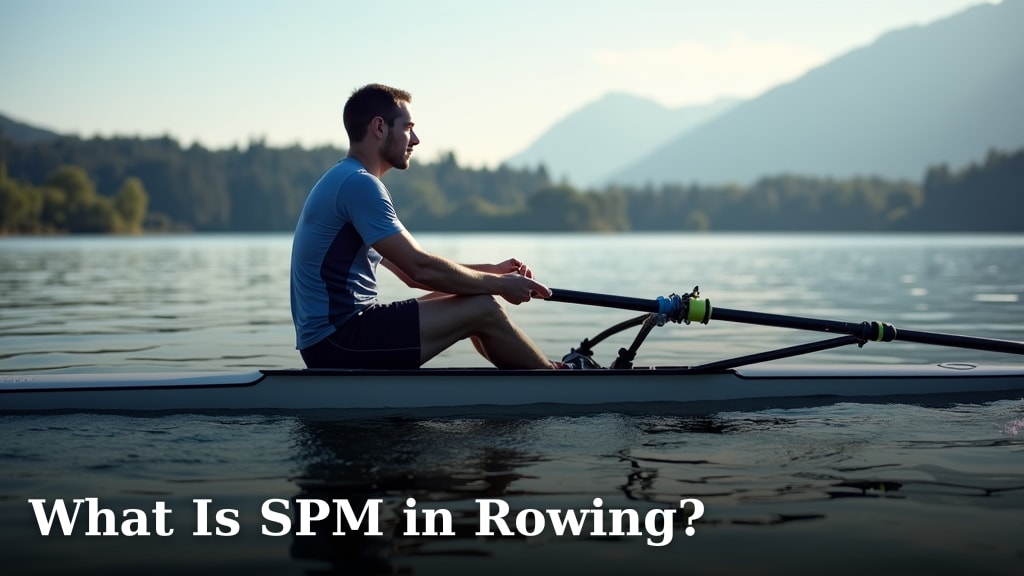
SPM in rowing stands for strokes per minute. It is a key measure of your boat’s speed and efficiency. A higher SPM generally means you are moving the boat faster through the water.
Understanding SPM helps you make smarter rowing decisions. You can use it to compare your performance to others. Many top rowers focus on finding the optimal SPM for their race strategy. It’s about finding the right rhythm for maximum power.
- SPM means strokes per minute.
- It’s a measure of your rowing speed.
- Higher SPM usually means a faster boat.
- Finding the right SPM is key for racers.
- It helps improve your overall efficiency.
Let’s dive into what SPM really means and how you can use it to improve your rowing.
Understanding Your Rowing Rhythm: Strokes Per Minute Explained
SPM, or strokes per minute, is a core metric in rowing. It tells you how many times you’ve moved your oar through the water in one minute. Think of it as your boat’s heartbeat. A consistent SPM helps you find a steady rhythm. This rhythm is vital for both speed and endurance. We’ll break down why SPM matters so much.
What Does SPM Really Mean for Your Rowing?
SPM directly impacts how fast your boat moves. It’s not just about raw power; it’s about applying that power efficiently. A higher SPM generally means more strokes, which can lead to greater speed. But there’s a sweet spot for every rower and crew. Going too fast might tire you out quickly. Going too slow might not give you enough momentum. Finding that optimal SPM is a key goal for many athletes.
SPM vs. Boat Speed: The Connection
You might think more strokes always equals more speed. While there’s a strong correlation, it’s not a simple one-to-one relationship. Imagine a sprinter versus a marathon runner. Both are fast, but they use energy differently. A rower with a high SPM might be like a sprinter, using quick bursts of energy. A rower with a lower SPM might be more like a marathoner, focusing on sustained effort. Research shows that boat speed is a product of stroke rate (SPM) and stroke length/power (how much you move the boat with each stroke). You need to balance both for maximum efficiency (NCAA Rowing Guidelines). Research shows that boat speed is a product of stroke rate (SPM) and stroke length/power, and our guide on daily rowing workouts explains how to vary intensity.
The Role of Stroke Length and Power
Your stroke length refers to how far your oar travels through the water. Stroke power is the force you apply. When you increase your SPM, you’re taking more strokes. If your stroke length and power stay the same, your boat will likely go faster. However, if you increase your SPM so much that your strokes become shorter or less powerful, you might not gain much speed. You might even lose speed. Experts often talk about the “ratio” of SPM to how much distance you cover. A good ratio means you’re getting a lot of “bang for your buck” with each stroke.
Different Rowing Situations, Different SPMs
The ideal SPM isn’t a fixed number. It changes based on what you’re trying to do. Are you training? Racing? Warming up? Each situation calls for a different stroke rate. This adaptability is what makes rowing so strategic.
SPM During Training and Practice
When training, you have more flexibility. You can experiment with different SPMs. This is your time to learn about your body’s limits and strengths. You might do drills at a lower SPM to focus on technique. Then, you might increase SPM to build endurance. Many coaches use training sessions to find the optimal SPM for different race distances. It’s about building a foundation and understanding your capability.
SPM in Racing Scenarios
Racing is where SPM becomes critical. You need a strategy. For shorter races, like a 2000-meter event, you might start with a higher SPM. This helps you build speed quickly. As the race progresses, you might maintain a strong, steady SPM. For longer races, you might start with a slightly lower SPM. This conserves energy for the entire distance. You’d then increase SPM towards the end for a final push. Many top crews adjust their SPM incrementally throughout a race.
Sprint Races vs. Endurance Races
In a sprint, think 500 meters or less. You want to maximize your power output from the start. This often means a higher SPM, maybe in the 35-40 range or even higher for elite rowers. For longer distances, like a 2000-meter race, you’ll likely see SPMs in the high 20s to mid-30s. The goal is to sustain a high average speed without burning out. The strategy here is balance.
SPM for Different Boat Types
The type of boat you’re in also influences SPM. A single scull might have a different optimal SPM than a large eight-person boat. In a single, the rower controls everything. They can adjust their SPM easily. In larger boats, the crew needs to synchronize their strokes. The collective rhythm is key. A larger boat might move more water with each stroke, potentially allowing for a slightly lower SPM to achieve high speed.
Finding Your Optimal SPM: Practical Tips
So, how do you figure out what SPM is right for you? It takes practice, awareness, and sometimes a bit of help. Don’t just guess; be methodical.
Using Technology to Track Your SPM
Most modern rowing machines (ergometers) and many boat-mounted sensors display your SPM. These tools are fantastic for immediate feedback. You can see your SPM in real-time. This allows you to make instant adjustments during your workout. Many apps and programs can also log your data over time. This helps you see trends and improvements. Having this data can be very motivating.
How to Experiment Safely
Start by rowing at a comfortable, consistent SPM. Maybe this is around 25-30 SPM. Feel the boat’s movement. Then, try increasing your SPM by one or two strokes per minute. How does the boat feel? Is it moving faster? Are you feeling more strain? Try decreasing it slightly. You’re looking for the point where you feel you’re moving efficiently and powerfully. Don’t force it. Listen to your body. If you’re rowing with a coach or crew, they can guide you through these experiments.
What Do the Pros Do?
Elite rowers often have a very refined sense of their optimal SPM. For a 2000-meter race, we found that top male crews might average around 36-39 SPM, while elite female crews might be around 34-37 SPM (International Rowing Federation data). These are averages, and they can vary by race strategy and the specific event. They spend years honing this ability. They know how to push their SPM without sacrificing technique.

Common SPM Mistakes to Avoid
It’s easy to fall into traps when thinking about SPM. Being aware of these can save you time and effort.
The “Too High SPM” Trap
One common mistake is thinking that higher SPM is always better. Many beginners rowers, and even some experienced ones, tend to increase their SPM too much. This can lead to choppy strokes. Your technique suffers. You might also burn out very quickly. You’re not getting the full benefit of each stroke. Remember, efficiency is just as important as rate.
The “Too Low SPM” Trap
On the flip side, rowing too slowly can also be inefficient. If your SPM is too low, you might not be generating enough momentum. The boat could stall between strokes. You might be expending less energy per minute, but you’re also moving slower. You need enough strokes to keep the boat gliding through the water effectively. Think about maintaining momentum.
Ignoring Stroke Quality
Perhaps the biggest mistake is focusing on SPM at the expense of stroke quality. Your SPM number is just a number if the strokes themselves are weak or poorly executed. A good stroke involves proper form, a strong catch, a powerful drive, and a clean finish. Always prioritize good technique. A technically sound stroke at a moderate SPM will often outperform a sloppy stroke at a high SPM. Many coaching philosophies prioritize technique over rate.
Checklist: Optimizing Your Rowing Rhythm
Ready to put this into practice? Here’s a quick checklist to help you:
- Know your equipment: Ensure your erg or boat sensor accurately shows SPM.
- Start slow: Begin practice sessions at a comfortable, lower SPM to focus on form.
- Experiment gradually: Increase SPM by small increments (1-2 strokes) and observe the effect.
- Listen to your body: Pay attention to fatigue and whether your technique is suffering.
- Prioritize technique: Never sacrifice stroke quality for a higher SPM.
- Consult a coach: Get expert feedback on your rhythm and efficiency.
Conclusion
You’ve learned that SPM is your rowing pulse, measuring strokes per minute. It’s not just about rowing harder, but rowing smarter. Finding your optimal SPM balances speed, power, and efficiency. Remember that your ideal rate changes with your training goals and race strategy. Don’t chase a number; focus on improving your stroke quality at a rhythm that works for you. For your next outing, try experimenting with your SPM. See how small adjustments impact your boat’s feel and speed. This practice will build your confidence and improve your performance on the water.
Frequently Asked Questions
What is a good SPM for a beginner rower?
For beginners, a good starting SPM is often between 25 and 30 strokes per minute. This allows you to focus on your technique and build a consistent rhythm. You can gradually increase it as you become more comfortable and your endurance improves.
How can I tell if my SPM is too high or too low?
If your SPM is too high, your strokes might feel choppy, and your technique can suffer. You might also fatigue quickly. If it’s too low, the boat might lose momentum between strokes. You should feel a good balance where the boat is gliding efficiently without you feeling overly strained.
Does SPM matter for recreational rowers, not just racers?
Yes, SPM matters for all rowers. For recreational rowers, understanding SPM helps you row more efficiently, which can make your outings more enjoyable and less tiring. It allows you to get more out of your time on the water.
Should my SPM change during a race?
Absolutely. Race strategies often involve adjusting your SPM. You might start with a slightly higher rate to build speed, then settle into a sustainable rhythm. Towards the end of a race, you might increase your SPM for a final push to the finish line.
How does stroke length affect my ideal SPM?
Stroke length and SPM work together. If you have a long, powerful stroke, you might not need as high an SPM to achieve good boat speed. Conversely, if your strokes are shorter, you might need a higher SPM to maintain momentum. Finding the right balance between stroke length and rate is key to efficiency.
