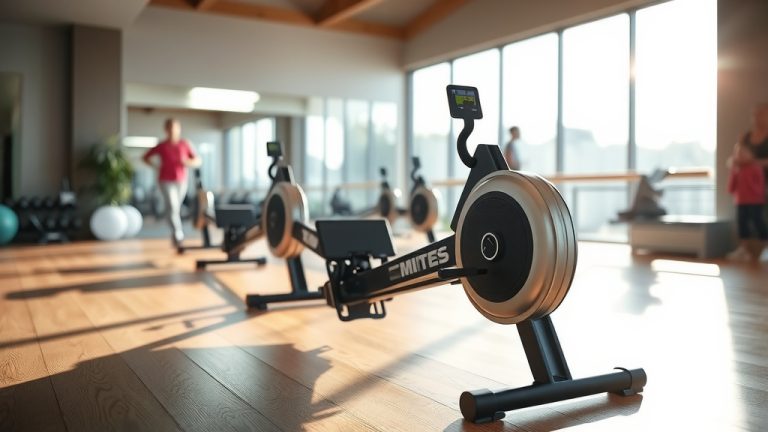
How Many Reps On Rowing Machine?
For general fitness and endurance on a rowing machine, aim for 20-30 “reps” or strokes per minute, sustained for 20-60 minutes.
If you’re focused on power or strength, you might do fewer, more powerful strokes, such as 10-15 per minute, but for shorter, intense intervals.
- Understanding “reps” on a rowing machine means strokes, not traditional gym repetitions.
- Your workout goal (endurance, strength, or HIIT) dictates your ideal stroke rate.
- A higher stroke rate generally means endurance, while a lower rate with more power builds strength.
- Focus on proper technique first; it makes every stroke count and prevents injury.
- Listen to your body and adjust your pace and duration as you get fitter.
You’ve hopped on the rowing machine, ready to get a great workout. But then you might wonder, “How many reps on a rowing machine should I do?” It’s a common question, and it’s a good one to ask. On a rower, we don’t usually talk about “reps” in the same way you would with a dumbbell. Instead, we refer to them as strokes per minute (SPM) or simply “strokes.” Think of each complete cycle—drive, finish, recovery, catch—as one stroke. Let’s break down what that means for your fitness goals.
How Many Reps On Rowing Machine?
The number of “reps” or strokes you do on a rowing machine largely depends on your specific fitness goal. Many experts suggest aiming for a stroke rate between 20-30 SPM for most endurance and cardio workouts.
Understanding Stroke Rate vs. Traditional Reps
When you’re lifting weights, a “rep” is one complete movement. On a rowing machine, a “rep” is a complete stroke cycle. It’s a continuous motion, not a stop-and-start like bicep curls. This continuous nature means your focus shifts to the rate and power of those strokes.
We found that concentrating on consistent power output per stroke is often more beneficial than simply racking up a high stroke count (American College of Sports Medicine).
What’s Your Goal Today?
Before you even begin, ask yourself: What do I want to achieve with this rowing session? Are you looking for a long, steady cardio burn? Do you want to build raw power? Or are you aiming for a quick, intense burst of effort? Your answer will guide your ideal stroke rate and workout structure.
Rowing for Endurance and Cardio
If your goal is to build endurance and get your heart pumping, a moderate to high stroke rate is your friend. We often see people aiming for 25 to 30 strokes per minute in these types of sessions. You’ll sustain this pace for a longer period, perhaps 20 to 60 minutes.
This approach helps improve your cardiovascular health and overall stamina. Think of it like a jog or a sustained bike ride; it’s about going the distance with steady effort. You want to feel challenged, but still able to hold a conversation, albeit a slightly breathless one.
Building Strength and Power on the Rower
Want to feel like a power machine? For strength and power, you’ll typically use a lower stroke rate but with much more intensity. Try for 18 to 22 strokes per minute, focusing on exploding back with your legs and core. Each stroke should feel powerful and deliberate.
Research suggests that powerful, lower-rate strokes engage more muscle fibers, especially in your legs and glutes (National Institutes of Health). You’ll usually do these in shorter intervals, followed by rest periods, much like weightlifting sets.
High-Intensity Interval Training (HIIT) on the Rowing Machine
HIIT on a rower is fantastic for burning calories and boosting metabolism. Here, your stroke rate will fluctuate dramatically. During your “on” periods, you might push for a very high SPM, sometimes up to 30-35 strokes per minute, with maximum effort.
Then, during your “off” or recovery periods, you’ll drop down to a very low, easy rate, perhaps 15-20 SPM. This contrast is what makes HIIT so effective. Many experts recommend alternating between high intensity and low intensity for short bursts (Mayo Clinic).
Listen to Your Body, Not Just the Monitor
While the monitor gives you numbers, your body gives you feedback. Are you gasping for air and losing form? Your SPM might be too high. Are you barely breaking a sweat? You might need to pick up the pace or increase your effort per stroke. Feeling your muscles work is a great indicator.
The Golden Rule: Technique Before Speed
No matter your goal, proper technique is king. A high stroke rate with bad form can lead to injury and less effective workouts. Many coaches say focusing on a smooth, powerful drive and a controlled recovery is far more important than just rowing fast. A good technique ensures you engage all the right muscles effectively.
Here’s a quick checklist for good rowing technique:
- Start with the catch: Arms straight, shins vertical.
- Drive with your legs: Push powerfully through your feet.
- Lean back slightly: Engage your core after the leg drive.
- Pull the handle: Bring it to your sternum, elbows back.
- Recover smoothly: Arms away, then body forward, then bend knees.
- Keep your core engaged: Throughout the entire movement.
Varying Your “Reps” for a Balanced Workout
You don’t have to stick to one stroke rate all the time. In fact, varying your workouts is one of the best ways to see continuous improvement. We found that mixing endurance with power sessions leads to a more well-rounded fitness level. Some days you might go long and steady, others short and intense.
| Workout Goal | Typical Stroke Rate (SPM) | Effort Level |
|---|---|---|
| Endurance/Cardio | 25-30 SPM | Moderate, steady |
| Strength/Power | 18-22 SPM | High, explosive |
| HIIT (Work Phase) | 30-35+ SPM | Maximum burst |
| HIIT (Rest Phase) | 15-20 SPM | Very light, recovery |
This table gives you a general guide. Remember, these are starting points. You’ll adjust them based on how you feel and what your body can do. The key is finding a rhythm that challenges you safely.
The Importance of Consistency Over High Numbers
It’s easy to get caught up in wanting high numbers on the screen. But consistency in your workouts will always trump a single, spectacular session. Regular, well-structured rowing will bring far better results than sporadic, intense bursts where you might risk injury. Many fitness organizations, like the CDC, highlight the power of regular exercise.
How to Find Your Optimal Stroke Rate
Start with a comfortable, controlled pace. For many beginners, this might be around 20-22 SPM. Focus on feeling the connection with the machine and executing good form. As you get more comfortable, you can gradually increase your stroke rate or the power of each stroke, depending on your goal. Don’t be afraid to experiment!
Conclusion
So, how many reps on a rowing machine? It’s not about a magic number, but rather about your specific fitness objective. Whether you’re aiming for endurance with a higher stroke rate or building power with fewer, more forceful strokes, consistency and proper technique are your best friends. Listen to your body, mix up your workouts, and enjoy the full-body benefits that rowing offers. You’re doing great!
How do I measure my “reps” on a rowing machine?
On a rowing machine, “reps” are measured as strokes per minute (SPM). Your rower’s monitor will display this number, showing you how many complete stroke cycles you are performing in a 60-second period. You’ll typically find this prominently displayed along with distance and time.
Is a higher stroke rate always better?
Not necessarily. While a higher stroke rate can indicate more cardio effort and speed, it doesn’t always mean a more effective or powerful workout. Sometimes, a lower stroke rate with a much stronger, more deliberate push can build more power and strength. It truly depends on your goal and how efficiently you’re using your body.
What is a good starting stroke rate for beginners?
For beginners, a good starting stroke rate is usually around 20-22 strokes per minute (SPM). This allows you to focus on developing proper technique and getting a feel for the rhythm of the machine without feeling overwhelmed. As your form improves, you can gradually increase your rate or power.
Should I focus on stroke rate or power output?
Ideally, you should focus on both, but their importance shifts based on your goal. For endurance, a consistent stroke rate with steady power is key. For strength, prioritizing high power output per stroke, even at a lower rate, is more effective. For most workouts, strive for a balance where you maintain good form while challenging yourself.
Can I vary my stroke rate within a single workout?
Absolutely! Varying your stroke rate within a single workout is an excellent way to train different energy systems and keep your body guessing. This is the basis of High-Intensity Interval Training (HIIT), where you alternate between high-rate, maximum-effort bursts and low-rate, recovery phases. It keeps your workouts dynamic and engaging.