Is Rowing Machine Good For Arms?
Yes, a rowing machine is good for your arms because it engages them significantly during the pulling phase of each stroke. It helps build muscular endurance, tone, and functional strength in your biceps, triceps, forearms, and shoulders.
While rowing machines provide an excellent full-body workout, your arms play a crucial supporting role, contributing to the pull that propels you through the stroke. Proper technique ensures your arms work effectively without overexertion.
- Rowing machines definitely engage your arms, especially the biceps and forearms.
- They help tone your arm muscles and improve their endurance, not primarily build huge bulk.
- Proper rowing form emphasizes leg drive first, then core, and finally arm pull.
- Your arms contribute about 20% to the overall power of a rowing stroke.
- For maximum arm benefits, focus on a strong, controlled pull and complete the full stroke.
Is Rowing Machine Good For Arms?
Absolutely, a rowing machine does engage your arms. It is a fantastic tool for working many muscles, and your arms are certainly part of that equation. You will feel a good workout in your biceps, forearms, and even your triceps.
The Rowing Stroke and Your Arm Engagement
Think about the rowing stroke in its different phases. Your arms get a workout, but not in isolation. They are part of a larger, coordinated movement. Understanding each phase helps you see where your arms come in.
The Catch and Drive Phase
At the catch, your arms are extended forward, ready for action. As you start the drive, your legs initiate the power. Your arms stay straight during this part. Many experts say your arms act like hooks, transferring power from your legs and core (Cleveland Clinic).
The Finish Phase
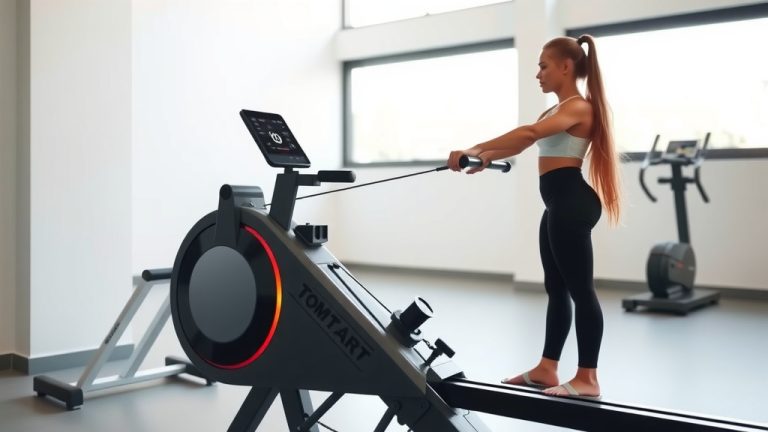
This is where your arms truly shine. After your legs have pushed and your core has leaned back, your arms pull the handle towards your body. This powerful pull activates your biceps and forearms. You feel this action directly as you bring the handle in.
The Recovery Phase
During recovery, your arms extend again to prepare for the next stroke. Your triceps work here to push the handle back out. This full range of motion keeps your arm muscles engaged throughout the entire workout.
Arms Are Not the Main Driver
It’s important to remember that your legs generate most of the power on a rowing machine. Research often connects the leg drive as contributing up to 60% of the force (NIH). Your core provides about 20%, and your arms contribute the remaining 20%.
Trying to power the stroke mainly with your arms is a common mistake. It can lead to fatigue and less effective workouts. Your arms are crucial, but they follow the lead of your legs and core.
Muscles Worked in Your Arms During Rowing
When you row, several muscles in your arms get a good workout. It’s more than just one muscle; it’s a team effort. Here’s a quick breakdown:
-
Biceps: These muscles on the front of your upper arm contract during the pull phase. They are the primary pulling muscle in your arm.
-
Triceps: Located on the back of your upper arm, triceps extend your arms during the recovery phase. They push the handle away from your body.
-
Forearms and Grip Muscles: Your forearms work constantly to grip the handle. This provides excellent grip strength training. We found that a strong grip is essential for overall pulling strength.
-
Shoulders (Deltoids): Your shoulder muscles help stabilize your arms and assist in the pulling motion. They contribute to the overall strength you generate.
Building Arm Strength and Definition
Rowing machines are excellent for building muscular endurance and definition in your arms. You’re performing repetitive pulls against resistance, which tones the muscles. Many experts say this type of exercise is great for lean muscle mass.
However, if your goal is to build massive arm size, like bodybuilders achieve with isolated bicep curls, rowing alone might not be enough. It builds functional strength, meaning strength useful for everyday movements. It helps you become stronger for tasks like lifting and carrying.
| Arm Muscle | Primary Role in Rowing | Benefit |
|---|---|---|
| Biceps | Pulling handle to body | Muscular endurance, tone |
| Triceps | Extending arms back | Arm extension strength |
| Forearms | Grasping the handle | Grip strength, endurance |
| Deltoids (Shoulders) | Stabilizing, assisting pull | Shoulder stability, support |
Rowing for Overall Fitness
While your arms get a good workout, remember that rowing is a fantastic full-body exercise. It works your legs, core, back, and arms all at once. This makes it an incredibly efficient way to burn calories and improve cardiovascular health (Mayo Clinic).
The compound nature of rowing means multiple joints and muscles work together. This is a very effective way to improve overall fitness and coordination. It’s why many fitness enthusiasts recommend it.
How to Maximize Arm Engagement
To get the most out of your arm workout on a rowing machine, focus on proper form. We found that technique is always more important than raw power. Here are some tips to really feel it in your arms:
- Leg Drive First: Initiate the stroke with a strong push from your legs.
- Lean Back: After your legs push, lean back slightly from your hips.
- Then Pull: Only then do your arms perform a strong, controlled pull towards your body. Imagine your elbows pointing back.
- Control the Recovery: Extend your arms fully before bending your knees again. This engages your triceps.
- Vary Resistance: While legs still lead, a slightly higher resistance setting can make the pull feel more demanding on your arms.
Common Mistakes to Avoid
Some common mistakes can reduce the effectiveness of your arm workout and even lead to injury. Avoid pulling with your arms too early in the stroke. This often happens when you don’t use your legs enough (NIH). It wastes energy and puts undue strain on your arms and back.
Also, don’t round your back or hunch your shoulders. Maintain a tall, upright posture throughout. This ensures your core and back muscles support your arms properly. Good posture protects your spine and lets your muscles work efficiently.
Here’s a quick checklist to help you get the most from your rowing arms:
- Check your posture before each stroke.
- Ensure your legs power the initial drive.
- Pull the handle towards your lower ribs.
- Keep your elbows close to your body.
- Extend arms fully during recovery.
- Maintain a firm but relaxed grip.
What Rowing Won’t Do for Your Arms
While rowing is excellent, it won’t replace everything. It isn’t designed for isolated muscle growth in the same way weightlifting is. If you’re chasing very specific arm hypertrophy, you might need more.
You won’t get the same targeted growth as doing bicep curls or tricep extensions. Rowing focuses on compound movements and muscular endurance. It’s about overall fitness, not bodybuilding isolation.
Combining Rowing with Other Exercises
For truly sculpted arms, consider combining rowing with other exercises. You could add some dumbbell curls for biceps. Tricep dips or overhead extensions would benefit your triceps. This approach gives you the best of both worlds.
Pairing cardiovascular benefits of rowing with strength training rounds out your fitness routine. Many guidelines point to a mix of cardio and strength for optimal health (CDC). This ensures all your muscle groups get the attention they need.
Conclusion
Yes, a rowing machine is indeed good for your arms, contributing to their tone, strength, and endurance. It works your biceps, triceps, forearms, and shoulders effectively. However, it’s essential to remember that rowing is a full-body exercise, with the legs and core doing most of the work. Focusing on proper technique ensures your arms engage optimally and safely. By integrating rowing into your fitness routine, you can build strong, functional arms as part of a healthier, more capable body. If you want maximum arm definition, consider adding targeted strength exercises alongside your rowing workouts.
Can rowing replace traditional arm workouts?
Rowing can’t fully replace traditional, isolated arm workouts if your main goal is significant muscle hypertrophy. It provides excellent endurance and toning, but for building specific bulk, you might need to add exercises like bicep curls or tricep extensions.
How often should I row for arm benefits?
For general fitness and arm benefits, aim for 3-5 rowing sessions per week. Each session could be 20-40 minutes. Consistency is key to seeing results, both in your arms and overall fitness.
Does resistance level affect arm workout?
While the legs still drive the power, a higher resistance setting can make the pulling phase feel more challenging for your arms and back. This can lead to increased muscle activation and a more intense workout for those muscle groups during the pull.
Will rowing make my arms bulky?
Generally, rowing will make your arms more toned and functionally strong rather than bulky. It promotes lean muscle development and muscular endurance. Building significant bulk typically requires very heavy resistance training and specific dietary considerations.
What’s the best way to prevent arm fatigue while rowing?
To prevent arm fatigue, focus on engaging your legs and core primarily, as they are your most powerful muscles. Allow your arms to act as connections rather than main drivers. Ensure you have proper form and maintain a consistent, efficient stroke rhythm. Avoid gripping the handle too tightly, which can tire your forearms quickly.