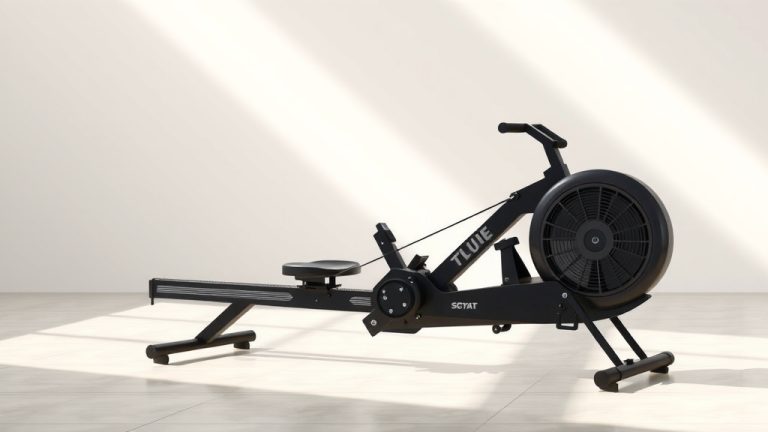
How To Use Rowing Machine?
To use a rowing machine effectively, sit with knees bent, feet strapped in, and grasp the handle. Initiate the stroke with a powerful leg drive, followed by leaning back slightly and pulling the handle towards your upper abdomen, known as the “drive.”
Then, reverse the motion smoothly: extend arms, lean forward, and bend knees to return to the starting position for the “recovery” phase, ensuring a continuous, fluid rhythm.
- Get started by understanding the four main parts of a rowing stroke: the catch, drive, finish, and recovery.
- Adjust your foot straps and damper setting to match your fitness level for a comfortable, effective workout.
- Prioritize proper form over speed or power to prevent injuries and maximize muscle engagement.
- Avoid common mistakes like rounding your back or pulling with just your arms; focus on a powerful leg push.
- Rowing offers a full-body workout, enhancing cardiovascular health and muscle strength with low impact.
How To Use Rowing Machine?
Learning how to use a rowing machine can seem a bit daunting at first. However, it’s one of the most effective full-body workouts you can do. We found that mastering the basic technique makes a huge difference. Think of it as a dance with four distinct steps.
Getting Started: Your First Steps
Before you even pull the handle, you need to set up your machine. This initial preparation is key for comfort and safety. Don’t just jump on; take a moment to adjust things. It makes your workout much more enjoyable.
Adjusting Your Machine
Most rowing machines have a damper setting, usually a lever on the side of the fan. This isn’t about intensity; it’s about the “feel” of the water. Many experts say a lower setting (like 3-5) is often sufficient for beginners (American Council on Exercise). It simulates a lighter boat.
We found that a lower damper setting helps you focus on technique rather than brute force. Experiment a little to see what feels right for you. It’s like finding the right gear on a bike for different terrains.
The Foot Straps Matter
Your feet need to be secure but not constricted. Place your feet on the footplates so the strap goes over the widest part of your foot. This is usually where your toes meet your foot. You want your heels to be able to lift slightly during the stroke.
A good strap placement means your feet feel stable. It allows you to drive powerfully with your legs. Loose straps can reduce your power and even cause discomfort. Make sure they are snug.
Understanding the Rowing Stroke
The rowing stroke is a continuous, fluid motion, but it breaks down into four main phases. Many experts agree that understanding each part helps you row more efficiently (Concept2). It’s like learning the notes before playing a song.
The Catch: Ready to Go
This is your starting position. Sit tall with your knees bent, shins vertical, and arms extended forward. Your shoulders should be relaxed, and your back straight. You’re coiled and ready to explode.
Your hands should grip the handle with a relaxed overhand grip. Imagine you’re about to push off a wall with your feet. This position is about setting up for power, not just sitting there.
The Drive: Powering Through
The drive is the most powerful part of the stroke. Begin by pushing hard with your legs. It’s like a powerful jump. As your legs extend, gently lean back from your hips and pull the handle towards your upper abdomen.
Your arms finish the pull, but remember, it’s a legs-first, then body, then arms sequence. Research often connects a strong leg drive with increased calorie burn (NIH). This phase should feel controlled and strong.
The Finish: Lean Back and Relax
At the finish, your legs are fully extended, you’re leaning back slightly (around 11 o’clock if the catch was 12 o’clock), and the handle is at your sternum or rib cage. Your elbows are bent, tucked close to your body. You’ve completed the power part.
This position allows for a moment of stability. It sets you up for the recovery phase. Don’t lean too far back; that can strain your lower back. Just a slight, controlled lean.
The Recovery: Glide Forward
Now, reverse the drive sequence smoothly. First, extend your arms forward. Next, pivot forward from your hips, letting your body lean towards your legs. Finally, allow your knees to bend as you slide forward on the seat.
The recovery should be about twice as long as the drive. This phase allows you to breathe and prepare for the next powerful stroke. It’s often described as a controlled return to the catch.
Common Mistakes to Avoid
Even experienced rowers sometimes make these errors. Being aware helps you correct them quickly. Avoid these common pitfalls for a smoother, more effective workout:
- “Arm Pulling” Too Soon: Don’t yank the handle with your arms before your legs have driven. Let your legs do the work first.
- Rounding Your Back: Keep your back straight and engaged. A rounded back can lead to strain and injury.
- Over-Compressing at the Catch: Don’t jam your knees too close to your chest. Your shins should be vertical, not past vertical.
- “Shoot the Slide”: This happens when you extend your legs too quickly without engaging your body and arms. Your body should move with your legs, not after them.
- Pulling to Your Chin: The handle should come to your upper abdomen/rib cage, not your chin. Pulling too high is inefficient.
Setting Up Your Workout
A good workout routine starts with preparation and ends with reflection. It’s more than just getting on and pulling. We found that a structured approach leads to better results and consistency.
Warm-up and Cool-down
Always start with a 5-10 minute warm-up. This could be light rowing at an easy pace. It prepares your muscles and gets your heart rate up. Skipping this step can increase injury risk (Mayo Clinic).
Finish with a 5-10 minute cool-down, similar to your warm-up pace. Follow this with some gentle stretching, especially for your hamstrings, glutes, and back. Your body will thank you.
| Workout Type | Duration | Intensity |
|---|---|---|
| Beginner Steady State | 20-30 mins | Easy, conversational pace |
| Interval Training (HIIT) | 20-30 mins | Short bursts of max effort, then rest |
| Pyramid Workout | 30-45 mins | Increasing, then decreasing, intensity/distance |
| Long Endurance | 45-60+ mins | Consistent, moderate pace |
Benefits of Rowing
Why choose rowing? The benefits are extensive. It’s one of the few machines that offers a truly full-body workout. Many experts highlight its cardiovascular and strength advantages.
Research often shows rowing strengthens your legs, core, back, and arms (Harvard Health Publishing). It also improves your lung capacity and helps burn calories effectively. It’s a low-impact option too, which is great for your joints.
Is Rowing Right For You?
Rowing is accessible to almost anyone, regardless of fitness level. It’s easily scalable; you control the intensity. If you’re looking for an efficient workout that builds strength and endurance without high impact, rowing is an excellent choice. It works for many people.
Mastering Your Stroke: A Checklist
Use this quick checklist to monitor your form during your workout. Aim for a fluid, continuous motion. This helps reinforce good habits and powerful strokes.
- Did I push hard with my legs first?
- Is my back straight, not rounded?
- Are my arms extending forward before my knees bend?
- Is the handle coming to my upper abdomen?
- Am I maintaining a smooth, consistent rhythm?
Conclusion
Mastering how to use a rowing machine is an achievable goal for anyone. By focusing on proper setup, understanding the four phases of the stroke, and avoiding common errors, you can transform your fitness routine. Remember, it’s about consistency and form over speed. With practice, you’ll find yourself gliding through your workouts, enjoying the full-body benefits and feeling stronger with every stroke. So, grab that handle and get rowing!
How often should a beginner use a rowing machine?
For beginners, we found that starting with 2-3 times per week is ideal. This allows your body to adapt to the new movements and helps prevent overtraining. You can gradually increase frequency as your fitness improves.
What is a good starting duration for a rowing workout?
A good starting duration for beginners is often 15-20 minutes per session. Focus on maintaining proper form throughout this time. You can extend your workouts by 5 minutes each week as you get fitter.
What resistance setting should I use on a rowing machine?
Most experts recommend that beginners start with a damper setting of 3-5. This provides enough resistance to feel the work but allows you to focus on developing good technique without excessive strain.
Should I warm up before using a rowing machine?
Yes, a warm-up is important. Spend 5-10 minutes on light cardio, like walking or easy rowing, to prepare your muscles and cardiovascular system. This can reduce the risk of injury and improve performance.
Can rowing machines help with weight loss?
Absolutely, rowing machines are excellent for weight loss. They provide a high-calorie-burning, full-body workout that improves cardiovascular health and builds muscle, both of which support effective weight management.