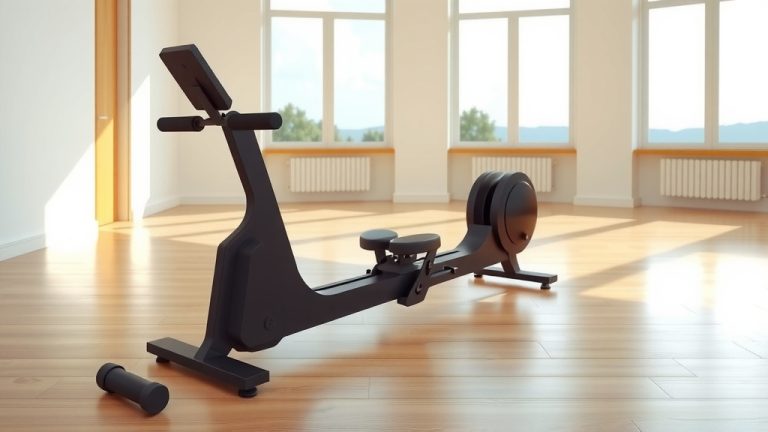
How To Get The Most Out Of Rowing Machine?
To get the most out of your rowing machine, focus on mastering proper technique, incorporating varied workouts, and maintaining consistent effort.
This ensures you engage your entire body efficiently, maximize calorie burn, and build strength and endurance effectively with every session.
For those looking for the quick answers, here’s a TL;DR on maximizing your rowing machine use:
- Master your stroke form early to prevent injury and boost efficiency.
- Vary your workouts with intervals and steady-state rows to target different fitness goals.
- Stay consistent with your routine, even if sessions are short.
- Track your progress to see improvements and stay motivated.
- Always include a warm-up and cool-down for better performance and recovery.
How To Get The Most Out Of Rowing Machine?
Unlocking the full potential of your rowing machine means focusing on technique, diverse training, and smart pacing. It’s about making every stroke count for fitness and enjoyment. We found that a thoughtful approach makes a huge difference in your results.
Perfecting Your Rowing Form Is Key
Think of proper form as your rowing superpower. It keeps you safe and helps you work all the right muscles effectively. Many experts say that bad form can lead to injury and less effective workouts (Mayo Clinic). Let’s break it down into easy steps.
The Setup: Getting Ready
Sit on the seat with your feet securely strapped in. Make sure the straps are snug across the widest part of your foot. Your shins should be vertical, and your arms extended forward, grasping the handle with an overhand grip. This is your starting “catch” position.
The Drive: Powering Through
Initiate the drive by pushing strongly with your legs. Imagine pushing off a wall with both feet. As your legs extend, lean back slightly from your hips and pull the handle towards your lower ribs. Keep your core tight. It’s a powerful, fluid motion, like a spring uncoiling.
The Finish: The End of the Stroke
At the finish, your legs should be fully extended, your body leaning slightly back, and the handle should be at your lower ribs. Your elbows will be bent and close to your body. This is where you pause briefly, feeling the work your muscles just did.
The Recovery: Returning Forward
Reverse the motion smoothly. Extend your arms first, then lean forward from your hips. Finally, bend your knees to slide back towards the catch position. It’s a controlled movement, letting your body rest before the next powerful drive. Think of it as a graceful slide back.
Mixing Up Your Workouts
Doing the same workout every day can get boring and lead to plateaus. Varying your routine keeps things fresh and challenges your body in new ways. This is crucial for continued progress and preventing boredom.
Steady-State Cardio: Building Endurance
These are longer, moderately paced rows. You should be able to hold a conversation during steady-state workouts. Many fitness professionals recommend these for building a strong aerobic base and improving heart health (NIH).
High-Intensity Interval Training (HIIT): Boosting Power
HIIT involves short bursts of intense rowing followed by brief recovery periods. For example, 30 seconds of all-out effort, then 60 seconds of easy rowing. Research often connects HIIT with significant improvements in calorie burn and anaerobic fitness.
Pyramid Workouts: Structured Challenge
In a pyramid workout, you gradually increase your effort or distance, then decrease it. You might row 1 minute hard, 2 minutes hard, 3 minutes hard, then 2 minutes hard, 1 minute hard. This structure can be great for mental engagement and physical challenge.
Consistency Over Intensity
It’s better to row for 20 minutes consistently three times a week than to do one grueling hour-long session once a month. Regularity builds habits and allows your body to adapt and strengthen over time. Small, consistent steps add up to big results.
Tracking Your Progress
Most rowing machines have monitors that track distance, time, pace, and calories. Use these numbers! Seeing your improvements, even small ones, is a huge motivator. You can also log your workouts in a journal or app to monitor your fitness journey.
Nutrition and Hydration Matters
What you put into your body directly impacts your energy and recovery. Staying well-hydrated is crucial, especially during and after workouts. Eating a balanced diet with protein, healthy fats, and complex carbohydrates will fuel your performance.
Listening to Your Body and Recovering Smart
Pushing yourself is good, but overtraining is not. Pay attention to how your body feels. If you’re feeling overly tired or sore, take a rest day or do a lighter recovery row. Good sleep is also incredibly important for muscle repair and overall well-being.
Here’s a quick look at some common rowing mistakes and how to fix them:
| Common Mistake | The Fix |
|---|---|
| Pulling with arms too early | Focus on initiating the drive with your legs first. |
| Hunching over the handle | Keep your chest open and shoulders relaxed. |
| Not fully extending legs | Push through your heels until legs are straight. |
| Rushing the recovery | Extend arms, then lean, then bend knees smoothly. |
Your Pre-Row Checklist
Before you even grab that handle, a quick check can make your workout safer and more effective. It only takes a moment.
- Hydration: Have water nearby.
- Foot straps: Are they secure and snug?
- Monitor settings: Is it reset and ready to track?
- Warm-up: Have you done 5-10 minutes of light cardio?
- Clear space: Is the area around your machine clear of obstacles?
Conclusion
Getting the most out of your rowing machine is a journey, not a destination. By focusing on proper form, varying your workouts, staying consistent, and listening to your body, you’ll unlock a world of fitness potential. Remember, every stroke brings you closer to your goals. Enjoy the ride!
How many calories can I burn on a rowing machine?
The number of calories you burn on a rowing machine varies based on your weight, intensity, and duration. A moderately intense 30-minute session can burn anywhere from 200 to 400 calories or more. Heavier individuals and higher intensity workouts typically lead to a greater calorie expenditure.
Is rowing a full-body workout?
Yes, rowing is widely considered a full-body workout. It engages roughly 86% of your muscles, including your legs (quads, hamstrings, glutes), core (abs, lower back), and upper body (back, shoulders, arms). This makes it highly efficient for comprehensive fitness.
How often should I use a rowing machine for best results?
For best results, aim to use your rowing machine 3-5 times a week. Beginners might start with 20-30 minute sessions, gradually increasing duration or intensity. Consistency is more important than infrequent, very long workouts.
Can rowing help me lose weight?
Absolutely! Rowing is excellent for weight loss because it’s a high-calorie-burning, full-body exercise that also builds muscle. Muscle mass helps boost your metabolism. Combine it with a balanced diet, and you’ll create the necessary calorie deficit for losing weight.
What is a good beginner rowing workout?
A good beginner rowing workout might start with a 5-minute easy warm-up. Then, row for 15-20 minutes at a moderate, steady pace where you can still talk comfortably. Finish with a 5-minute cool-down and some light stretching. Focus on maintaining good form throughout the entire session.