Is A Rowing Machine Hard On Your Knees?
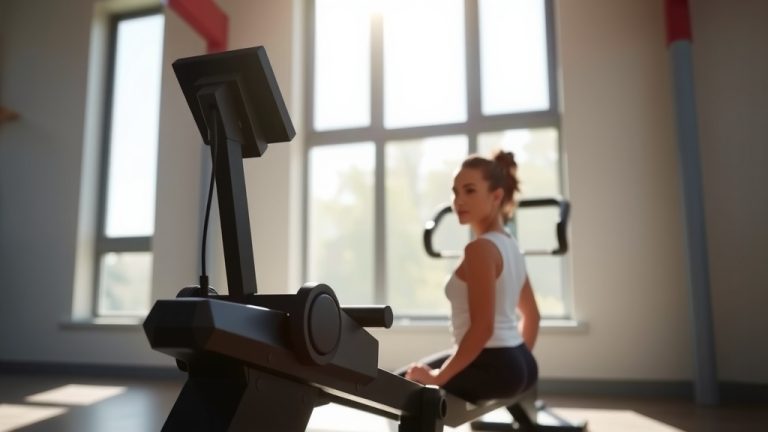
A rowing machine is generally kind to your knees because it’s a low-impact exercise that minimizes joint stress. When performed with proper technique, rowing can even strengthen the muscles surrounding your knees, offering protection and support.
You can enjoy a full-body workout without the jarring impact often associated with running or jumping, making a rowing machine a great option for many people seeking joint-friendly fitness.
Here’s a quick rundown of what you’ll discover in this post:
- Rowing is a low-impact exercise, gentle on your knees compared to many others.
- Proper form is key to protecting your knees and maximizing benefits.
- Adjusting your machine and listening to your body helps prevent discomfort.
- Building strong supporting muscles can improve knee resilience.
- Rowing can actually enhance knee health by promoting joint lubrication.
Is A Rowing Machine Hard On Your Knees?
No, a rowing machine is not inherently hard on your knees when used correctly. It is widely considered a low-impact exercise, making it a knee-friendly option for many fitness enthusiasts.
Understanding Your Knees During Exercise
Your knees are truly amazing structures, acting as the bridge between your upper and lower body. They allow for movement but can also bear a lot of weight, especially during exercise. Protecting them means understanding how different movements affect them.
When you work out, your knee joints experience compression and extension. High-impact activities like running can create significant force. A rowing machine, in contrast, offers a more controlled and fluid motion for your joints (Cleveland Clinic).
The Rowing Stroke: What Happens to Your Knees?
Imagine the rowing stroke as a beautiful, flowing dance with four main steps. Each step involves your knees, but in different ways. Let’s break down these distinct phases of rowing to see how your knees move.
Understanding each phase helps you maintain good form. Good form is your best friend for happy and healthy knees while rowing. You’ll feel the difference, we found, when you get it right.
The Catch Phase: Gentle Bend
This is where you start, up at the front of the machine, with your knees bent deeply. Your shins are almost vertical, and your body is compressed. The key here is to keep your heels down and engaged, ready for the drive.
During the catch, your knees are under some compression, but it should feel like a gentle stretch. You’re simply gathering your power, not straining anything. Many experts say this phase prepares your muscles without undue stress.
The Drive Phase: Powerful Extension
Now, push off with your legs, driving back explosively! This is where your powerful leg muscles extend your knees. Your glutes and quads do the heavy lifting here, propelling your body backward.
Your knees extend almost fully but should not lock out. Locking your knees can create unnecessary strain on the joint. Instead, maintain a slight, soft bend even at full extension (Mayo Clinic).
The Finish Phase: Slight Bend
You’re leaning back slightly, handle to your core, with your legs mostly straight. Your knees still maintain that soft, gentle bend. This isn’t a high-stress point for your knees at all.
The finish allows your core to engage and complete the powerful stroke. Your knees are stabilizing, not actively pushing, making this a low-stress moment for them. We found that focus here is often on core strength.
The Recovery Phase: Back to the Catch
This is the reverse of the drive, where your body slides forward, bringing your knees back to a deep bend. It’s a controlled movement, letting your arms and core lead you. Your knees simply follow the path your body creates.
Here, the emphasis is on a smooth, unhurried return. Allowing your body to glide forward naturally prevents jerking movements. This smooth bending action is far less impactful than, say, running downhill.
Is Poor Form Putting Your Knees at Risk?
Absolutely. While rowing is knee-friendly, bad form can quickly turn it into a knee irritator. Think of it like this: even a perfect car can break down if you drive it poorly. We found that common mistakes can lead to issues.
For example, if you push with your arms and back before your legs, you might hyperextend your knees. Or, if you try to pull the handle too far back, you might torque your body. These small errors accumulate over time and cause discomfort.
The Role of Proper Technique
Good technique is your ultimate shield against knee pain on the rowing machine. It ensures that the forces are distributed evenly. You’re engaging the right muscles and protecting your delicate joints.
Think of it as learning to ride a bike; once you get the form, it feels natural. We found that focusing on these simple points below can make a huge difference:
- Legs, Core, Arms: Push with your legs first, then swing your torso, then pull with your arms.
- Soft Knees: Never lock your knees out at the end of the drive. Keep a micro-bend.
- Heels Down: Keep your heels connected to the footplates for as long as possible.
- Controlled Recovery: Let your hands move away, then swing your body, then bend your knees.
- Engage Core: A strong core supports your back and helps power the stroke efficiently.
- Shoulders Relaxed: Don’t hunch or tense your shoulders; keep them down and loose.
Adjusting Your Rowing Machine for Knee Comfort
Your rowing machine isn’t a “one size fits all” tool; it needs tailoring. Small adjustments can make a big impact on knee comfort. You want the machine to work for you, not against you.
Make sure your foot straps are secure but not overly tight. Your feet should feel stable but not constricted. Also, consider the damper setting; a lower damper might feel smoother and put less initial strain on your knees (NIH).
Listening to Your Body: Pain vs. Effort
There’s a big difference between working hard and feeling pain. Effort feels like muscle fatigue or a good burn. Pain, especially sharp or persistent pain in your knees, is your body’s way of saying “Stop!” You need to pay attention to these signals.
If you feel knee discomfort, ease up immediately. Don’t push through it. Re-check your form, adjust the machine, or take a break. Your body knows best, and ignoring warning signs can lead to bigger problems.
Rowing Machine vs. Other Cardio: Knee Impact
How does rowing stack up against other popular cardio workouts when it comes to your knees? Let’s take a quick look. You might be surprised at the differences in joint stress levels.
| Exercise | Knee Impact Level | Benefits for Knees |
|---|---|---|
| Rowing Machine | Low | Strengthens surrounding muscles, improves joint lubrication. |
| Running | High | Can build bone density, but high impact. |
| Cycling | Very Low | Non-weight bearing, excellent for rehab. |
| Jump Rope | High | Good for cardiovascular health, but very jarring. |
Strength Training for Resilient Knees
Think of your leg muscles as a protective armor for your knees. Strong quadriceps, hamstrings, and glutes help stabilize the joint. They absorb shock and keep things moving smoothly. You want these muscles to be fit and ready for action.
Exercises like squats, lunges, and calf raises can strengthen these crucial muscles. You don’t need heavy weights; bodyweight exercises are very effective. Many experts recommend incorporating these into your routine for overall knee health (ACSM).
Can Rowing Actually Improve Knee Health?
Yes, for many people, rowing can be beneficial for knee health! As a low-impact exercise, it encourages blood flow to the joint. This blood flow helps deliver nutrients and removes waste, promoting healthier joint tissue.
The controlled movement also helps produce synovial fluid, which lubricates your joints like oil in an engine. Research often connects regular, low-impact activity with improved joint function (NIH). So, you’re not just working out; you’re nurturing your knees.
Conclusion
A rowing machine is a fantastic piece of equipment for a full-body workout, and you can rest easy about your knees. It’s a low-impact choice that, with proper form and attention to your body, can actually support and improve knee health. Focus on smooth, controlled movements, listen to your body’s signals, and make those small adjustments, and you’ll enjoy a powerful workout without unnecessary strain. Your knees will thank you!
Is a rowing machine good for bad knees?
Yes, a rowing machine can be a great option for individuals with “bad” knees, provided they use correct form and start with light intensity. Its low-impact nature means less jarring on the joints compared to high-impact exercises like running. Always consult with a doctor or physical therapist if you have pre-existing knee conditions.
What are the signs I’m using a rowing machine wrong and hurting my knees?
You might notice a sharp pain, clicking, or grinding sensation in your knees during or after your workout. Other signs include swelling around the kneecap or persistent aching. If you feel any of these, stop, re-evaluate your form, and consider lowering the intensity.
Can rowing strengthen the muscles around my knees?
Absolutely! Rowing is an excellent way to strengthen the quadriceps, hamstrings, and glutes, which are vital for knee support and stability. Stronger muscles around the joint help absorb shock and prevent injury.
How can I make my rowing machine workout even more knee-friendly?
To make it extra knee-friendly, ensure your feet are securely but comfortably strapped in, start with a lower damper setting for a smoother feel, and focus on pushing primarily with your heels. A good warm-up and cool-down are also very beneficial.
Is it better to row with straight legs or slightly bent knees?
You should never fully lock out your knees, keeping a slight, soft bend even at the full extension of the drive phase. This “soft knees” approach protects your joints from hyperextension and ensures continuous muscle engagement, we found.