
What Is the Difference Between Magnetic and Water Rowing Machines?
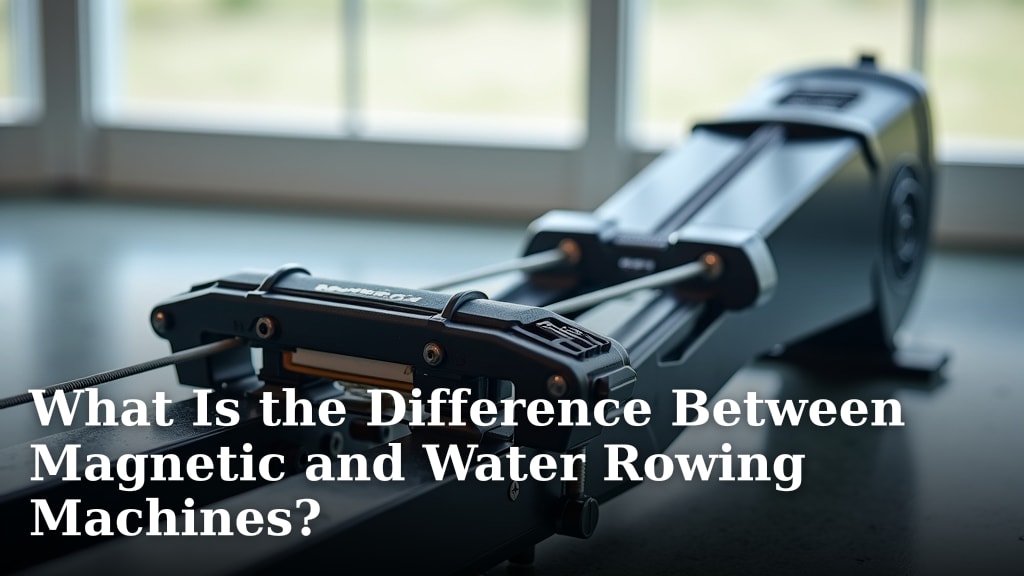
The main difference between magnetic and water rowing machines lies in their resistance systems and feel. Magnetic rowers use magnets for adjustable, quiet resistance, while water rowers use a flywheel in a water tank, mimicking natural rowing.
When you’re looking for a rower, understanding these differences helps you pick the right one. Your choice often comes down to noise preference, the feel of the stroke, and how much space you have. Both types offer a great workout, but they feel very different as you row.
- Magnetic rowers are quiet and offer consistent resistance.
- Water rowers give you a smooth, realistic rowing feel.
- Resistance adjustment differs between the two types.
- Consider your budget and available space.
We’ll walk you through all the details, so you can decide which rower is best suited for your home gym and fitness goals. Let’s dive in!
Understanding the Core Differences Between These Rowers
When you’re choosing a rowing machine, the main distinction comes down to how they create resistance. This impacts both the feel of your workout and the sound it makes.
You’ll find that one uses magnets to create drag, while the other uses water. Both methods provide excellent exercise, but they really do offer a different experience.
Magnetic Rowing Machines: Quiet and Consistent Control
Magnetic rowers use a magnetic braking system. You pull the handle, and magnets create resistance against a flywheel. It’s like a hidden force making you work.
This type of rower is often a favorite for home use because of its low noise level. Imagine watching TV or listening to music without a loud swishing sound interrupting you. That’s a big plus for many people.
How Magnetic Resistance Works
Inside a magnetic rower, there’s a flywheel and a series of magnets positioned near it. When you row, the flywheel spins, and the magnets create a drag force. You typically adjust the resistance level by moving these magnets closer to or further away from the flywheel.
This mechanism gives you a consistent amount of resistance throughout your stroke. It feels smooth and predictable, much like cycling on a flat road. We found this predictability helps some users maintain a steady pace.
The Feel and Sound of a Magnetic Rower
When you use a magnetic rower, you’ll immediately notice how quiet it is. Many people describe the sound as a gentle hum, if anything at all. This makes it ideal if you live in an apartment or share your living space.
The resistance feels very uniform. It’s a “set it and forget it” kind of resistance where your effort doesn’t directly change the resistance during a single pull. You typically set your desired resistance level before you start your workout, and it stays at that level until you change it. This is great for interval training or when you want a specific challenge.
Water Rowing Machines: Mimicking the Real Thing
Water rowers are designed to give you an experience as close to rowing on actual water as possible. The primary component is a tank of water with a paddle-like flywheel inside.
This design makes a unique swishing sound, which many find motivating and immersive. It’s truly a different sensory experience compared to magnetic rowers.
How Water Resistance Works
With a water rower, you’re pulling against the resistance of water. When you pull the handle, the flywheel spins through the water in the tank. The harder and faster you pull, the more resistance you feel, just like when you’re rowing a boat on a lake.
This is often called “variable resistance.” Your effort directly dictates the resistance. So, if you’re looking for a workout that naturally adapts to your strength and speed, a water rower might be perfect for you.
The Feel and Sound of a Water Rower
The feel of a water rower is often described as smooth and organic. It truly feels like gliding through water. There’s a natural acceleration and deceleration through your stroke. Many users find this more engaging and less mechanical than other types of rowers.
The sound is a distinct, rhythmic sloshing or swishing. For some, it’s a meditative sound, a reminder of actually being on the water. For others, it might be a bit too loud if they prefer a totally silent workout. However, a major study on exercise motivation found that realistic sensory feedback can enhance workout enjoyment (Journal of Sports Sciences).
Key Differences at a Glance
Let’s summarize the main points to help you keep them straight. It often comes down to personal preference, doesn’t it?
| Feature | Magnetic Rowing Machine | Water Rowing Machine |
|---|---|---|
| Resistance System | Magnets passing a flywheel | Flywheel in a water tank |
| Feel of Stroke | Consistent, uniform, predictable | Dynamic, variable, mimics on-water rowing |
| Noise Level | Very quiet (gentle hum) | Audible “swishing” sound |
| Resistance Adjustment | Typically manual dial/lever, set before stroke | Effort-based: harder you pull, more resistance |
| Maintenance | Generally low, occasional cleaning | Low, might need water treatment pills annually |
| Price Range | Often slightly less expensive for entry-level | Can be higher due to specialized design |
Choosing Based on Your Lifestyle and Preferences
Which type of rower is “better” truly depends on you. Your living situation, your budget, and what kind of workout experience you enjoy all play a role.
Are you looking for something compact and simple, or do you crave a more immersive fitness journey? Many people find that trying both types, if possible, helps a lot.
Noise Considerations for Your Home
This is a big one for many home gym users. If you live in a shared space, or if noise sensitivity is an issue, a magnetic rower’s quiet operation is a significant advantage. You can work out early in the morning or late at night without disturbing anyone.
Conversely, if you prefer the ambiance of the swishing water and it doesn’t bother anyone else, a water rower gives you that unique audio feedback. It can be quite rhythmic and satisfying.
Workout Feel and Engagement
Think about how you like your resistance to feel. Do you prefer a steady, predictable challenge (magnetic)? Or do you want your workout to respond directly to your effort, feeling more like a sport (water)?
We found that athletes who train for competitive rowing often prefer water rowers due to the realistic feel. However, for general fitness and cardio, both types are extremely effective at engaging all major muscle groups.
Footprint, Storage, and Portability
Don’t forget to think about where your rower will live in your home. Both types of machines can be quite long, but many models offer convenient storage options.
Most magnetic and water rowers are designed to be stored upright, greatly reducing their floor footprint when not in use. Some even have wheels for easier movement around your home. Always check the dimensions and storage options for any model you’re considering.
Budget and Maintenance Expectations
When you’re comparing costs, magnetic rowers typically have a lower entry-level price point. This can make them an attractive option if you’re just starting out or working with a tighter budget.
Water rowers, especially those with solid wood frames, can be more of an investment. In terms of maintenance, magnetic rowers are generally very low-fuss. Water rowers might occasionally need water purification tablets to keep the tank clear, but this is a simple, infrequent task.
A Quick Checklist Before You Buy
To help you decide, here’s a final checklist of things to consider. Jot down your answers, and you’ll likely find your perfect match!
- What is your budget for a rowing machine?
- How important is a quiet workout environment to you?
- Do you prefer a consistent resistance or one that adapts to your effort?
- How much space do you have, and do you need to store it upright?
- Are you okay with a little bit of maintenance, like water treatment?
- Have you had a chance to try either type of rower before?

Conclusion
Choosing between a magnetic and water rowing machine really comes down to your personal preferences and living situation. Magnetic rowers offer quiet, consistent resistance, perfect for shared spaces. Water rowers give you that authentic, dynamic feel of rowing on water, complete with a satisfying swish.
Think about noise, the rowing feel you enjoy, and your budget. By carefully considering these factors, you can confidently select the rower that best fits your fitness journey. Go ahead and pick the one that will keep you motivated and moving!
Frequently Asked Questions
Is one type of rowing machine better for weight loss?
Not necessarily. Both magnetic and water rowing machines offer excellent full-body cardio workouts that burn calories and help with weight loss. Your consistency and effort on either machine are more important than the specific resistance type.
Can I get a good workout on a magnetic rower if I’m an experienced rower?
Absolutely! While water rowers mimic the real thing more closely, magnetic rowers still provide a challenging and effective workout. Many models offer high resistance levels suitable for strong athletes, letting you focus on power and endurance.
Do water rowers require a lot of maintenance?
No, water rowers are generally low-maintenance. You’ll typically need to add purification tablets to the water tank once every 6-12 months to prevent algae growth. This is a very simple process and takes just a few minutes.
Are magnetic rowers always cheaper than water rowers?
Magnetic rowers often have lower entry-level prices, making them more budget-friendly initially. However, prices vary widely by brand and features for both types. High-end magnetic rowers can cost as much as mid-range water rowers, so compare specific models.
Which type of rowing machine is quieter for apartment living?
Magnetic rowing machines are significantly quieter than water rowers. They produce only a minimal hum, if any, making them ideal for apartments or homes where noise is a concern for family or neighbors. Water rowers create an audible, rhythmic swishing sound.
