
Why Is My Rowing Machine Chain Squeaking?
Your rowing machine chain is squeaking because it likely needs lubrication or a good cleaning. Dust and grime can build up, causing friction and that annoying sound. A lack of proper maintenance is usually the main culprit.
That squeak isn’t just irritating; it can also be a sign of future problems if left unaddressed. Regular care for your rower’s chain is essential for its smooth operation and longevity. You want your workouts to be quiet and effective, right?
- Squeaking chains need lubrication.
- Dirt and grime cause friction.
- Regular cleaning prevents noise.
- Proper maintenance extends rower life.
Let’s dive into why your chain might be complaining and exactly how you can get your rowing machine back to its silent, smooth-gliding self.
Unraveling the Mystery of Your Squeaky Rowing Machine Chain
That annoying squeak from your rowing machine chain is usually a simple fix. It most often signals a need for maintenance and care. Think of it like a little plea for attention from your machine.
You want your workouts to be smooth and quiet, not a symphony of squeaks and groans, right? Let’s explore why this happens and how you can get things back on track.
Common Reasons Your Chain Is Complaining
We find that most chain noises stem from a few key issues. Understanding these helps you tackle the problem directly.
It’s not just about the noise; ignoring these can lead to bigger problems down the road, like accelerated wear and tear (American Council on Exercise).
Lack of Lubrication
This is probably the most common culprit. Chains need to be well-oiled to move smoothly. Without proper lubrication, metal grinds against metal.
Imagine riding a bicycle without oiling the chain. You’d hear a similar, grating sound. Your rowing machine chain is no different.
Over time, the factory lubricant can dry out or get pushed aside. This leaves your chain exposed and vulnerable to friction.
Dirt and Debris Accumulation
Your rowing machine, much like any other piece of exercise equipment, can gather dust, sweat, and grime. These tiny particles get trapped within the chain links.
When dirt builds up, it acts like sandpaper, causing friction and that irritating squeak. This also contributes to premature wear.
Even small amounts of debris can make a big difference in how smoothly your chain operates.
Chain Rust or Corrosion
If your rowing machine is in a humid environment or stored improperly, the chain can develop rust. Rust on a chain is a major source of noise and can severely impact performance.
Rust makes the chain stiff and causes it to drag. This increases resistance and creates a very distinct, grating sound.
Catching rust early is important. It can lead to weakening of the chain links if left untreated.
Improper Chain Tension
While less common, an incorrectly tensioned chain can also cause issues. If the chain is too loose, it might rub against components it shouldn’t.
Too much tension can also cause problems, putting undue stress on the chain and other parts. It’s like a guitar string – too loose or too tight, and it just doesn’t sound right.
Most rowing machines have a recommended tension. Checking your machine’s manual for this specification is a good idea.
Your Action Plan: Silencing That Squeak
Now that you understand why your chain is squeaking, it’s time to fix it. Don’t worry, these steps are straightforward and can be done at home.
You’ll be amazed at how much better your machine feels after a little TLC. It’s all about consistent care.
Gather Your Tools and Supplies
Before you start, make sure you have everything you need. This will make the process quicker and more efficient.
Having the right supplies on hand saves you from stopping halfway through. A little preparation goes a long way.
- Clean rags or microfiber cloths
- Degreaser (bike chain degreaser works well)
- Chain lubricant (specifically for bike chains or rowing machines)
- Small brush (an old toothbrush is perfect)
- Gloves (to keep your hands clean)
- Your rowing machine’s manual (for specific instructions)
Step-by-Step Chain Cleaning and Lubrication
Follow these steps carefully to ensure you clean and lubricate your chain properly. This process will take about 15-30 minutes, depending on the condition of your chain.
Patience here pays off. A rushed job might leave some dirt behind or miss spots needing lubrication.
Initial Inspection
First, take a good look at the chain. Identify any obvious areas of dirt, rust, or damage. This helps you focus your efforts.
Does it look dry? Is there a lot of visible gunk? Note down what you see.
Degreasing the Chain
This is where you remove all the old gunk. Apply your degreaser to a clean rag and gently wipe down the entire length of the chain.
For tougher spots or internal links, use a small brush to work the degreaser in. Wipe away all the loosened dirt and old lubricant.
Make sure to get into all the nooks and crannies. You want to see the chain links looking clean and shiny before moving on.
Drying the Chain Thoroughly
After degreasing, it’s vital to dry the chain completely. Any remaining degreaser or moisture can interfere with new lubricant.
Use a fresh, dry cloth and wipe the chain until it’s completely dry. You can even let it air dry for a few minutes for good measure.
Applying New Lubricant
Now for the good stuff! Apply a thin, even coat of chain lubricant to the entire length of the chain. Don’t overdo it; a little goes a long way.
Many experts recommend using specific chain oils (Bicycle Maintenance Guide). These are designed to penetrate deeply and resist dirt.
Cycle the chain a few times by pulling the handle. This helps distribute the lubricant evenly throughout the links.
After a few minutes, use another clean rag to wipe off any excess lubricant from the outside of the chain. Too much lube can attract more dust.
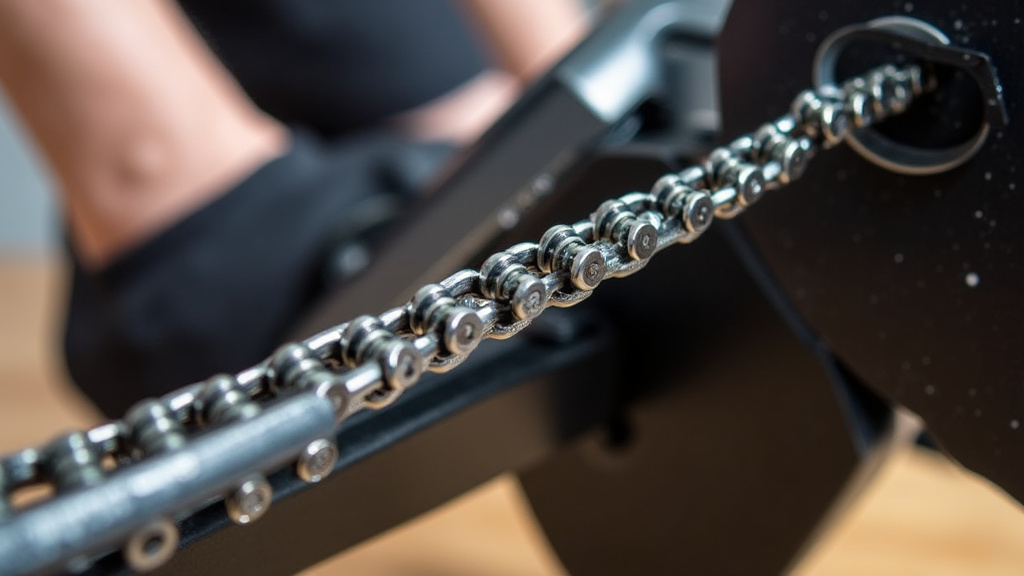
Maintaining a Silent Rowing Experience
Regular maintenance is your best defense against future squeaks. Think of it as a small investment of time that pays off in smooth, quiet workouts.
A little preventative care now saves you from bigger problems later. You want your machine ready when you are.
Establish a Maintenance Schedule
How often should you clean and lubricate your chain? It depends on how often you use your machine.
We found that many manufacturers suggest lubricating every 50-100 hours of use (Concept2). If you row several times a week, that might mean once a month or every other month.
If you notice the chain starting to look dry or hear a slight noise, that’s your cue to lubricate.
Here’s a simple checklist to keep your rowing machine chain in top shape:
- Wipe down the chain after every few workouts to remove sweat and dust.
- Inspect the chain regularly for dirt buildup or dry spots.
- Lubricate the chain every 50-100 hours of use, or as needed.
- Check chain tension periodically as per your machine’s manual.
- Store your rowing machine in a dry, low-humidity environment.
Choosing the Right Lubricant
Not all lubricants are created equal. Using the right product makes a big difference in effectiveness and longevity.
Avoid using WD-40 as a primary lubricant for your chain. While it’s great for displacing water, it’s a degreaser first and a lubricant second. It can dry out and leave your chain unprotected (Consumer Reports).
| Lubricant Type | Best Use Case | Pros | Cons |
|---|---|---|---|
| Dry Lube | Dry, dusty conditions | Attracts less dirt, cleaner | Needs more frequent application |
| Wet Lube | Wet, muddy (or indoor humid) conditions | Longer lasting, better protection | Attracts more dirt, can be messier |
| All-Purpose/Wax-based | General use, balanced conditions | Good balance of cleanliness & durability | May require specific cleaning |
For most indoor rowing machines, an all-purpose or wax-based bike chain lubricant works wonderfully. It offers good protection without attracting excessive dust.
If you’re unsure, check your rowing machine’s manual. They often recommend specific types of lubricants.
Addressing More Persistent Issues
What if the squeak remains even after a good cleaning and lubrication? Don’t despair; there are a few other possibilities.
Sometimes the issue might be deeper than just the chain itself. Let’s look at what else could be going on.
Damaged Chain Links
Occasionally, a chain link can become bent, stiff, or corroded beyond simple cleaning. This can cause persistent noise.
Carefully inspect each link for any signs of damage. If you find a compromised link, the chain might need replacement. You can often purchase replacement chains directly from your rowing machine manufacturer.
Issues with the Sprocket or Pulleys
The chain runs over sprockets and pulleys within your rowing machine. If these components are worn, dirty, or misaligned, they can also cause noise.
Check these parts for any visible damage or debris. A thorough cleaning of these areas, similar to how you cleaned the chain, might help.
If you suspect a deeper issue with these internal components, it might be time to consult your rowing machine’s support team.
Professional Assistance
If you’ve tried all these steps and the squeak persists, or if you’re uncomfortable performing the maintenance yourself, consider contacting the manufacturer’s customer service or a professional technician.
They can offer specific troubleshooting tips or guide you through more complex repairs. Sometimes a fresh pair of eyes (or hands) is all it takes.
Conclusion
You now know that a squeaky rowing machine chain is usually a simple fix. It often points to a need for lubrication or cleaning. By understanding the common causes, like lack of oil or dirt buildup, you can quickly diagnose the problem.
Taking a few minutes for proper cleaning and oiling will bring back that smooth, quiet operation. Consistent maintenance ensures your rowing machine stays in top condition for years. So, grab your supplies and give your rower the care it deserves for silent, effective workouts!
Frequently Asked Questions
How often should I lubricate my rowing machine chain?
Most manufacturers, like Concept2, suggest lubricating your chain every 50-100 hours of use. If you row frequently, this might mean once a month. Pay attention to how your chain looks and sounds; if it appears dry or starts making noise, it’s time for lubrication.
Can I use WD-40 on my rowing machine chain?
It’s generally best to avoid WD-40 as a primary lubricant for your chain. While it can displace water, it’s mainly a degreaser. It can dry out and leave your chain unprotected. We found that dedicated bike chain lubricants or specific rowing machine oils work much better.
What kind of lubricant is best for a rowing machine chain?
For most indoor rowing machines, an all-purpose or wax-based bike chain lubricant is an excellent choice. These types offer good protection without attracting too much dust. Check your machine’s manual, as some brands recommend specific products.
What if my chain is rusty? Can I still fix it?
If your chain has minor surface rust, you can try cleaning it thoroughly with a degreaser and a small brush, then lubricating it well. For significant rust, which can weaken the chain, replacement might be necessary. Regular cleaning and storage in a dry environment prevent rust.
My chain is clean and lubricated, but it’s still squeaking. What else could be wrong?
If the squeak persists, check for other issues. Look closely at the chain links for any signs of damage or stiffness. Also, inspect the sprockets and pulleys for wear, dirt, or misalignment. If you can’t identify the problem, contacting your rowing machine manufacturer’s support is a good next step.
