
What Is the Resistance Range on Most Home Rowing Machines?
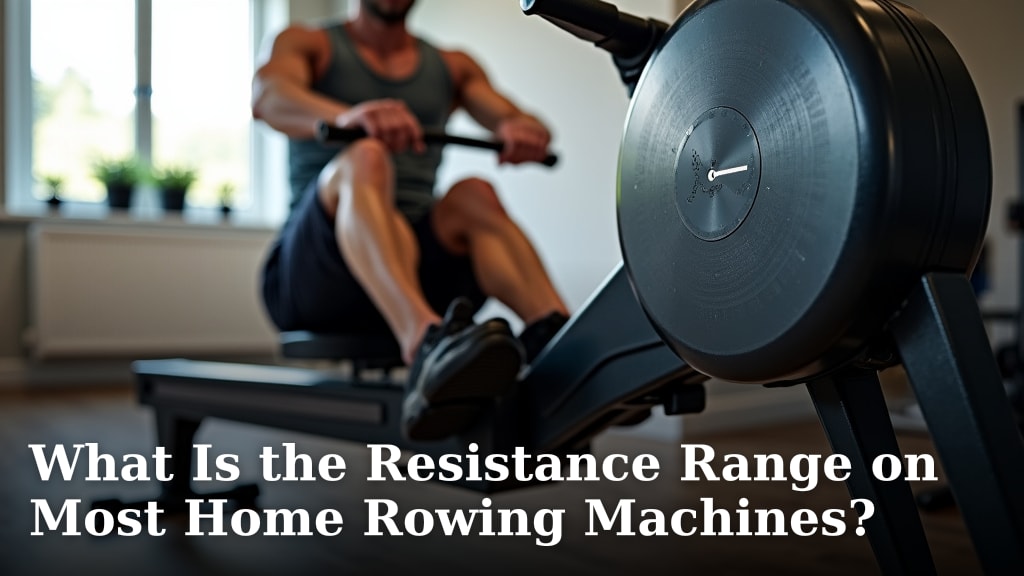
The resistance range on most home rowing machines typically falls between 5 to 10 levels. This adjustment allows you to control how hard you pull. You can find machines with fewer or more levels, but this is a common starting point. Understanding this range helps you tailor your workouts effectively.
Many rowers offer a variety of resistance types, like air, water, or magnetic. Each type provides a different feel and experience during your workout. We found that magnetic rowers often provide the most consistent and adjustable resistance across their range.
- Most rowers have 5-10 resistance levels.
- Resistance adjusts how hard you pull.
- Different rowers use air, water, or magnetic resistance.
- Magnetic rowers offer consistent, adjustable resistance.
Let’s dive into what these resistance ranges mean for your training and how to choose the right one for you.
Understanding Your Rowing Machine’s Resistance Levels
So, you’re curious about the resistance range on home rowing machines? It’s a smart question to ask! Understanding this helps you get the most out of every workout. Think of it like adjusting the difficulty on a bike. More resistance means you’re working harder with each pull. Fewer levels mean you have less control.
Most home rowers you’ll find offer a resistance range that feels pretty manageable for most people. We’ve found that the sweet spot for many machines is between 5 to 10 distinct levels. This gives you enough variety to switch things up. It lets you go from a gentle warm-up to a really challenging session without feeling overwhelmed by choices.
How Resistance Affects Your Workout
The resistance setting directly impacts how much effort you need to exert. When the resistance is low, it feels easier to pull the handle towards you. This is great for warm-ups, cool-downs, or longer, steady-state cardio sessions. You’re focusing on your form and getting your blood flowing.
As you increase the resistance, each stroke requires more force. This is where you build strength and power. It’s like trying to row upstream; you’re fighting against a stronger current. Higher resistance levels will boost your calorie burn and make your muscles work harder. They’re perfect for interval training or strength-focused rows.
We found that the number of levels isn’t always the most important factor. It’s also about how the resistance feels. Some machines offer a smooth, progressive increase, while others might feel jumpy between settings. This is where the type of resistance mechanism comes into play, which we’ll touch on more later.
Typical Resistance Ranges: What to Expect
When you look at a home rowing machine, you’ll often see a dial or buttons to adjust resistance. Most manufacturers aim for a range that’s accessible. For basic models, you might see 5 levels. This is enough to differentiate between easy, moderate, and hard. It’s a good starting point for beginners.
Mid-range rowers commonly offer 8 to 10 levels. This provides a bit more fine-tuning. You can really dial in the exact intensity you want for a particular workout goal. This range is very popular because it hits a good balance between variety and simplicity. You’re not drowning in options.
High-end or more specialized rowers can have anywhere from 12 to 20 levels, or even more. Some air rowers, for example, have virtually unlimited resistance because it’s directly tied to how hard you pull. The machine simply offers more air resistance the faster you move. This is a different kind of adjustability. It’s less about fixed “levels” and more about a dynamic response.
Why So Many Levels?
You might wonder why some machines have so many levels. It’s all about customization and progression. As you get fitter, what was once a challenging level will become easier. Having more levels means you can continue to push yourself without outgrowing the machine too quickly.
For athletes, having a wide range is essential for specific training protocols. They might need very precise resistance settings for certain drills or performance tests. Think of it like a musician needing a wide range of notes to create complex music. For a casual user, 5-10 levels is usually plenty.
We found that having too few levels can be frustrating if you’re looking to make small, incremental increases in difficulty. Conversely, having too many can be overwhelming if you’re not sure what setting to pick. It’s a balance!
Types of Resistance and Their Impact on Your Range
The type of resistance on a rower significantly changes how the levels feel and perform. It’s not just about the number of settings; it’s about the mechanics behind them. We’ve looked into the common types and how they affect your workout experience. The type of resistance on a rower significantly changes how the levels feel and perform, and our guide compares air and magnetic options.
Magnetic Resistance: Consistency is Key
Magnetic rowers use magnets and a metal flywheel. Adjusting the resistance involves moving the magnets closer to or further from the flywheel. This system is known for being quiet and smooth.
We found that magnetic rowers typically offer a very consistent and predictable resistance across their levels. When you set it to level 5, it will feel like level 5 every time. The adjustments are usually quite precise, making it easy to find your perfect setting. Many experts say this consistency is a major advantage (Cleveland Clinic).
Magnetic rowers often have a good range of resistance, typically between 5-15 levels. This makes them a popular choice for home users who want reliable performance. They’re generally low maintenance because there are no fans to clean or water tanks to manage.
Air Resistance: Responsive and Dynamic
Air rowers use a fan flywheel. The harder and faster you pull, the more air the fan moves, creating more resistance. This system is often called Air rowers use a fan flywheel, and our guide reviews the best air rowing machines for your home.“infinite resistance” because there aren’t distinct levels.
Instead of numbered settings, air rowers respond directly to your effort. Pull lightly, and it’s easy. Pull hard, and it’s very challenging. This means the resistance range is technically limitless, dictated entirely by your own power output. We found this can be incredibly motivating for some users.
The main difference here is that the resistance isn’t set by a dial. It’s a direct consequence of your rowing stroke. This makes it feel very dynamic and responsive. However, some people prefer the certainty of a numbered setting. Air rowers can also be noisier than magnetic ones.
Water Resistance: The Natural Feel
Water rowers use a paddlewheel in a tank of water. Like air rowers, the resistance is largely determined by how hard you pull. However, the water adds a unique, smooth, and rhythmic feel to the stroke.
Many users love water rowers for the soothing sound and the realistic feel of rowing on water. While they often have fewer “levels” (sometimes just 1-3 physical settings), the actual resistance can vary based on your stroke. The water provides a natural dampening effect.
We found that the resistance range on water rowers is often perceived as broad due to this dynamic response. It provides a good workout for both endurance and strength, though it might not offer the same level of fine-tuning as a magnetic system for specific strength goals.
Hydraulic Resistance: Compact and Affordable
Hydraulic rowers use cylinders filled with fluid or air. They are often the most compact and budget-friendly option. Resistance is adjusted by changing the fluid flow or air pressure within the cylinders.
Hydraulic rowers usually have a decent range of resistance levels, often in the 5-12 range. They are a great option for smaller spaces. However, some users report that the resistance can feel less smooth compared to magnetic or water rowers.
We found that the experience on hydraulic rowers can vary greatly by brand. Some offer surprisingly good resistance, while others might feel a bit artificial. They are a good entry point if you’re new to rowing and have budget constraints.

Choosing the Right Resistance Range for You
Deciding on the right rowing machine resistance range depends on your personal goals and fitness level. Don’t get too caught up in just the number of levels. Consider how you’ll use the machine.
For Beginners and Casual Fitness
If you’re just starting out or looking for a way to get some gentle exercise, a rower with 5-8 resistance levels is likely perfect. You need enough variation to feel like you’re progressing but not so much that it becomes confusing. A magnetic rower in this range is often a solid, user-friendly choice.
Focus on building consistency in your rowing stroke. You’ll want to find a level that allows you to maintain good form for your entire workout. We found that beginners often benefit from the predictability of magnetic resistance.
For Intermediate and Advanced Rowers
If you’re more experienced or have specific strength and conditioning goals, you might want a machine with 10+ resistance levels. This allows for more precise control over your training intensity. You can easily adjust for sprints, endurance pieces, or strength intervals.
Air rowers can also be excellent here, as they provide a challenge that scales directly with your effort. You won’t outgrow an air rower easily. If you’re aiming for peak performance, consider machines that offer a wide and responsive resistance spectrum.
Consider the “Feel” Over Just Numbers
Ultimately, the “feel” of the resistance matters more than the number of levels. Does it feel smooth? Is it easy to adjust? Does it provide the challenge you’re looking for?
We found that many users prefer the smoothness of magnetic resistance. Others enjoy the natural pull of water. Air rowers offer a progressive challenge that feels very organic. Test different types if you can, or read reviews carefully.
Here’s a quick checklist to help you decide:
- Do you want to build strength or focus on cardio?
- How important is a quiet workout?
- What’s your budget?
- Do you prefer a smooth, consistent feel or a dynamic response?
- How much space do you have for a rower?
- Are you a beginner or an experienced athlete?
Conclusion
As you can see, the resistance range on home rowing machines varies, but most fall between 5 to 10 levels. This provides a good spectrum for most users to tailor their workouts. Remember, the type of resistance—magnetic, air, water, or hydraulic—greatly impacts the feel and consistency of these levels. Don’t just focus on the number; consider how the resistance feels and responds to your effort. Your best bet is to choose a rower whose resistance range and type align with your current fitness level and future goals.
Frequently Asked Questions
Can I get a good workout with only 5 resistance levels?
Absolutely! Even with 5 resistance levels, you can achieve a great workout. You can use the lower settings for warm-ups and steady cardio, and the higher settings for strength building and intense intervals. It’s about how you use the available settings.
How do I know if I need more than 10 resistance levels?
If you’re an experienced rower or have specific strength training goals, you might benefit from more than 10 levels. This allows for finer adjustments to intensity, helping you push your limits further as you get fitter. For most casual to intermediate users, 10 levels offer plenty of variety.
Are air rowers better if I want unlimited resistance?
Air rowers offer a dynamic resistance that increases with your pulling speed, meaning it’s practically unlimited. This is great if you want a challenge that scales directly with your effort. However, if you prefer precise, set levels, a magnetic rower might be a better fit for you.
Is magnetic resistance always consistent across all levels?
Yes, magnetic resistance is known for its consistency. When you set a magnetic rower to a specific level, you can expect that same resistance every time you use it. This predictability makes it easier to track your progress and set specific training targets.
How do I adjust resistance on a water rower if there aren’t many levels?
Water rowers often have fewer physical resistance settings because the resistance is largely determined by how hard and fast you pull. The water provides a natural, smooth resistance that changes with your stroke intensity. Think of your rowing stroke itself as the primary adjustment method.
