Is A Rowing Machine A Good Total Body Workout?
Yes, a rowing machine offers a remarkable total body workout, engaging nearly 85% of your body’s muscles in a single, fluid motion.
It effectively combines strength training and cardiovascular conditioning, making it an incredibly efficient fitness tool for comprehensive physical development.
- You get a full-body workout that targets your legs, core, and upper body all at once.
- Rowing perfectly blends cardio and strength training, giving you a powerful dual benefit.
- It’s a low-impact exercise, which means it’s gentle on your joints while still providing a tough challenge.
- You can burn a significant amount of calories, making it fantastic for managing your weight and boosting fitness.
- Regular rowing improves your endurance and stamina, helping you feel stronger and more energetic every day.
Is A Rowing Machine A Good Total Body Workout?
Absolutely, a rowing machine delivers an excellent total body workout. This powerful piece of equipment engages nearly every major muscle group in your body.
The Power of the Rowing Stroke
When you picture a rowing machine, what comes to mind? Many people just see arms pulling. But the real magic of rowing is in its full-body movement. It’s a dynamic, sequential exercise that demands cooperation from your entire body.
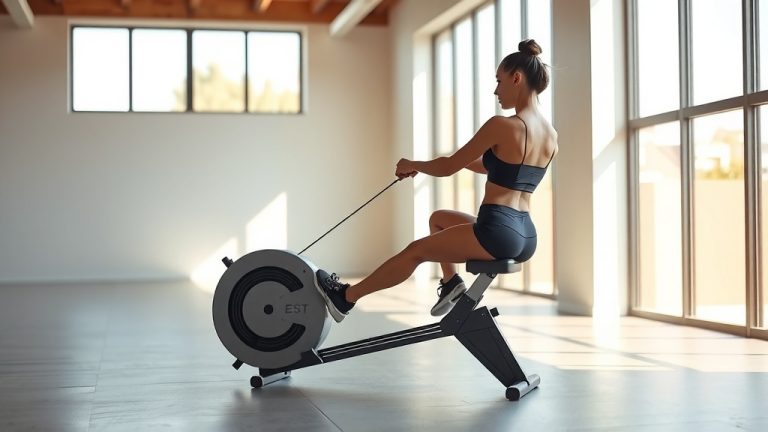
Think of it like this: you push with your legs, lean back with your core, and then pull with your arms. This isn’t just an arm workout; it’s a full symphony of muscle action. We found that the legs provide a significant portion of the power (Concept2).
Leg Day, Every Day? Not Quite!
While your legs do a lot of the heavy lifting, around 60% of the effort comes from them. You’re pushing off the foot stretcher with power, activating your quads, hamstrings, and glutes. This push creates the initial drive, much like jumping.
This powerful leg drive helps to build strong lower body muscles. Many experts point to the leg drive as the foundation of a good stroke (American Council on Exercise).
Core Strength: Your Rowing Machine Secret Weapon
Your core muscles act as the bridge between your upper and lower body. As you drive back with your legs, your core engages to stabilize your torso and transfer that power. A strong core is absolutely essential for both proper form and injury prevention.
Research often connects a strong core with improved athletic performance (NIH). Rowing forces your abdominal and lower back muscles to work together in a coordinated fashion.
Upper Body Engagement: More Than Just Arms
When you pull the handle towards your body, you’re not just using your biceps. Your back muscles, including your lats and rhomboids, do most of the work here. Your shoulders also get involved, helping to stabilize the movement. The arms finish the stroke, but they aren’t the primary drivers.
This combination makes rowing effective for sculpting your back and shoulder muscles. We found that proper technique maximizes this upper body contribution.
Cardiovascular Benefits: Pump Up Your Heart
Beyond building muscle, rowing provides an outstanding cardiovascular workout. Your heart rate elevates, and your lungs work harder, improving your overall endurance. It’s a fantastic way to boost your heart health.
Many guidelines point to regular cardio, like rowing, as a good first step for improving cardiovascular fitness (Mayo Clinic). You’ll feel more energetic in your daily life, too.
Low Impact, High Reward: Gentle on Your Joints
One of the biggest advantages of rowing is its low-impact nature. Unlike running, where your joints absorb constant pounding, rowing is a smooth, fluid motion. This makes it a great option for people with joint pain or those looking for a joint-friendly workout.
This low impact allows you to train intensely without putting undue stress on your knees, hips, and ankles. It’s truly a workout for almost everyone, regardless of age or fitness level.
Why Low Impact Matters
Choosing low-impact exercises can help you stay active for longer. It reduces the risk of overuse injuries that can sometimes sideline you. This means more consistent workouts and better long-term health outcomes.
Calorie Burn: An Efficient Fitness Partner
Because rowing engages so many muscle groups simultaneously, it’s incredibly efficient at burning calories. You can achieve a significant calorie expenditure in a shorter amount of time compared to some other exercises. This is great for weight management.
We’ve seen that high-intensity rowing can be a powerful tool for weight loss when combined with a balanced diet.
Improving Your Rowing Form: The Key to Total Body Results
To truly reap the total body benefits, proper form is crucial. It’s not about how fast you go, but how well you move. Focusing on technique ensures you engage the correct muscles and prevent injury.
Here’s a quick form checklist to keep in mind:
- Start with a strong leg drive.
- Engage your core for stability.
- Lean back slightly from your hips.
- Finish the stroke by pulling the handle to your sternum.
- Recover smoothly before starting the next stroke.
Comparing Rowing with Other Popular Workouts
How does rowing stack up against other common fitness activities? Let’s take a quick look. Each has its place, but rowing offers a unique blend.
| Workout Type | Primary Focus | Impact Level |
|---|---|---|
| Rowing Machine | Total Body (Cardio + Strength) | Low |
| Running | Cardiovascular, Lower Body | High |
| Cycling | Cardiovascular, Lower Body | Low |
| Weightlifting | Strength, Muscle Building | Varies |
As you can see, rowing stands out for its comprehensive full-body activation with minimal joint stress.
Integrating Rowing Into Your Fitness Routine
Thinking about adding rowing to your routine? That’s a fantastic idea! You can use it for warm-ups, cool-downs, or as your main workout. Start with shorter sessions, maybe 10-15 minutes, and gradually increase your time.
Listen to your body, and don’t be afraid to experiment with different intensities. A good goal is usually 20-30 minutes, three to five times a week, for optimal benefits.
Tips for Getting Started
- Watch videos on proper rowing form.
- Start with a moderate resistance level.
- Focus on smooth, controlled movements.
- Drink plenty of water before and after.
- Enjoy the process of getting stronger!
Conclusion
There’s no doubt about it: a rowing machine is an excellent tool for a total body workout. It expertly combines strength and cardiovascular benefits while being kind to your joints. If you’re looking for an efficient, effective, and complete exercise, the rower truly delivers.
So, next time you’re at the gym or considering a home fitness investment, remember the mighty rowing machine. It might just be the versatile workout solution you’ve been searching for to help you reach your health goals.
Is rowing good for losing belly fat?
Yes, rowing can be very effective for losing belly fat as part of an overall weight loss strategy. Because it’s a high-calorie-burning exercise that engages many muscle groups, it helps create the calorie deficit needed to reduce fat throughout your body, including your midsection. Consistency and a healthy diet are key.
Can you build muscle with a rowing machine?
Absolutely! Rowing is excellent for building muscle, especially in your legs, glutes, core, back, and arms. While it may not build muscle mass as quickly as heavy weightlifting, it contributes to lean muscle development, strength, and muscular endurance across your entire body.
Is 20 minutes of rowing enough?
For many people, 20 minutes of rowing is a very effective workout. It’s enough time to get your heart rate up, challenge your muscles, and burn a significant amount of calories. If you maintain good form and a moderate to high intensity, 20 minutes can certainly contribute to improved fitness and health.
Is rowing better than running?
Neither is inherently “better” but they offer different benefits. Rowing provides a more complete total body workout with lower impact on your joints, engaging upper body and core significantly more than running. Running excels as a high-impact cardio exercise, often burning more calories in less time for some. The best choice depends on your fitness goals and any joint concerns.
How often should I use a rowing machine for best results?
For best results, aim to use a rowing machine 3 to 5 times per week. Starting with shorter sessions (15-20 minutes) and gradually increasing duration or intensity to 30-45 minutes as your fitness improves is a good approach. Listening to your body and allowing for rest days is always important.