Does Rowing Machine Work Triceps?
Yes, a rowing machine does work your triceps, but they aren’t the primary muscle group targeted during the exercise. Your triceps activate during the “finish” phase of the rowing stroke as you extend your arms.
While rowing is known for its incredible full-body workout, your triceps contribute to the arm extension motion, supporting other larger muscle groups. They are part of the powerful pushing and pulling action.
- The triceps are involved in the rowing stroke, specifically during the arm extension at the finish.
- They are secondary movers, assisting primary muscles like your legs, glutes, and back.
- Good rowing form can help you engage your triceps more effectively.
- Combining rowing with targeted strength exercises will give you the best triceps development.
- Rowing machines offer a fantastic full-body workout, even if triceps aren’t the main focus.
Does Rowing Machine Work Triceps?
You’re curious if your rowing sessions are hitting those triceps muscles, right? Many people ask this. The short answer is yes, they do get some work, but maybe not in the way you expect.
Think of your triceps as helpers in the rowing motion. They aren’t the stars of the show, but they play a supporting role. They assist in extending your arms during a crucial part of the stroke.
Understanding the Rowing Stroke
To really see where your triceps fit in, let’s break down the rowing stroke. It’s a rhythmic, four-part movement. Each phase uses different muscles, working together smoothly.
Imagine yourself on the rower. You push off with your legs, lean back with your core, and then pull with your arms. It’s a fantastic blend of power and control.
The Catch Phase
This is where you start. Your knees are bent, arms are extended, and you’re leaning forward slightly. You’re ready to launch. At this point, your triceps are not actively engaged.
You’re setting up for the drive. Think of it like a coiled spring, ready to release its energy. Your shins are vertical, preparing for the leg push.
The Drive Phase
Here’s where the power comes from! You push hard with your legs first. Your glutes and quads do most of the heavy lifting. Your core helps transmit this power.
As your legs extend, your back muscles start to engage. You’re opening up your body, moving backward. Your arms are still fairly straight, so the triceps remain relaxed.
The Finish Phase
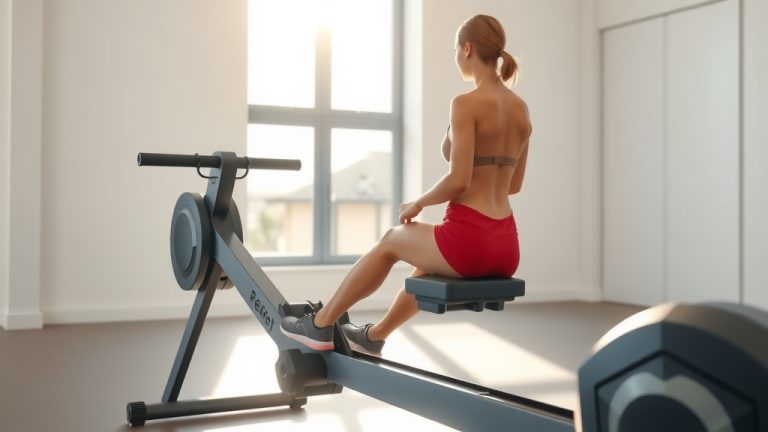
This is the part where your triceps step up! Your legs are fully extended, you’re leaning back slightly, and the handle is pulled towards your lower ribs. Your biceps and back muscles work to pull the handle in.
As you pull, your arms extend away from your body at the very end. This extension is where your triceps muscles kick in. They help straighten your arms to complete the pull (American Council on Exercise).
The Recovery Phase
Now, you return to the catch position. Your arms extend first, then you lean forward, and finally, your knees bend. It’s a controlled, smooth movement.
During recovery, your triceps are primarily relaxing. They’ve done their work and are preparing for the next stroke. This phase is important for conserving energy.
Where Do Triceps Fit In?
Your triceps are engaged when you extend your arms at the finish of the stroke. They are the muscles on the back of your upper arm. Their main job is to straighten the arm at the elbow.
Picture the handle reaching your body. As you push the handle away slightly before the recovery, those triceps fire. They are active in that final push-back motion.
Primary vs. Secondary Muscles
It’s important to know the difference between primary and secondary movers. Primary muscles do most of the work for a given movement. Secondary muscles assist them.
For rowing, your legs, glutes, core, and back are the big players. They generate the most power. Your arms, including your triceps, are secondary in power generation.
Here’s a quick look at how muscles are used:
| Muscle Group | Primary Role in Rowing |
|---|---|
| Legs (Quads, Glutes) | Generate initial power, pushing off |
| Core (Abs, Obliques) | Stabilize, transfer power |
| Back (Lats, Rhomboids) | Pull the handle towards the body |
| Arms (Biceps) | Pull the handle in, flexion |
| Arms (Triceps) | Extend arms at the finish, stabilize |
Why Triceps Might Feel Neglected
You might not feel a strong triceps burn after rowing. This is common. Since your legs and back do so much, the triceps often don’t get the same intense fatigue.
Many experts say that while rowing is a full-body workout, it’s not designed to be a primary triceps builder. Other exercises target them more directly (Mayo Clinic).
Don’t worry if your triceps aren’t screaming after a session. It just means other muscles are doing their job well. It’s a testament to rowing’s efficiency.
Boosting Triceps Engagement in Your Row
Want to make your triceps work a little harder on the rower? Focus on your form during the finish phase. A slight emphasis can make a difference.
Ensure your arm extension is complete and deliberate. Don’t just let the handle float back. Actively push it away slightly before initiating the recovery.
Here’s a quick checklist to help engage your triceps more:
- Finish Strong: Make sure your arms fully extend away from your body.
- Elbows In: Keep your elbows closer to your body during the pull.
- Controlled Push: Actively push the handle away from your chest.
- Focus on Extension: Think about straightening your arms deliberately.
- Smooth Transition: Avoid rushing the recovery, allowing full arm extension.
Rowing for Arm Strength: More Than Just Triceps
While triceps get some love, rowing is fantastic for overall arm strength. Your biceps work hard during the pull. Your forearms also get a workout from gripping the handle.
Your shoulders and upper back muscles are also highly involved. Rowing is a complete upper body workout. You’ll develop good endurance and muscle tone throughout your arms and shoulders.
Complementary Exercises for Stronger Triceps
If building stronger, more defined triceps is a top goal, consider adding other exercises. Rowing gives them some work, but direct isolation is often best.
Exercises like triceps dips, overhead triceps extensions, and close-grip push-ups are excellent. Many sources, like the NIH, recommend these for targeted triceps growth.
Combining rowing for cardio and overall fitness with specific strength training is a winning strategy. You’ll get the best of both worlds for your fitness journey.
The Benefits of a Full-Body Rowing Workout
Rowing is truly one of the best full-body workouts you can do. It engages about 85% of your body’s muscles in every stroke. This makes it incredibly efficient.
You get cardio benefits, muscle strengthening, and improved endurance. Plus, it’s low-impact, which is great for your joints. It’s a wonderful way to stay active and healthy.
Conclusion
So, does a rowing machine work triceps? Yes, it absolutely does. They are active during the finish phase of your stroke, helping to extend your arms. While they might not be the primary muscle group getting a huge burn, they are an important part of the overall movement.
Rowing excels as a full-body workout, building strength and endurance across many muscle groups, including your arms. If you’re looking for more intense triceps development, consider adding some targeted exercises alongside your rowing. Keep up the great work on the rower!
What is the main muscle group worked by a rowing machine?
The main muscle group worked by a rowing machine is your legs, specifically your quadriceps and glutes. These muscles generate the majority of the power during the drive phase of each stroke.
Can rowing alone build big triceps?
While rowing engages your triceps and can contribute to their endurance and tone, it’s generally not sufficient to build significantly large triceps on its own. For substantial triceps growth, targeted strength exercises are more effective.
Is rowing a good exercise for arm strength?
Yes, rowing is an excellent exercise for overall arm strength. It works your biceps during the pull, your triceps during the extension, and your forearms from gripping the handle. It helps build balanced arm strength and endurance.
How can I ensure my triceps are engaged during rowing?
To better engage your triceps during rowing, focus on a complete and deliberate arm extension at the very end of your stroke. Actively push the handle away from your body with your arms before initiating the recovery phase. Maintain good form throughout the entire movement.
Are there any rowing variations that target triceps more?
While the standard rowing stroke involves triceps, there aren’t specific “triceps-focused” rowing variations on the machine itself. Your best approach for increased triceps work is to ensure optimal arm extension during the finish of each regular stroke, or to incorporate separate triceps isolation exercises.