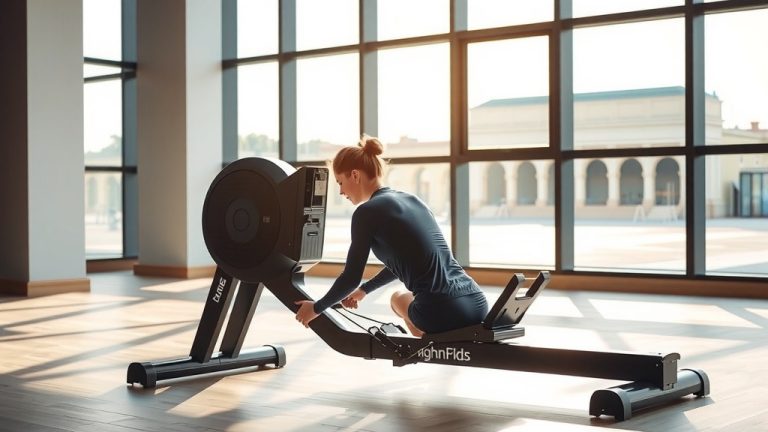
Is Rowing Machine Good For Sciatica?
A rowing machine can be a beneficial exercise tool for sciatica, but only when used with correct form and careful modifications to prevent aggravating nerve pain. It is often considered a low-impact option.
Many health professionals suggest that rowing can help strengthen your core and back muscles, which are essential for supporting your spine and easing sciatica symptoms.
- Rowing can strengthen core muscles, which may help support your spine and reduce sciatica pain.
- Always use proper form and adjust your technique to avoid twisting or excessive bending, which can worsen sciatica.
- Listen to your body; stop immediately if you feel any sharp pain or increased discomfort.
- Consult your doctor or a physical therapist before starting any new exercise routine, especially with sciatica.
- Modifications like seat height and foot position can make rowing safer and more comfortable for your back.
Is Rowing Machine Good For Sciatica?
Yes, a rowing machine can be good for sciatica if you approach it with caution and correct technique. It’s not a universal solution, but it offers advantages.
Understanding Sciatica and Your Body
Sciatica isn’t a condition itself; it’s a symptom. It describes pain that travels along the path of the sciatic nerve, running from your lower back down your leg. This pain often comes from a herniated disc or bone spur pressing on the nerve (Mayo Clinic).
Because the sciatic nerve starts in your lower back, activities that twist, compress, or overstretch this area can make the pain much worse. Your goal with any exercise is to support your spine gently.
Rowing’s Potential Perks for Sciatica Relief
When done right, rowing offers several benefits. It’s a low-impact exercise, meaning less jarring on your joints than running. It engages many muscle groups, giving you a full-body workout.
Crucially, rowing strengthens your core, glutes, and hamstrings. These muscles are vital for stabilizing your lower back. A stronger core can help reduce the pressure on your sciatic nerve over time, as research often shows (NIH).
The Pitfalls: When Rowing Could Worsen Sciatica
On the flip side, improper rowing form is a big problem. Many people bend too much at the lower back or twist during the stroke. This kind of movement can compress or irritate the sciatic nerve, making your pain flare up.
The “catch” phase (the start of the stroke) and the “recovery” phase (returning to the start) are particularly risky if your back rounds. You want to keep a neutral spine throughout, like a straight line.
Key Adjustments for Sciatica-Friendly Rowing
Think of your rowing machine as a friend you need to customize. A few tweaks can make a big difference. We found that adjusting the foot straps helps a lot.
Keep your feet positioned so your knees don’t go past your ankles at the catch. This helps you drive with your legs, not your back. Some people find raising the seat slightly more comfortable too, if possible.
Mastering the Rowing Stroke (Sciatica Edition)
Your technique is everything. Forget about speed or power at first. Focus on being smooth and controlled. Many experts say to think of the stroke in phases: legs, core, arms, then arms, core, legs for the return.
Initiate the drive with your legs. Keep your back straight, engaging your core muscles. Your torso should pivot slightly at the hips, not bend or round at the lower back. It’s like a gentle rocking motion.
Proper Form Checklist for Sciatica
Here’s a quick guide to keeping your back happy:
- Engage your core throughout the entire stroke.
- Keep your back straight and neutral, no rounding.
- Start the drive with a strong push from your legs and glutes.
- Hinge forward from your hips, not your waist, on the recovery.
- Avoid twisting or jerking movements; stay smooth and controlled.
- Keep your shoulders relaxed and pull with your lats, not just your arms.
Listen to Your Body: Pain is a Signal
This is perhaps the most important rule. If you feel any sharp pain, tingling, or increased numbness, stop immediately. Your body is telling you something. Pushing through pain can cause further damage or worsen your sciatica.
Sometimes, a little muscle fatigue is okay, but nerve pain is different. Be honest with yourself about what you’re feeling.
When to Pause or Avoid Rowing Altogether
There are times when rowing simply isn’t a good idea. If your sciatica pain is acute, meaning it’s new, severe, or constant, give rowing a break. Also, if you’re experiencing foot drop or severe weakness in your leg, consult a doctor before any exercise.
We found that any exercise causing increased symptoms should be stopped. Your health and comfort always come first.
Consult Your Doctor or a Physical Therapist First
Before you even step on a rowing machine, talk to your doctor. They can give you personalized advice based on the cause and severity of your sciatica. A physical therapist can also observe your form and provide specific modifications.
They might even suggest specific stretches or exercises to do before or after rowing to support your back’s health.
Comparing Rowing to Other Low-Impact Exercises
Rowing is just one option. It helps to see how it stacks up against others, especially for back care. We found that each has its strengths.
| Exercise Type | Sciatica Benefit | Considerations |
|---|---|---|
| Rowing Machine | Strengthens core, full-body, low impact. | Requires strict form to avoid back strain. |
| Swimming/Water Aerobics | Zero impact, supports body weight, gentle movement. | Some strokes (butterfly) may not be suitable. |
| Walking | Gentle, improves circulation, accessible. | Avoid prolonged standing if it worsens pain. |
| Stationary Bike | Low impact, strengthens legs, good cardio. | Upright bikes may cause forward lean, recumbent might be better. |
Building Core Strength Off the Machine
Your journey to a stronger, sciatica-friendly back doesn’t stop with rowing. Incorporate exercises that specifically target your core. Think about gentle planks, bird-dog exercises, or pelvic tilts.
These movements help build the stability your spine craves. Many guidelines point to consistent core work as a good first step (Cleveland Clinic).
Staying Consistent and Patient with Your Routine
Healing from sciatica takes time and patience. Don’t expect instant results. Start with shorter rowing sessions, maybe 10-15 minutes, and gradually increase duration as your body adapts. Consistency matters more than intensity.
You’re aiming for a sustainable habit, not a quick fix. Think of it as investing in your long-term comfort and mobility.
Conclusion
A rowing machine can certainly be a valuable tool in your fitness routine, even with sciatica. It offers a great way to build strength and improve cardiovascular health without heavy impact.
The key lies in impeccable form, careful adjustments, and a commitment to listening to your body’s signals. Always get professional medical advice first. With the right approach, you can enjoy the many benefits of rowing while keeping your sciatic nerve happy.
FAQs About Rowing and Sciatica
Can rowing aggravate my sciatica if I have a bulging disc?
Yes, rowing can aggravate sciatica if you have a bulging disc, especially with poor form. Movements that round your lower back or involve twisting can put pressure on the disc and irritate the sciatic nerve. Focusing on a neutral spine and leg-driven power is vital.
What specific modifications can I make to my rowing form for sciatica?
To modify your rowing for sciatica, keep your back straight and hinge at your hips, not your waist. Adjust foot straps to prevent excessive knee flexion. Consider a slightly wider foot stance or a cushion for added comfort on the seat. Always prioritize a smooth, controlled stroke over speed.
Are there any pre-rowing stretches that can help with sciatica?
Gentle stretches focusing on the glutes and piriformis muscle can be helpful. Think about piriformis stretches, figure-four stretches, or gentle hamstring stretches. Always perform these slowly and stop if you feel any sharp pain. A physical therapist can recommend the best routine for you.
How often should someone with sciatica row, and for how long?
Start slowly, perhaps with 2-3 sessions per week, for 10-15 minutes each. Focus on consistency and proper form over duration or intensity. Gradually increase time as your body tolerates it, always stopping if pain increases. Listen to your body and adjust accordingly.
If rowing causes me discomfort, what are some alternative low-impact exercises for sciatica?
If rowing causes discomfort, consider other low-impact options like swimming or water aerobics, which reduce joint stress. Walking on flat surfaces, using a recumbent stationary bike, or engaging in gentle yoga (with modifications) are also good alternatives that can help without aggravating your sciatica.