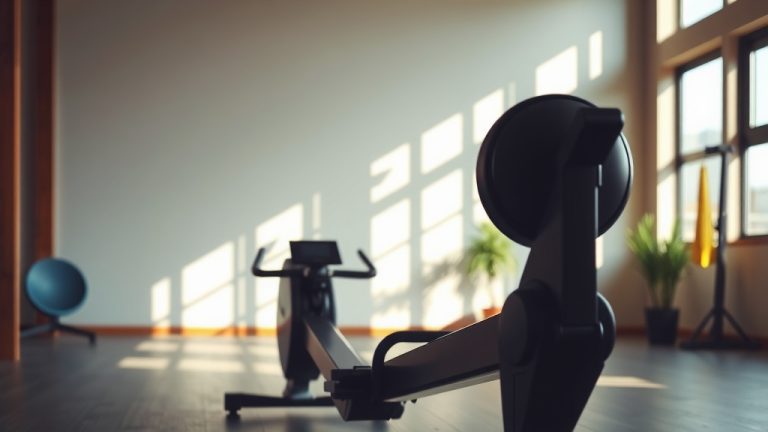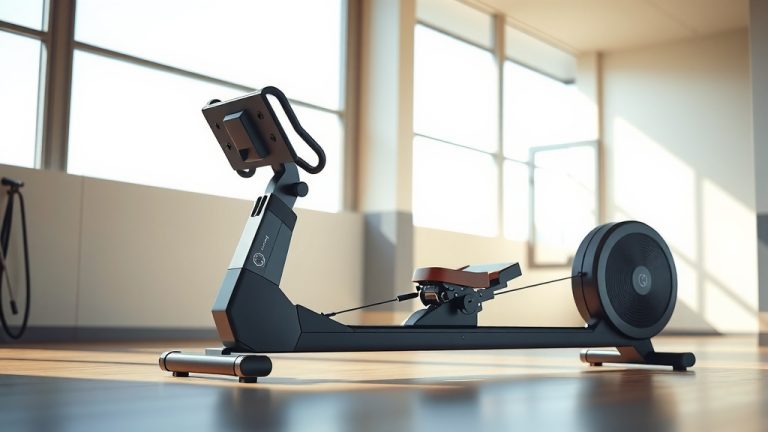
Is A Rowing Machine Considered Strength Training?
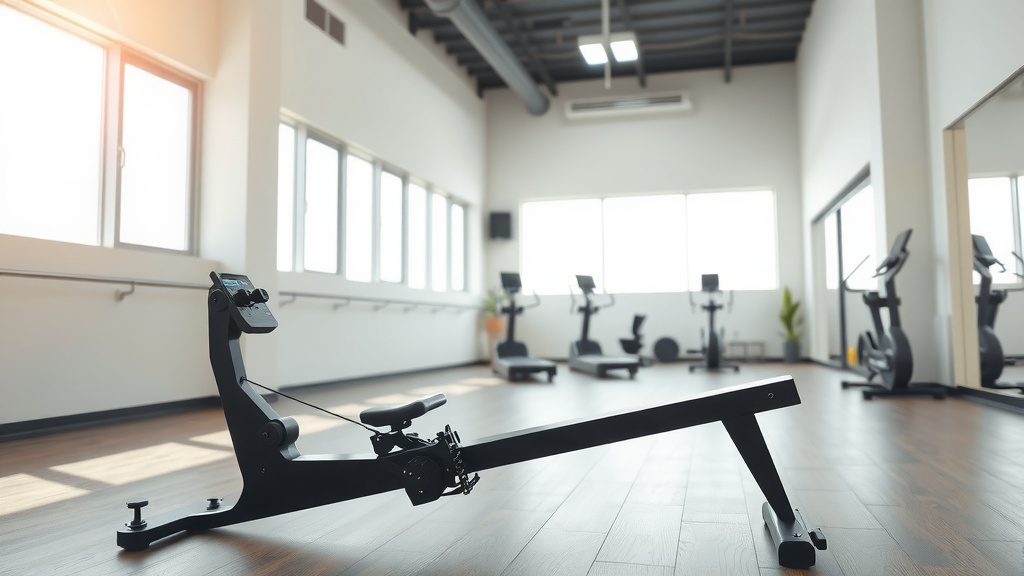
A rowing machine definitely engages your muscles and can contribute to your overall strength, particularly in terms of muscular endurance and power. While it’s not traditional heavy strength training like lifting barbells, rowing provides a unique blend of cardiovascular and resistance benefits.
Think of rowing as a dynamic, full-body workout that challenges many major muscle groups simultaneously, building functional strength and stamina. It’s an excellent way to boost your fitness without solely focusing on max lifts.
- Rowing machines primarily offer a mix of cardiovascular fitness and muscular endurance training.
- You engage about 85% of your muscles with each stroke, focusing on legs, core, and upper body.
- While not ideal for maximal strength gains, it significantly builds power and functional strength.
- For true heavy strength training, you might need to combine rowing with weightlifting.
- Proper technique on the rower amplifies muscle activation and strength benefits.
Is A Rowing Machine Considered Strength Training?
Yes, a rowing machine involves strength training, but it’s more accurately defined as a form of resistance and power training. It challenges your muscles against a load.
This type of exercise helps build muscular endurance and functional strength rather than just raw, maximal lifting power.
Understanding the “Strength” in Training
When you think of strength training, images of barbells and dumbbells often come to mind. These exercises typically focus on lifting heavy loads for few repetitions.
However, strength training also includes activities that build muscle endurance, power, and the ability to handle daily tasks easily. Rowing fits perfectly into this broader definition.
Muscles Activated During Rowing
During a rowing stroke, nearly every major muscle group gets involved. This makes it a truly full-body exercise.
You use your legs to push, your core to stabilize, and your arms and back to pull. It’s a complex movement that requires coordination and muscle engagement (American Council on Exercise).
Rowing: A Full-Body Powerhouse
Imagine pressing off a wall with your legs, then pulling something heavy towards you. That’s essentially what rowing mimics.
It’s a powerful movement pattern. This constant push and pull helps build a type of strength useful in many sports and everyday activities.
The Drive Phase: Where Strength Shines
The most powerful part of the stroke is the drive phase. Here, your legs do most of the work, pushing off the foot stretcher.
Your quadriceps, hamstrings, and glutes are all firing. Then, your core engages, and your back muscles, like your lats and rhomboids, pull the handle in.
Is Rowing Like Lifting Weights? Not Quite.
While both rowing and weightlifting build strength, they do it differently. Weightlifting often isolates muscles with specific exercises.
Rowing uses many muscles in a fluid, continuous motion. The resistance on a rower is also dynamic, changing with your effort, unlike a fixed barbell weight.
| Aspect | Rowing Machine | Traditional Weightlifting |
|---|---|---|
| Primary Focus | Cardio, Muscular Endurance, Power | Maximal Strength, Hypertrophy |
| Muscle Engagement | Full-body, integrated movement | Often isolated, targeted groups |
| Resistance Type | Dynamic, effort-based (air, water) | Static, fixed weights (barbells) |
| Joint Impact | Low impact, smooth motion | Can be higher impact depending on lifts |
| Skill Requirement | Technique important for efficiency | Form critical to prevent injury |
Rowing for Muscular Endurance and Stamina
One of rowing’s greatest strengths is building muscular endurance. This means your muscles can work longer without getting tired.
Think about climbing stairs or carrying groceries. Good muscular endurance makes these tasks much easier. Rowing also significantly boosts your cardiovascular stamina.
Progressive Overload on a Rower
You can definitely apply progressive overload to your rowing workouts, just like with weights. This means gradually increasing the challenge over time.
You can increase the drag factor, row for longer distances, or simply put more power into each stroke. Many experts agree that consistency and effort lead to progress (American Heart Association).
Can Rowing Build Visible Muscle?
Yes, rowing can contribute to building visible muscle, especially if you’re consistent and push yourself. It strengthens and tones major muscle groups.
However, for significant muscle hypertrophy (bulk), you might find traditional resistance training with heavier weights more direct. Rowing will lean out and define your physique.
Combining Rowing for Optimal Gains
To get the best of both worlds, consider combining rowing with other strength training exercises. Row for your cardio and endurance, then hit the weights for maximal strength and muscle growth.
This integrated approach helps you build a well-rounded fitness level. We found that a balanced routine often yields the best results.
The Ergonomics of Effective Rowing
Proper form is key to getting the most strength benefits from your rower. A good technique ensures you engage the correct muscles and prevent injury.
Focus on a strong leg drive, a stable core, and a powerful, controlled pull. Many guidelines point to proper sequence for maximum output (Mayo Clinic).
- Push hard with your legs first.
- Engage your core for stability.
- Keep your back straight, don’t hunch.
- Pull the handle to your sternum.
- Maintain a smooth, continuous rhythm.
- Control the recovery phase too.
Rowing and Functional Strength
Functional strength means being strong enough to handle real-life movements and tasks. Rowing excels at building this type of strength.
It strengthens your core, improves posture, and teaches your body to work as a unit. This translates into better balance, more power in sports, and easier daily living.
The Mind-Muscle Connection in Rowing
Focusing on the muscles you’re using can enhance your rowing workout. Try to feel your glutes and quads pushing at the start of the stroke.
Then, feel your lats and core engaging as you pull. This mind-muscle connection can lead to better activation and greater strength gains over time.
Conclusion
So, is a rowing machine considered strength training? The answer is a clear yes, but with a nuanced understanding. It’s a fantastic tool for building muscular endurance, power, and functional strength across your entire body.
While it may not replace the heavy lifting of a barbell for maximal strength gains, rowing offers a unique and highly effective way to improve your overall fitness, burn calories, and build a resilient, strong physique. Incorporate it into your routine, focus on good form, and you’ll definitely feel the difference.
Does Rowing Build Arms or Legs More?
Rowing primarily builds your legs more than your arms, as about 60% of the power comes from the leg drive. Your arms, while engaged in pulling, act more as connectors to transfer power from your back and legs.
How Can I Increase Strength on a Rowing Machine?
To increase strength, focus on explosive leg drives, maintain a higher drag factor, and incorporate interval training with short bursts of maximum effort followed by recovery periods. Regularly challenge yourself with longer distances or harder strokes.
Is Rowing Good for Core Strength?
Absolutely! Rowing is excellent for core strength. Your core muscles work constantly to stabilize your torso throughout the entire stroke, preventing injury and effectively transferring power between your upper and lower body.
Can Rowing Replace Weightlifting for Strength?
Rowing can’t entirely replace traditional weightlifting if your goal is maximal strength or significant muscle hypertrophy. However, it is a superb complement, building different types of strength and cardiovascular fitness that enhance your weightlifting performance and overall health.
How Often Should I Row for Strength Benefits?
For strength benefits, we found that rowing 3-5 times a week, varying your intensity and workout type (e.g., long endurance rows, short powerful intervals), can yield great results. Always listen to your body and include rest days.