Is Rowing Machine Good For Posture?
Yes, a rowing machine can be excellent for improving posture when used correctly, by strengthening key back, core, and leg muscles.
It helps create a more upright and stable spine, counteracting the effects of prolonged sitting and poor habitual posture.
- The rowing machine can significantly improve your posture by strengthening core and back muscles.
- Proper form is essential; bad technique can worsen posture, not fix it.
- It targets muscles that support your spine, helping you stand taller and sit straighter.
- Combine rowing with stretches and awareness for the best long-term posture changes.
- Always prioritize technique over speed or intensity to reap the full benefits.
Is Rowing Machine Good For Posture?
Absolutely, a rowing machine can be a powerful tool for enhancing your posture. It works many muscles that support your spine, making you stronger and more upright.
Understanding Good Posture
What exactly is good posture? It means your body is aligned, with your ears over your shoulders, shoulders over your hips, and hips over your ankles. This alignment reduces strain on your joints and muscles (Mayo Clinic).
Why Posture Matters for You
Good posture isn’t just about looking confident; it’s about your overall health. It helps with breathing, digestion, and even your mood. Poor posture often leads to aches and pains you want to avoid.
How Rowing Strengthens Your Posture Muscles
A rowing stroke is a full-body movement. It engages your legs, core, and upper body. These muscle groups all play a vital role in maintaining good posture.
The Powerhouse: Your Back Muscles
Rowing deeply works your upper and lower back muscles, including the lats, rhomboids, and traps. These muscles pull your shoulder blades back and down, which is key for an open chest and a straight spine.
Core Strength for Spinal Support
Your core muscles, including your abs and obliques, are constantly engaged during rowing. A strong core acts like a natural corset, stabilizing your spine and preventing slouching. It’s like building a strong foundation for your house.
Leg Drive and Postural Stability
Don’t forget your powerful leg drive! The glutes and hamstrings initiate the rowing stroke. Strong legs provide a stable base, preventing your upper body from collapsing forward.
Can Rowing Fix Bad Posture?
Rowing can certainly help correct bad posture, but it’s not a magic bullet. It builds the necessary muscle strength. However, you also need to be mindful of your posture throughout your day.
Common Rowing Mistakes That Harm Posture
Using improper form on the rower can actually worsen your posture. Rounding your back or shrugging your shoulders are common errors. These habits can reinforce the very issues you’re trying to fix.
Here are some red flags to watch for:
- Rounding your lower back at the catch.
- Over-extending your back at the finish.
- Shrugging your shoulders towards your ears.
- Pulling with your arms too early, instead of your legs.
- Hunching forward instead of maintaining a tall spine.
Mastering Proper Rowing Form for Posture Benefits
Good form is non-negotiable if you want posture benefits. Think of it as sculpting your body into its best alignment with every stroke. We found that focusing on technique often yields greater results than just pushing harder.
The Four Phases of a Perfect Stroke
Every rowing stroke has four phases: The Catch, The Drive, The Finish, and The Recovery. Understanding each phase helps you maintain proper posture throughout the movement.
Setting Up Your Rower for Success
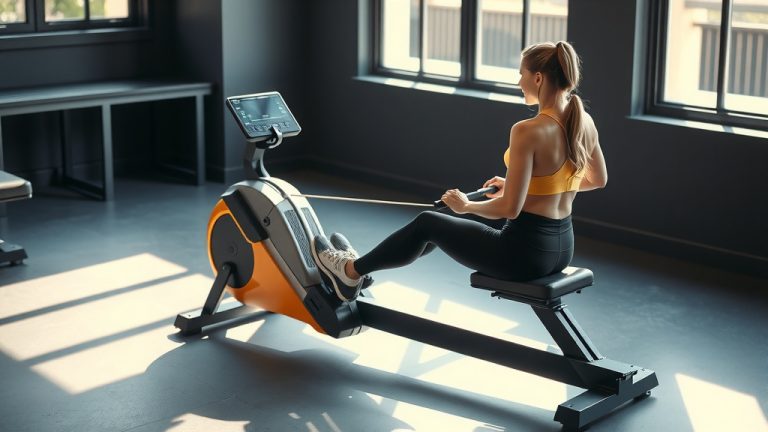
Before you even start, adjust your foot straps so the strap goes over the widest part of your foot. Sit tall on the seat, relax your shoulders, and look straight ahead. Your body should feel balanced and ready.
The Catch: Ready for Action
At the catch, lean forward slightly from your hips, keeping your back straight. Your shins should be vertical, and your arms extended. Imagine you have a proud chest, not a slumped one.
The Drive: Power Through Your Legs
Push off powerfully with your legs first, engaging your glutes and hamstrings. Keep your core braced and your back stable. Your arms should still be straight at this point, connecting the power from your legs to the handle.
The Finish: Strong and Upright
At the finish, lean back slightly, with your core engaged. Your handle should be at your lower ribs. Your shoulders should be relaxed and down, not hunched. This position trains your body to hold an upright posture.
The Recovery: Smooth Return
Extend your arms first, then lean forward from your hips, and finally bend your knees. This controlled return prepares you for the next stroke, maintaining that excellent spinal alignment.
Posture Checklist During Your Row
Use this quick checklist to ensure you’re getting the most out of your rowing for posture:
- Are your shoulders relaxed and down? Avoid shrugging.
- Is your core engaged? Brace your abs gently.
- Is your back straight, not rounded? Maintain a natural curve.
- Are your hips leading the lean forward? Not your upper back.
- Are your feet fully connected to the footplates? Even pressure.
- Is your gaze forward, not down? Keep your neck neutral.
Good vs. Bad Rowing Posture Comparison
Sometimes seeing the contrast helps. Let’s look at how proper rowing posture differs from common errors, and why it matters for your spine.
| Aspect | Good Posture Rowing | Bad Posture Rowing |
|---|---|---|
| Back | Straight, tall, slight natural curve. | Rounded, slumped, or over-arched. |
| Shoulders | Relaxed, down, and slightly back. | Shrugged up towards ears, or rounded forward. |
| Core | Engaged and stable throughout. | Loose, allowing back to take strain. |
| Head/Neck | Neutral, gaze forward. | Tucked down, or craned upwards. |
| Hips | Initiate forward lean and backward swing. | Stiff, forcing back to bend excessively. |
Beyond the Rower: Supporting Your Posture
Rowing is fantastic, but posture improvement is a holistic effort. Think about how you move and sit all day long. Research often connects daily habits with long-term postural health (NIH).
Incorporate Stretching and Mobility
Regular stretching, especially for your chest and hip flexors, can complement your rowing. This helps undo tightness that might pull your body into poor alignment. Imagine your body is a spring; you need to both strengthen and stretch it.
Mindfulness in Daily Life
Are you slouching at your desk? Hunching over your phone? Become aware of your posture during everyday activities. Every little adjustment makes a difference. It’s like being your own personal posture detective.
Conclusion
The rowing machine can be an incredibly effective tool for building a stronger, more upright posture. By strengthening your back, core, and legs with proper technique, you’re creating a resilient framework for your body. Remember, consistency and mindful form are your best allies in this journey. Keep rowing, keep improving, and stand tall!
Is Rowing Good for Upper Back Posture?
Yes, rowing is excellent for upper back posture. It specifically targets the rhomboids and trapezius muscles, which are key for pulling your shoulders back and preventing that common rounded-shoulder look.
How Often Should I Row for Posture Improvement?
For noticeable posture improvement, aim to row 3-4 times a week, for 20-30 minutes per session. Focus on maintaining perfect form, even if that means a slower pace. Consistency truly wins here.
Can Rowing Worsen My Posture?
Yes, if you row with incorrect form, particularly by rounding your back or shrugging your shoulders, you can worsen existing postural issues or create new ones. Always prioritize learning and practicing good technique.
What Other Exercises Help Posture Along with Rowing?
Pairing rowing with exercises like planks, bird-dog, glute bridges, and face pulls can further enhance your posture. These moves target core stability and neglected posterior chain muscles, creating a balanced approach.
Is a Rowing Machine Better Than Walking for Posture?
While walking is great for overall health, a rowing machine typically offers more direct benefits for posture due to its full-body resistance training. It actively strengthens the muscles needed to support a tall, upright spine, which walking doesn’t target as intensely.