7 Best Heart Rate Monitors with GPS (November 2026)
The best heart rate monitors with GPS pairing include the COOSPO H6 Heart Rate Monitor Chest Strap for GPS watches and bike computers, the GEOID HS500 Heart Rate Monitor for long battery life, and the COROS Heart Rate Monitor for armband comfort.
On this page (8 sections)
- The best GPS-pairing heart rate monitors, ranked
- How the best GPS-pairing heart rate monitors compare
- Do you need GPS built into the heart rate monitor itself?
- Which connection type should you choose for GPS workouts?
- Chest strap, armband or wrist tracker: which fit is best for outdoor training?
- How long should the battery last for GPS training?
- What should you check before pairing with a GPS bike computer or watch?
- Our verdict on the best heart rate monitor with GPS
The best heart rate monitor with GPS is the COOSPO H6 for most riders and runners, because it pairs by Bluetooth and ANT+ with GPS sports watches and GPS bike computers. The best heart rate monitor with GPS for long battery life is the GEOID HS500 at 800 hours.
The best armband option is the COROS Heart Rate Monitor, which turns on when worn and pairs with up to 3 Bluetooth devices.
Most sensors in this guide do not carry GPS themselves. Your watch, phone or bike computer records the route and pace, and the strap or armband adds heart rate.
For studio classes, compare Orangetheory heart rate monitors.
That split is what makes the best heart rate monitor with GPS pairing work in practice.
Our score weighs specs, features and buyer feedback against what you're shopping for. We compared battery type, connection types, fit, water resistance and GPS-device pairing, and we checked the specs for each model.
Start with heart rate monitor options if you're still deciding between a chest strap, armband and wrist tracker. For training indoors, the best heart rate monitor for exercise guide covers gym and rower use.
Runners should also read best heart rate monitor for running for pace and interval use.
Our picks at a glance
-
1
 Best for GPS watches and bike computers
COOSPO H6 Heart Rate Monitor Chest Strap
9.6/10 our score
See it on Amazon -
2

-
3

- 4
 Check it
Scosche Rhythm Heart Rate Monitor Armband
Best for forearm wear and HRV data - 5
 Check it
MorePro Fitness Tracker with 24/7 Heart Rate
Best for wrist-based daily tracking - 6
 Check it
Heartix HRM Heart Rate Monitor for Streaming
Best for streaming and gaming overlays - 7
 Check it
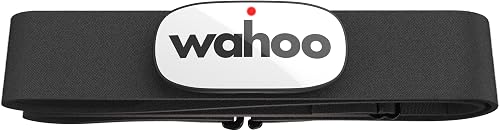
WAHOO TRACKR Heart Rate Monitor
Best for rechargeable chest strap use
The best GPS-pairing heart rate monitors, ranked
The COOSPO H6 leads because it covers both Bluetooth and ANT+ GPS devices. The GEOID HS500 follows on battery life, then the COROS and Scosche armbands for comfort and HRV data.
COOSPO H6 Heart Rate Monitor Chest Strap: Best for GPS watches and bike computers
- Bluetooth 4.0 and ANT+ dual mode
- IP67, 300-hour CR2032 battery
- Works with Garmin GPS bike computers and sports watches
A dual-mode chest strap that feeds heart rate to GPS watches, bike computers, phones and gym equipment.
Pros
- Bluetooth and ANT+ in one sensor
- Pairs with GPS watches and bike computers
- 300-hour replaceable battery
Cons
- No built-in GPS or display
- Coospo says do not soak or use for swimming
The COOSPO H6 suits riders and runners who already own a GPS watch or bike computer. It sends heart rate data in real time while that device records route, speed and distance.
Its Bluetooth and ANT+ dual mode is the main reason it ranks first here. You can pair it with a phone app for Zwift or Strava, and with a Garmin GPS bike computer or sports watch for outdoor routes.
CooSpo lists accuracy of plus or minus 1 BPM for the H6 HR sensor during exercise. That figure is a maker claim, so treat it as a target rather than a guarantee for every workout.
The IP67 rating and 300-hour CR2032 battery fit sweat and rain training. CooSpo says do not soak it into water and do not use it for swimming, so rinse rules matter after wet rides.
The trade-off is clear: the H6 has no display and no GPS of its own. If you want route maps on your wrist, your GPS watch still does that job.
GEOID HS500 Heart Rate Monitor: Best for long battery life
- 800-hour battery
- IP67 waterproof
- ANT+ and Bluetooth, LED status light
A thin chest strap with an 800-hour battery and LED confirmation that heart rate is detected.
Pros
- 800-hour battery to reduce changes
- LED shows detection and connection
- ANT+ and Bluetooth pairing
Cons
- No built-in GPS or display
- Geoid says swimming is not recommended
The GEOID HS500 suits cyclists and runners who want to change batteries rarely. Geoid rates it at 800 hours, which it frames as about 2.5 years at 1 hour a day, 4 times a week.
Its LED flashes when the sensor is properly worn and turns off after 10 flashes. A red light means the monitor is ready to use, which helps you confirm detection before a GPS workout starts.
The HS500 pairs by ANT+ with Wahoo, IGPSPORT, Bryton and Black Bird bike gear. By Bluetooth it works with Zwift, Strava, Kinomap, Wahoo Fitness, TrainerRoad and Nike Run Club, among others.
Geoid says the new hardware and algorithms reduce noise from movement and sweat. That matters on rough descents or intervals when a chest strap can shift.
The trade-off is the lack of a screen. You read heart rate on your watch or computer, and Geoid says swimming is not recommended despite the IP67 rating.
COROS Heart Rate Monitor: Best for armband comfort
- Armband with wear detection
- 38 hours active, 80 days standby
- Pairs with up to 3 Bluetooth devices
A fabric armband that turns on when worn and pairs with COROS watches, phones and indoor trainers.
Pros
- Wear detection for auto on and off
- Soft fabric band instead of a chest strap
- Pairs with up to 3 devices
Cons
- Bluetooth only, no ANT+
- 38-hour active battery needs regular charging
The COROS Heart Rate Monitor suits runners who dislike pressure across the chest. Its fabric armband lays flat on the arm and locks in place with a textured surface and sliding buckle.
Wear detection is the standout feature. The armband powers on when worn and off when removed, then auto-connects to paired devices at the start of a workout.
COROS says it pairs with up to 3 devices at once, including sports watches, indoor trainers, bike computers, phones and treadmills. That helps if you train on a GPS watch outdoors and on an indoor rower.
Battery life is 38 hours of full operation or 80 days of standby on a single charge. The magnetic cable recharges it in 2 hours, and no Type-C adapter is included.
The trade-off is Bluetooth only. It is not compatible with ANT+, so choose it only if your GPS watch or bike computer supports Bluetooth.
Scosche Rhythm Heart Rate Monitor Armband: Best for forearm wear and HRV data
- Optical armband, ANT+ and Bluetooth
- HRV mode with RR interval data
- IP68, up to 24 hours battery
An optical forearm armband with HRV mode for runners and riders who want more than basic pulse.
Pros
- HRV mode captures RR intervals
- Wear on forearm, bicep or tricep
- IP68 for sweat and rain
Cons
- 24-hour battery is short for heavy use
- No built-in GPS, needs a paired watch or computer
The Scosche Rhythm suits athletes who want heart rate plus recovery data. Its HRV mode captures RR interval data from subtle heartbeat variations for apps such as HRV4Training and Welltory.
You can wear the armband on your forearm, bicep or tricep. Scosche pitches it as a dependable alternative to restrictive chest straps during intense workouts.
It pairs by Bluetooth or ANT+ with a sports watch, fitness equipment or apps such as Strava, Peloton and Wahoo. That covers GPS watches for outdoor routes and indoor trainers for winter training.
The IP68 rating handles sweat, rain and demanding sessions indoors or outdoors. Battery life is up to 24 hours of continuous use, which is short compared with coin-cell chest straps.
The trade-off is charging discipline. If you forget to charge it, a GPS run can start with no heart rate data at all.
MorePro Fitness Tracker with 24/7 Heart Rate: Best for wrist-based daily tracking
- 24/7 heart rate, blood oxygen and sleep tracking
- 120+ sport modes, IP68
- 7 days normal use, 15 days standby
A wrist tracker for all-day heart rate, steps, sleep and sport modes, without built-in GPS for route maps.
Pros
- Tracks heart rate around the clock
- Sleep, blood oxygen and cycle tracking
- Long standby battery
Cons
- No GPS for outdoor route tracking
- Not for medical use
The MorePro tracker suits people who want one wrist device for daily health trends. It tracks heart rate around the clock, plus blood pressure trends, on-demand blood oxygen and sleep stages.
It offers 120+ sport modes, including running and walking, with steps, distance, calories, heart rate and training time. That makes it useful for tracking workouts you already do.
The IP68 design handles sweat, rain and hand-washing. Battery life is up to 7 days of normal use or 15 days on standby, with a full charge in about 2 hours.
The key limit for this guide is simple: it has no GPS. It cannot map an outdoor route or record pace from satellites, so GPS runners still need a watch or phone.
MorePro also marks the health features as not for medical use. Use it for wellness trends, not for diagnosis.
Heartix HRM Heart Rate Monitor for Streaming: Best for streaming and gaming overlays
- Bluetooth 5.0 and ANT+
- 300-hour CR2032 battery
- Soft adjustable chest strap for Pulsoid
A chest strap built for live heart rate overlays on streams, with Bluetooth 5.0 and ANT+ for apps.
Pros
- Designed for streaming overlays
- Bluetooth 5.0 and ANT+ pairing
- 300-hour replaceable battery
Cons
- No GPS or display of its own
- Scored lower for outdoor GPS training use
The Heartix HRM suits streamers and gamers first, and GPS trainers second. It is built to share heart rate data in real time as a stream overlay, for example with Pulsoid.
It uses Bluetooth 5.0 and ANT+ to connect to Pulsoid and popular fitness apps. That lets the same sensor work on a stream and later in a fitness app.
The soft, adjustable chest strap is meant for long streaming and gaming sessions without discomfort. That comfort matters more for seated use than for high-impact running.
Battery life is up to 300 hours from a replaceable CR2032 battery. Heartix says that can last from several months to a year of active use.
The trade-off for this guide is focus. It has no GPS, no display and a smaller record for outdoor GPS pairing than the COOSPO or GEOID picks.
WAHOO TRACKR Heart Rate Monitor: Best for rechargeable chest strap use
- Rechargeable, up to 200 hours active life
- Bluetooth and ANT+, 3 Bluetooth connections
- IPX7, LED status indicator
A light rechargeable chest strap with LED status and simultaneous Bluetooth and ANT+ connections.
Pros
- Rechargeable instead of coin cells
- Light 30 g pod
- LED confirms detection and battery
Cons
- No built-in GPS or display
- Charging cable needed for recharge
The WAHOO TRACKR suits riders and runners who prefer rechargeable gear. Wahoo rates the high-capacity rechargeable battery at over 100 hours in one description and up to 200 hours of active life in the specs.
The pod weighs 30 g and uses a slim, soft, secure strap. That light weight helps during intense exercise when a heavier sensor can bounce.
It connects by ANT+ and Bluetooth to smartphones, fitness equipment and training apps. Wahoo lists 3 Bluetooth connections at once, which can help a watch, phone and trainer stay linked.
LED indicators confirm heart rate detection, battery status and connection to training devices. That small light saves guesswork at the start of a GPS workout.
The trade-off is the charging cable. You avoid coin cells, but you must plug the TRACKR in before a long training block.
How the best GPS-pairing heart rate monitors compare
A GPS pairing only works when your watch or bike computer accepts the sensor's connection type. ANT+ still dominates older bike computers, while Bluetooth dominates phones and many newer watches.
| Product | Best for | Battery life | Weight | Material | Our score |
|---|---|---|---|---|---|
| COOSPO H6 Heart Rate Monitor Chest Strap | GPS watches and bike computers | 300 hours | 55 g | Plastic | 9.6 |
| GEOID HS500 Heart Rate Monitor | long battery life | 800 hours | 9.5 | ||
| COROS Heart Rate Monitor | armband comfort | 38 hours active | 50 g | 9.3 | |
| Scosche Rhythm Heart Rate Monitor Armband | forearm wear and HRV data | 24 hours | Silicone | 9.3 | |
| MorePro Fitness Tracker with 24/7 Heart Rate | wrist-based daily tracking | 7 days normal use | 1.12 ounces | 9.2 | |
| Heartix HRM Heart Rate Monitor for Streaming | streaming and gaming overlays | 300 hours | 0.08 kg | 8.7 | |
| WAHOO TRACKR Heart Rate Monitor | rechargeable chest strap use | 200 hours | 30 g | 8.5 |
We compared battery life, connection types, fit and water resistance across all 7 picks. We checked the specs for GPS-device pairing, such as Garmin and Wahoo bike computers, and for Bluetooth-only limits.
Scores reflect how well each sensor fits a GPS searcher. The COOSPO H6 scores highest because it covers Bluetooth and ANT+ GPS devices.
The MorePro scores lower here because it has no GPS, even though it is a capable daily tracker.
Fit matters as much as signal type. Chest straps sit under a shirt or jacket, armbands sit on the upper arm or forearm, and wrist trackers read from the wrist all day.
Price tier is budget, mid-range or premium in our comparison. We do not list prices, so compare battery and connection needs before comparing cost.
Do you need GPS built into the heart rate monitor itself?
No, most riders and runners should pair a sensor with a GPS watch or bike computer instead. The GPS device records route, pace and distance, and the sensor adds heart rate to that file.
A built-in GPS sensor would duplicate the watch you already wear. Chest straps and armbands stay smaller and lighter because they send data instead of calculating position.
Exception: a wrist tracker with GPS can work as a standalone device. The MorePro in this guide has no GPS, so it cannot replace a GPS watch for route tracking.
If you train on a treadmill or indoor rower, GPS matters less than signal stability. Our best heart rate monitor for Zwift guide covers that indoor use.
Chest strap plus GPS watch
A chest strap plus GPS watch is the classic combo for running and cycling. The watch shows pace and heart rate zones, and the strap gives a steady signal during intervals.
Armband plus GPS watch
An armband plus GPS watch suits people who find chest straps uncomfortable. The COROS and Scosche picks pair by Bluetooth, and the Scosche also offers ANT+.
Wrist tracker without GPS
A wrist tracker without GPS suits daily steps, sleep and gym workouts. It will not map a trail run, so carry a phone or wear a GPS watch for routes.
Which connection type should you choose for GPS workouts?
Choose by the GPS device you already own, not by the sensor alone. ANT+ is common on bike computers and older sports watches, while Bluetooth is common on phones and newer watches.
The COOSPO H6 and GEOID HS500 offer both Bluetooth and ANT+, so they fit more GPS devices. The COROS armband is Bluetooth only, so check your watch or computer first.
Dual-mode sensors also help if you switch between outdoor GPS training and indoor apps. The WAHOO TRACKR supports 3 Bluetooth connections at once, which can reduce re-pairing.
ANT+ for bike computers
ANT+ suits Garmin, Wahoo and other bike computers that record GPS routes. The COOSPO H6 lists Garmin, CooSpo, XOSS and Wahoo GPS bike computers.
Bluetooth for watches and phones
Bluetooth suits phones, Strava, Zwift and many sports watches. Pair from inside the app, not from your phone's Bluetooth list, for most chest straps.
Dual mode for mixed training
Dual mode suits riders who train outdoors with a bike computer and indoors with an app. The Heartix HRM also uses Bluetooth 5.0 and ANT+ for fitness apps and streaming tools.
Chest strap, armband or wrist tracker: which fit is best for outdoor training?
A chest strap gives the steadiest signal for many runners and riders. It sits close to the chest and is less affected by arm swing during intervals.
An armband avoids chest pressure and is easier for some people to put on. The COROS fabric band and Scosche silicone strap both stay put during intense workouts, according to their makers.
A wrist tracker is easiest for all-day wear. You can see steps, sleep and heart rate without adding a strap, but optical wrist readings can lag during fast intervals.
For rowing, fit and signal stability matter during long strokes. Read Do You Need a Heart Rate Monitor to Row Effectively? before choosing for erg sessions.
Chest straps for steady signals
Chest straps such as the COOSPO H6, GEOID HS500 and WAHOO TRACKR use chest electrodes. Moisten the electrode areas before wearing them for a stable connection.
Armbands for comfort
Armbands such as the COROS and Scosche Rhythm sit on the arm instead of the chest. They suit people who dislike a band around the torso.
Wrist trackers for all-day data
Wrist trackers such as the MorePro track heart rate, sleep and steps all day. They are less targeted for GPS route work because this model has no GPS.
How long should the battery last for GPS training?
Coin-cell chest straps last longest between changes. The GEOID HS500 rates 800 hours, while the COOSPO H6 and Heartix HRM rate 300 hours from a CR2032 battery.
Rechargeable sensors need more frequent charging. The WAHOO TRACKR rates up to 200 hours active life, the COROS rates 38 hours, and the Scosche rates 24 hours.
Wrist trackers trade sensor battery life for all-day tracking. The MorePro lasts up to 7 days of normal use or 15 days on standby, with a 2-hour charge.
For rowing workouts, battery life matters less than comfort during long pieces. Our guide on How To Get Heart Rate Up On Rowing Machine? explains effort targets for erg sessions.
Coin-cell batteries for low maintenance
Coin-cell straps such as the GEOID HS500 and COOSPO H6 suit travellers who want fewer charges. Carry a spare CR2032 battery for long trips.
Rechargeable batteries for convenience
Rechargeable sensors such as the WAHOO TRACKR and COROS avoid coin cells. Keep the charging cable with your training bag.
Standby life for daily wear
Standby life matters for wrist trackers and auto-on armbands. The COROS armband rates 80 days of standby, which helps when you train a few times a week.
What should you check before pairing with a GPS bike computer or watch?
Check that your GPS device supports Bluetooth, ANT+ or both. The sensor and the GPS device must share at least one connection type.
Check the app list for your phone. The COOSPO H6 works with Strava, Wahoo Fitness, Polar Beat, Zwift and Peloton, among others.
Check strap size and sensor placement. The COROS large band fits arm sizes from 9.4 to 16.9 inches, so measure before choosing that size.
For Concept2 training, connection type matters as much as GPS. Our best concept2 heart rate monitor guide covers rower pairing in detail.
Pair from the app, not the phone list
Most Bluetooth chest straps should be paired from inside the training app. The COOSPO H6 and GEOID HS500 both warn against pairing from the phone Bluetooth list.
Confirm ANT+ on older computers
Older GPS bike computers may use ANT+ only. Dual-mode sensors such as the COOSPO H6 and GEOID HS500 reduce that risk.
Test the signal before a key workout
Wear the sensor, confirm the LED or app shows heart rate, then start the GPS workout. A short test saves a lost interval session.
Our verdict on the best heart rate monitor with GPS
Pick the COOSPO H6 if you want one sensor for GPS watches, bike computers and indoor apps. Its Bluetooth and ANT+ pairing plus 300-hour battery cover most training setups.
Pick the GEOID HS500 if battery life is your priority. Its 800-hour rating and LED status light suit riders and runners who train often.
Pick the COROS armband if a chest strap feels uncomfortable. Its wear detection and fabric band make it easy to start a GPS workout.
Pick the Scosche Rhythm if you want HRV data for recovery tracking. Its RR interval mode adds insight beyond basic heart rate zones.
The MorePro tracker is the weakest GPS pick here because it has no GPS. Choose it for all-day wrist tracking, not for route mapping.
Next step: match the connection type to your watch or bike computer, then read our heart rate monitor options guide for fit advice.
Our top 3 picks at a glance
-
1
Best for GPS watches and bike computers
COOSPO H6 Heart Rate Monitor Chest Strap
9.6/10 our score
See it on Amazon -
2
-
3
Frequently asked questions
What is the best heart rate monitor with GPS?
The COOSPO H6 is the best heart rate monitor with GPS for most people when paired with a GPS watch or bike computer. It sends heart rate by Bluetooth and ANT+ while the GPS device records your route, pace and distance.
Does a chest strap heart rate monitor have GPS?
Most chest straps and armbands in this guide do not have GPS. GPS comes from your watch, phone or bike computer, and the sensor adds heart rate data to that workout file.
Can I use a heart rate monitor with a Garmin or Wahoo GPS computer?
Yes. The COOSPO H6 works with Garmin and CooSpo GPS bike computers and with BLE and ANT+ sports watches.
The GEOID HS500 lists ANT+ pairing with Wahoo and other bike computers.
Which is better for GPS running, a chest strap or an armband?
A chest strap often gives a steadier signal during fast arm movement, while an armband avoids chest pressure. The COROS and Scosche armbands suit runners who dislike chest straps.
Do I need GPS on the wrist tracker itself?
Only if you want route maps without carrying a phone or watch. The MorePro tracker has no GPS, so it tracks sport modes and heart rate but cannot map an outdoor route on its own.


