9 Best Rowing Machine Lubricants (October 2026)
The best rowing machine lubricants include the Petrol-Gel Food Grade Equipment Lubricant NSF for grease-required service points, the Action Fitness 100% Silicone Treadmill Lubricant for silicone-approved equipment parts, and the WD-40 Specialist Silicone Lubricant for compatible metal or rubber linkages.
On this page (9 sections)
- How we chose rowing machine lubricants
- Which rowing machine lubricant suits each service point?
- What should you check before choosing rowing machine lubricant?
- Can you use treadmill lubricant on a rowing machine?
- How do you prepare a rower before applying lubricant?
- How should you apply and care for rowing machine lubricant?
- What mistakes should you avoid when lubricating a rower?
- What if the rower still feels or sounds wrong?
- Which rowing machine lubricant should you choose?
The best rowing machine lubricant is the type your manual specifies for the exact service point. Petrol-Gel is our top pick for compatible points that call for grease; the silicone oils and sprays below suit only parts whose instructions allow them.
A rower may have a chain, rail, seat rollers, pivots, cables or a bungee, and those parts can have different care needs. Identify the part before shopping, then check the maintenance instructions for its lubricant type and placement.
For chain care, start with our guide to lubricating a rowing machine chain. If the chain skips, check common causes of a rowing machine chain skipping before assuming that it needs oil.
Our picks at a glance
-
1
 Best for grease-required service points
Petrol-Gel Food Grade Equipment Lubricant NSF
9.7/10 our score
See it on Amazon -
2
 Best for silicone-approved equipment parts
Action Fitness 100% Silicone Treadmill Lubricant
9.6/10 our score
See it on Amazon -
3
 Best for compatible metal or rubber linkages
WD-40 Specialist Silicone Lubricant
9.5/10 our score
See it on Amazon
- 4
 Check it
CCGeass Treadmill Belt Lubricant
Best for silicone belt-style service points - 5
 Check it
1DFAUL Treadmill Lubricant for Belt
Best for silicone application by extension tube - 6
 Best for compatible dry-film applicationsCheck it
- 7
 Check it
EAWONGEE Treadmill Belt Lubricant Spray 7.2oz
Best for targeted spray application - 8
 Check it
PlanetSafe Lubricants Planet Safe AIM Extreme Duty Lubricant
Best for compatible metal parts - 9
 Check it
XNBXYS 2 Pcs Elliptical Exercise Machine Lubricant
Best for compatible seated pedal machines
How we chose rowing machine lubricants
These picks cover several forms and applicators, but few are made specifically for rowers. We compared each product’s stated use, material guidance and application method against common rowing machine service points, with the machine manual as the final compatibility check.
The score reflects how clearly each option fits a plausible maintenance task, along with its features and stated uses. A high score does not make a lubricant suitable for every chain, rail or joint.
| Product | Best for | Form | Material | Container | Our score |
|---|---|---|---|---|---|
| Petrol-Gel Food Grade Equipment Lubricant NSF | grease-required service points | Gel | Mineral oil | Tube | 9.7 |
| Action Fitness 100% Silicone Treadmill Lubricant | silicone-approved equipment parts | Liquid | Silicone | 9.6 | |
| WD-40 Specialist Silicone Lubricant | compatible metal or rubber linkages | Spray | Can | 9.5 | |
| CCGeass Treadmill Belt Lubricant | silicone belt-style service points | Liquid | Silicone | 9.2 | |
| 1DFAUL Treadmill Lubricant for Belt | silicone application by extension tube | Liquid | Silicone | 8.8 | |
| CRC Dry Ceramic Lube | compatible dry-film applications | Aerosol | Can | 8.7 | |
| EAWONGEE Treadmill Belt Lubricant Spray 7.2oz | targeted spray application | Spray | Silicone | 8.6 | |
| PlanetSafe Lubricants Planet Safe AIM Extreme Duty Lubricant | compatible metal parts | Liquid | Bottle | 8.1 | |
| XNBXYS 2 Pcs Elliptical Exercise Machine Lubricant | compatible seated pedal machines | Grease and liquid | Bottle | 7.9 |
Which rowing machine lubricant suits each service point?
Choose by the lubricant type named for the part in your manual. Grease, silicone liquid, spray and dry film are different choices, and none should be treated as a universal rower lubricant.
1. Petrol-Gel Food Grade Equipment Lubricant NSF: Best for grease-required service points
Petrol-Gel Food Grade Equipment Lubricant NSF: Best for grease-required service points
- Gel form
- Mineral oil
- NSF approved for food processing equipment
- Tube container
A gel lubricant for equipment points where the rower manual calls for grease. Check compatibility before applying it to a chain, rail or other surface.
Pros
- Gel stays in place
- Petrol says it can be used on gym equipment
- NSF approved for food processing equipment
Cons
- Not a universal choice for every rowing machine part
- Manual compatibility still matters
Petrol-Gel is a mineral-oil gel in a tube. Petrol says it is NSF approved for food processing equipment and can also be used on gym equipment, making it the most direct pick here when a compatible rower service point calls for a grease-like lubricant.
Its smooth consistency is designed to stay in place without dripping under moderate temperatures. That can suit a point where gel is appropriate, but the manual still decides whether the formula belongs on that chain, rail or joint.
Use it only at the location and in the amount the instructions specify. If the machine calls for a light chain oil, choose that type instead of substituting a gel.
Choose it when your rower calls for gel or grease at a compatible point. For chain-specific instructions, follow our rowing machine chain lubrication guide.
2. Action Fitness 100% Silicone Treadmill Lubricant: Best for silicone-approved equipment parts
Action Fitness 100% Silicone Treadmill Lubricant: Best for silicone-approved equipment parts
- 100% silicone oil
- Twist spout and 11 in extension tube
- Made for treadmill belt lubrication
A silicone oil with two applicators for controlled placement. Consider it only where your rowing machine manual approves silicone lubricant.
Pros
- Two applicator styles
- Silicone formula
- Action Fitness describes use on exercise equipment
Cons
- Designed primarily for treadmill belts
- Not suitable for parts that require another lubricant
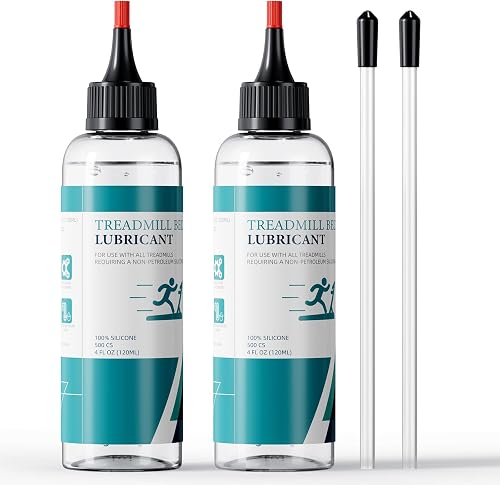
Action Fitness is a 100% silicone oil with a twist spout and an 11 in extension tube. The two applicators allow more controlled placement than a broad spray.
It is designed mainly for treadmill belts, and Action Fitness also names ellipticals, bicycles and hinges as possible uses. That makes it a practical choice only when your rowing machine manual approves silicone for the specific part.
Use the tube or spout as directed and keep lubricant away from surfaces the manual says to leave dry. Skip this bottle if your rower calls for chain oil, grease or another formula.
Choose it when silicone is approved and you want two ways to apply it.
3. WD-40 Specialist Silicone Lubricant: Best for compatible metal or rubber linkages
WD-40 Specialist Silicone Lubricant: Best for compatible metal or rubber linkages
- Silicone spray
- Dries to a clear finish
- For most metal, rubber, vinyl and plastic surfaces
A spray option for compatible moving linkages where the manual allows silicone. Its aerosol format calls for careful application near the rower’s other surfaces.
Pros
- Clear dry finish
- Designed for tracks, cables and pulleys
- Broad stated material compatibility
Cons
- Spray can reach nearby surfaces
- Not intended as a substitute for chain oil unless the manual permits it
WD-40 Specialist Silicone is an aerosol that dries to a clear finish. Its stated compatibility includes most metal, rubber, vinyl and plastic surfaces, and its described uses include tracks, cables, pulleys and machine equipment.
A spray can reach nearby parts, so shield the chain, rail, footplates and floor from overspray. Material compatibility alone does not establish that the rower maker approves it for a particular linkage.
Consider it only where the manual permits silicone spray. It is not a default chain lubricant, and it cannot correct a loose or damaged part.
Choose it for an approved linkage when a spray application fits the instructions.
4. CCGeass Treadmill Belt Lubricant: Best for silicone belt-style service points
CCGeass Treadmill Belt Lubricant: Best for silicone belt-style service points
- 100% silicone lubricant
- Precision twist cap
- Extension tube
This treadmill belt lubricant includes an extension tube for reaching under a belt. Use it on a rower only if the manufacturer allows silicone on that specific part.
Pros
- Extension tube for targeted application
- Silicone-based
- CCGeass mentions some gym equipment
Cons
- Primarily designed for treadmill belts
- Manual compatibility is essential
CCGeass is a silicone liquid with a precision twist cap and extension tube. It is intended for treadmill belts, and CCGeass says it may suit some other sports equipment when that equipment’s maker approves silicone.
The tube helps direct liquid into a narrow area, but a rower’s chain and seat rail may need different care. Use this only if the manual names silicone for the exact service point.
If a chain skips, investigate the mechanism before applying lubricant. Our guide to why a rowing machine chain skips covers other possible causes.
Choose it when silicone is approved and you need a narrow applicator.
5. 1DFAUL Treadmill Lubricant for Belt: Best for silicone application by extension tube
1DFAUL Treadmill Lubricant for Belt: Best for silicone application by extension tube
- Silicone liquid
- Precision screw cap
- Extension tube
The extension tube helps direct lubricant to a narrow service area. Its stated use is treadmill belts, so check the rower manual before considering it for another part.
Pros
- Targeted applicator
- Silicone formula
- Bottle format
Cons
- Designed for treadmill belts
- No rowing-machine compatibility specified
1DFAUL is a silicone liquid in a bottle with a precision screw cap and extension tube. The brand describes it for treadmill belts, with the tube intended to direct lubricant into a targeted area.
Its applicator may be useful when the manual calls for silicone at a narrow service point. The treadmill focus does not make it a general rowing machine lubricant, so skip it if the rower’s instructions call for another formula.
Before addressing a change in resistance with lubricant, identify the cause. See why rowing machine resistance may not be working for symptoms that may need a different fix.
Choose it when your manual approves silicone and the extension tube suits the job.
6. CRC Dry Ceramic Lube: Best for compatible dry-film applications
CRC Dry Ceramic Lube: Best for compatible dry-film applications
- Dry-film aerosol
- Non-tacky formula
- NSF H2 registered for meat and poultry plants
A dry-film lubricant for compatible surfaces where avoiding an oily residue matters. Confirm the rower manufacturer permits a ceramic dry film before use.
Pros
- Dry, non-tacky finish
- CRC describes it for metal, wood, rubber, plastic and glass
- NSF H2 registered
Cons
- Aerosol application needs care
- Not specified for rowing machines
CRC Dry Ceramic Lube creates a dry, non-tacky film instead of an oily coating. CRC describes it for metal, wood, rubber, plastic and glass, and it is NSF H2 registered for use in meat and poultry plants.
A dry film can suit a service point whose instructions call for that type of lubricant and where an oily coating is unwanted. The aerosol needs careful placement; protect neighboring surfaces and follow its application directions.
CRC does not specify this for rowing machines. Do not use it on a chain, rail or roller unless the manufacturer approves a compatible dry-film lubricant.
Choose it only when the rower manual calls for a dry film on a compatible surface.
7. EAWONGEE Treadmill Belt Lubricant Spray 7.2oz: Best for targeted spray application
EAWONGEE Treadmill Belt Lubricant Spray 7.2oz: Best for targeted spray application
- Silicone spray
- Precision straw and fan nozzle
- EAWONGEE advises avoiding metal components
Its two applicators offer targeted or broader spray placement. EAWONGEE describes it for rubber and plastic treadmill parts and advises avoiding metal, so it may not fit a rower chain.
Pros
- Two spray patterns
- EAWONGEE names elliptical and other workout equipment as possible uses
- Silicone formula
Cons
- EAWONGEE advises avoiding metal parts
- Designed mainly for treadmill belts
EAWONGEE combines a precision straw with a fan nozzle in a silicone spray. The brand describes it for treadmill belts and some other fitness equipment, while advising users to avoid metal components.
That warning rules it out for a rower’s metal chain or linkage. It may fit a compatible rubber or plastic part only when the machine manual permits silicone spray.
The straw offers more focused placement than the fan nozzle, but protect nearby parts from overspray either way. Skip it if you cannot isolate the approved service point from metal components.
Choose it for an approved rubber or plastic point when the manual allows this spray.
8. PlanetSafe Lubricants Planet Safe AIM Extreme Duty Lubricant: Best for compatible metal parts
PlanetSafe Lubricants Planet Safe AIM Extreme Duty Lubricant: Best for compatible metal parts
- Liquid lubricant
- Precision application tip
- PlanetSafe describes use on gym equipment
A 1 fl oz bottle with a precision tip for compatible metal-to-metal contacts. Check whether the rower manual permits this type of lubricant at the part you need to service.
Pros
- Precision application
- PlanetSafe names exercise machines among its uses
- Designed for metal parts
Cons
- No rowing-specific compatibility stated
- Not a choice for parts requiring silicone or another lubricant
Planet Safe AIM is a 1 fl oz liquid lubricant with a precision tip. PlanetSafe describes it for metal parts and machinery, including exercise machines, and for metal-to-metal contacts.
The tip helps place a small amount at a compatible contact. This is not a rowing-specific formula, so check the manual before considering it for a chain, pivot or pulley.
Use it only where the rower instructions permit a general metal lubricant. Avoid rails or surfaces that the manual says to keep clean and dry.
Choose it when the manual permits a metal lubricant and a precision tip is useful.
9. XNBXYS 2 Pcs Elliptical Exercise Machine Lubricant: Best for compatible seated pedal machines
XNBXYS 2 Pcs Elliptical Exercise Machine Lubricant: Best for compatible seated pedal machines
- Lubricant for elliptical and seated pedal exercisers
- Bottle container
- Grease and liquid forms
This lubricant is aimed at elliptical and seated pedal machines. It is a narrow alternative for a rower only if its manual approves the lubricant and application point.
Pros
- Named for exercise equipment
- Grease and liquid forms
- Bottle container
Cons
- Not specifically described for rowing machines
- Material compatibility needs confirmation
XNBXYS is intended for elliptical machines, under-desk exercisers and seated pedal machines. It comes in grease and liquid forms, but its material guidance does not establish compatibility with a rowing machine.
That narrow equipment focus makes it a possible option only if the rower maker confirms the lubricant and application point. Otherwise, choose a lubricant specified for your machine.
If a worn bungee has changed the handle’s return, lubricant may not solve the issue. Read our guide to rowing machine bungee cord replacement to see when replacement may be the relevant repair.
Choose it only when the manufacturer approves it for your rower.
What should you check before choosing rowing machine lubricant?
Check the machine manual for the part, lubricant type and application steps. A product that works on one gym machine may be wrong for another component, even if both are metal or rubber.
Use this short checklist before buying:
- Identify the part. Decide whether you’re servicing a chain, rail, seat rollers, pivot, cable or bungee.
- Match the lubricant type. Look for instructions naming oil, silicone, grease, dry film or no lubricant.
- Check the material. Confirm that the lubricant is suitable for the surface, as well as approved by the machine maker.
- Confirm placement. Follow the specified location, amount and application method.
- Protect neighboring parts. Keep lubricant off surfaces that should remain clean or dry.
If the manual is missing, look up maintenance instructions for the exact model or contact the manufacturer before substituting a general-purpose product. This is especially useful for chains and rails, where excess lubricant can collect dust or change how parts move.
Can you use treadmill lubricant on a rowing machine?
You can use treadmill lubricant on a rower only when the rower manual approves its type for the specific part. Treadmill belt oils are designed for belt and deck care, so their stated use does not make them suitable for a rowing chain or rail.
The Action Fitness, CCGeass and 1DFAUL picks are silicone liquids aimed mainly at treadmill belts. WD-40 Specialist and EAWONGEE are sprays with different material guidance, so check each formula and application method against the instructions for your machine.
Do not choose by bottle size, applicator or the word “fitness” alone. First confirm the service point, then select the product type and applicator that let you follow the manual accurately.
How do you prepare a rower before applying lubricant?
Prepare the machine by identifying the service point, checking the manual and clearing the area around it. If the instructions call for cleaning first, remove dirt with the method they specify and let the surface dry before applying lubricant.
Set up with good light and enough room to reach the part without moving or tipping the machine. Keep a cloth nearby for drips, and protect the floor and neighboring surfaces if you are using a spray.
Before starting, check that the machine is stable and follow any directions to unplug or secure it. Do not disassemble a rower unless the manual instructs you to do so; an extension tube or precision tip may help reach a point without taking parts apart.
How should you apply and care for rowing machine lubricant?
Apply only the amount the manual calls for, directly to the specified point. Use a narrow tip or tube when it helps control placement, and avoid broad sprays near chains, rails, belts or floor surfaces that should stay clean.
After application, follow the manual’s directions about wiping excess or moving the mechanism to spread lubricant. Don’t add more simply because a part still makes noise; first confirm the source and check whether the product has reached the intended area.
For routine care, wipe dust and sweat from accessible surfaces and inspect for visible wear. Use the maintenance interval in the rower manual, since the right schedule depends on the machine and its use.
What mistakes should you avoid when lubricating a rower?
The most common mistake is treating every moving part as if it needs the same lubricant. A chain, rail, pivot and bungee can have different requirements, and a treadmill belt formula may not suit any of them.
Avoid these errors:
- Using a general lubricant without checking the manual. Broad equipment claims are not approval for every rower part.
- Applying too much. Excess can spread to areas that should stay dry or collect dirt.
- Spraying near the chain or rail. Aerosol can travel beyond the target point.
- Mixing lubricant types. Don’t layer a new formula over residue unless the instructions allow it.
- Lubricating to hide a fault. Skipping, wobbling, resistance changes or damaged parts may need inspection or repair.
- Ignoring material warnings. EAWONGEE advises avoiding metal; that makes it a poor fit for metal rower parts.
- Skipping a clean surface. Dirt beneath a lubricant can interfere with smooth movement.
If a chain is damaged, worn or still skips after the prescribed maintenance, use the machine’s troubleshooting guidance. Lubricant is a maintenance item, not a repair for every mechanical fault.
What if the rower still feels or sounds wrong?
Lubricant can help only when the part needs lubrication and the product matches the manual. A slipping chain, inconsistent resistance or weak return may point to another issue.
Start with the symptom: check common reasons rowing machine resistance may not work for resistance trouble. If the return cord may be worn, see the rowing machine bungee cord replacement guide; stop using the machine if a part is visibly damaged or movement feels unsafe.
Which rowing machine lubricant should you choose?
Choose Petrol-Gel when your manual calls for gel or grease at a compatible service point. Pick Action Fitness, CCGeass or 1DFAUL only when silicone liquid is approved; consider WD-40 Specialist, CRC or PlanetSafe only when their specific formula is allowed for the part, and skip EAWONGEE for metal components.
The best rowing machine lubricant is the one that matches the service point and the manufacturer’s instructions. Identify the part first, follow the stated application steps, and read how to lubricate a rowing machine chain if chain care is your next task.
Our top 3 picks at a glance
-
1
Best for grease-required service points
Petrol-Gel Food Grade Equipment Lubricant NSF
9.7/10 our score
See it on Amazon -
2
Best for silicone-approved equipment parts
Action Fitness 100% Silicone Treadmill Lubricant
9.6/10 our score
See it on Amazon -
3
Best for compatible metal or rubber linkages
WD-40 Specialist Silicone Lubricant
9.5/10 our score
See it on Amazon
Frequently asked questions
What lubricant should I use on a rowing machine chain?
Use the lubricant named in your rowing machine manual. Some chains call for a light oil, while other machines specify a different product or care method.
A treadmill belt silicone oil or general-purpose spray is not automatically suitable for a chain.
Can I use silicone lubricant on a rowing machine?
Only use silicone lubricant if your rower’s manual approves it for the part you’re servicing. A silicone spray may suit some compatible moving parts, but a chain or rail can have different care requirements.
Apply only to the specified area and wipe away excess if the manual instructs you to.
Should I lubricate a rowing machine rail?
Check the manual before lubricating the rail. Some rails are meant to be wiped clean, and adding oil or grease can attract dirt or change how the seat moves.
If your rower’s instructions call for lubrication, follow the named product and placement steps.
Can rowing machine lubricant fix a skipping chain?
Lubricant may help only when the chain needs routine care. A chain that skips can point to another issue, so inspect the machine and follow its troubleshooting steps before applying oil.
See our guide to why a rowing machine chain skips for possible causes.
How often should I lubricate my rowing machine?
Follow the maintenance interval in your rower’s manual. Usage, environment and machine design can affect how often a part needs care.
Wipe dust from the machine during routine cleaning, and don’t add lubricant just because a part makes noise.