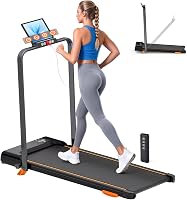
How to Use a Treadmill for Weight Loss
Use a treadmill for weight loss by building a repeatable routine with brisk walking, optional running, and gradual increases in time or incline. Pair regular movement with eating habits that support your goals.
On this page (9 sections)
- Can a treadmill help you lose weight?
- How should you start using a treadmill for weight loss?
- How do you use walking intervals for weight loss?
- How can incline walking make a treadmill workout harder?
- Should you run on a treadmill for weight loss?
- How do you progress without overtraining?
- Is a walking pad enough for treadmill weight loss?
- How do you make treadmill workouts easier to repeat?
- What is the best treadmill routine for weight loss?
Use a treadmill for weight loss by walking often, adding short faster or incline intervals, and increasing the workload slowly. A routine you can repeat each week is more useful than a hard session that leaves you too tired to train again.
Treadmill exercise can support weight loss because it adds regular movement to your day. Your results still depend on your overall eating pattern, activity level, sleep, and how consistently you follow the plan.
Can a treadmill help you lose weight?
Yes, a treadmill can help with weight loss when regular sessions increase your total activity and fit a sustainable calorie plan. Walking, jogging, and running all count, so you can choose the level that matches your current fitness.
The treadmill makes pace, time, and incline easier to control. That control helps you repeat similar sessions and track progress without depending on weather or daylight.
The Centers for Disease Control and Prevention links regular physical activity with weight management. Its physical activity guidance can help you compare weekly movement goals with your current routine.
A treadmill is a tool, not a guarantee. If you have ongoing pain or a medical condition, ask a qualified health professional for advice.
How should you start using a treadmill for weight loss?
Start with easy walking and finish each session feeling able to do more. A simple first session is 5 minutes of easy walking, 10 to 20 minutes at a steady pace, and 5 minutes of slower walking.
Use a pace that lets you speak in short sentences. If you can only say a few words before stopping to breathe, slow down or take a recovery break.
Set up the treadmill where you can step off safely. Keep the walking area clear, use the safety features supplied with your treadmill, and wear shoes that suit your walking style.
What is a simple beginner treadmill routine?
A beginner routine can use 3 sessions per week:
- Walk easily for 5 minutes.
- Walk at a comfortable steady pace for 15 minutes.
- Slow down for 5 minutes.
- Add 5 minutes to the middle section when the session feels manageable.
Keep the incline at 0% while you learn the controls and find a repeatable pace. Add incline later instead of increasing speed, time, and incline in the same week.
If you want help choosing equipment for this style of training, compare treadmill exercise machines by belt space, speed range, incline, storage, and support features.
How do you use walking intervals for weight loss?
Walking intervals alternate a comfortable pace with a faster pace, giving you structure without requiring a nonstop run. They work well when you want more variety than steady walking.
Try this routine after a few easy sessions:
- Warm up for 5 minutes.
- Walk steadily for 2 minutes.
- Walk faster for 1 minute.
- Repeat the 2-minute and 1-minute blocks 6 times.
- Cool down for 5 minutes.
The faster block should feel purposeful, not like a sprint. If your form becomes awkward or you cannot recover during the slower block, reduce the speed or shorten the interval.
Who may suit the LONTEK 15% Incline Walking Pad Treadmill with?
The LONTEK suits home walkers who want manual choices between flat, 10%, and 15% incline positions. Its speed range is 0.6 to 6.2 MPH, so it can support easy walking, faster walking, light jogging, and interval pacing.
It has a 37.4 x 15 in running surface, a 3.0HP brushless motor, a 350 lb maximum weight recommendation, and an LED display for time, speed, distance, and calories burned. The foldable 46.9 x 22.6 x 4.4 in body is designed for compact storage.
Choose this style if you want to change incline by hand and prefer a built-in handlebar for extra support. Measure your storage area and walking space before ordering, especially if you plan to move it between rooms.
How can incline walking make a treadmill workout harder?
Incline walking makes a session harder without needing a faster pace. Start with a low incline for 1 to 2 minutes, then return to flat.
A sample incline session looks like this:
- Warm up flat for 5 minutes.
- Walk at a low incline for 2 minutes.
- Return to flat walking for 3 minutes.
- Repeat 4 to 6 times.
- Cool down flat for 5 minutes.
Keep your body upright and avoid pulling on the handrails. Lower the incline if your knees, hips, ankles, or back become painful.
For a steeper routine, see how to plan an incline treadmill workout for fat loss. Use the treadmill pace chart to link speed, pace, and interval timing.
Who may suit the WELLFIT Walking Pad with 12% Auto Incline?
The WELLFIT suits walkers who want automatic incline changes and more handrail support during home workouts. Its 0% to 12% auto incline, 0.6 to 7.6 MPH speed range, and extended dual handrails cover walking, jogging, running, and incline training.
It has a 40 x 16 in belt, a 3.5HP brushless motor, a 375 lb maximum weight recommendation, and an LED display that shows speed, time, distance, incline, and calories. The foldable frame measures 50.4 x 18.5 x 41.7 in and folds to 50.4 x 18.5 x 5.5 in.
This option may fit beginners who want to change incline without stepping off to adjust legs. It includes a remote control, power cord, lubricant, tool kit, and user manual, so keep the supplied items together for setup and care.
Should you run on a treadmill for weight loss?
Running is optional, and you should add it only after steady walking feels controlled. Short run intervals can raise intensity, but walking still works well if running causes pain or slows recovery.
Try a walk-run routine with a 5-minute warm-up, then alternate 30 seconds of easy running with 2 minutes of walking for 6 rounds. Finish with 5 minutes of easy walking.
Keep the running speed slow enough to stay in control. Add more run intervals before running faster, and take an easier day if soreness alters your movement.
A shorter speed range can still suit walking-based weight loss. The THERUN Walking Pad with 40" Longer Belt is a compact example for walking and light jogging.
Who may suit the THERUN Walking Pad with 40" Longer Belt?
The THERUN suits walking-focused routines and under-desk movement. Its 40 x 15 in belt, 0.6 to 3.8 MPH speed range, 2.5HP motor, and 300 lb maximum weight recommendation support walking and light jogging.
The LED display shows time, calories, steps, speed, and distance. Its 45.5 x 19.6 x 4.5 in body weighs 36.6 lb and has built-in front transport wheels for moving it between locations.
Choose it when your plan centers on repeatable walking rather than faster running or automatic incline changes. It has 2 modes for under-desk treadmill use and walking-pad use, so decide where you will use it before each session.
How do you progress without overtraining?
Change one training variable at a time: session length, number of sessions, speed, or incline. A small increase is easier to recover from and makes discomfort easier to trace.
Use a 4-week progression:
- Week 1: Walk 3 times for 20 to 25 minutes.
- Week 2: Walk 3 or 4 times for 25 to 30 minutes.
- Week 3: Add 4 to 6 short faster or incline intervals.
- Week 4: Keep the intervals and add 5 minutes to one or two sessions.
You do not need to increase every week. Repeat a week when your legs feel unusually tired, sleep worsens, or your normal pace feels harder.
Track time, speed, incline, and how you felt afterward. Display calorie numbers are estimates, so do not treat them as exact permission to eat more.
For another way to interpret energy use, see how to use a treadmill MET calculator and chart and how to estimate treadmill calories with speed and incline.
Is a walking pad enough for treadmill weight loss?
A walking pad can support weight loss when it helps you accumulate regular walking time. It may be useful for short indoor sessions, work breaks, or days when a full gym workout is not practical.
A walking pad is not automatically better than a full treadmill. Compare the speed range, belt dimensions, incline method, handlebar support, maximum weight recommendation, and storage needs with your routine.
Read Best Walking Pads for Weight Loss if compact equipment is your main concern. You can also compare whether walking pads can help you lose weight before deciding between a walking pad and a larger treadmill.
How do you make treadmill workouts easier to repeat?
Put your treadmill sessions on a schedule and remove small setup barriers. Choose a time when the floor is clear, keep your shoes nearby, and decide the session length before stepping on.
Use easy days between harder incline or run sessions. A simple weekly plan could include two steady walks, one interval session, and optional short walking breaks on other days.
Clean around the belt according to the treadmill instructions and keep the walking area clear. Follow the care guidance for lubrication, belt alignment, and storage for your specific model.
If you are comparing machines for a different cardio style, read treadmill vs elliptical for weight loss. A rowing machine can also provide a full-body workout, and these guides explain whether you can lose weight on a rowing machine and how rowing machine workouts may support weight loss.
What is the best treadmill routine for weight loss?
The best treadmill routine for weight loss is the one you can repeat, recover from, and gradually progress. Start with steady walking, add short faster or incline intervals, and introduce running only when it feels controlled.
Choose LONTEK if manual incline positions and a 6.2 MPH top speed match your plan. Choose WELLFIT if automatic incline, extended handrails, and a wider 40 x 16 in belt matter most.
Choose THERUN if your priority is compact walking and light jogging.
Keep your weekly plan simple, track the work you actually complete, and adjust one variable at a time. For the next step, compare whether treadmills can help you lose weight with your schedule and preferred workout style.
Frequently asked questions
Can walking on a treadmill help you lose weight?
Yes, walking on a treadmill can support weight loss when it helps you use more energy than you consume over time. Start with a pace you can repeat, add minutes gradually, and pair your routine with eating habits that fit your needs.
Consistency matters more than exhausting workouts.
How long should I walk on a treadmill to lose weight?
Start with 20 to 30 minutes if that feels manageable, then build toward longer sessions as your fitness improves. You can split walking into shorter blocks during the day.
Use your breathing, effort, and recovery to guide the pace instead of chasing a single calorie number.
Is incline walking better for weight loss?
Incline walking can make a session more demanding without requiring a faster pace. Begin with a low incline and short intervals, then increase one variable at a time.
Hold the handrails only for balance, since leaning heavily on them can change the effort and walking form.
Should I run or walk on a treadmill for weight loss?
Walking is a useful starting point because it is easier to repeat and recover from. Running can raise workout intensity, but it is optional.
Build walking time first, then add short run intervals if your joints, fitness level, and schedule support that progression.