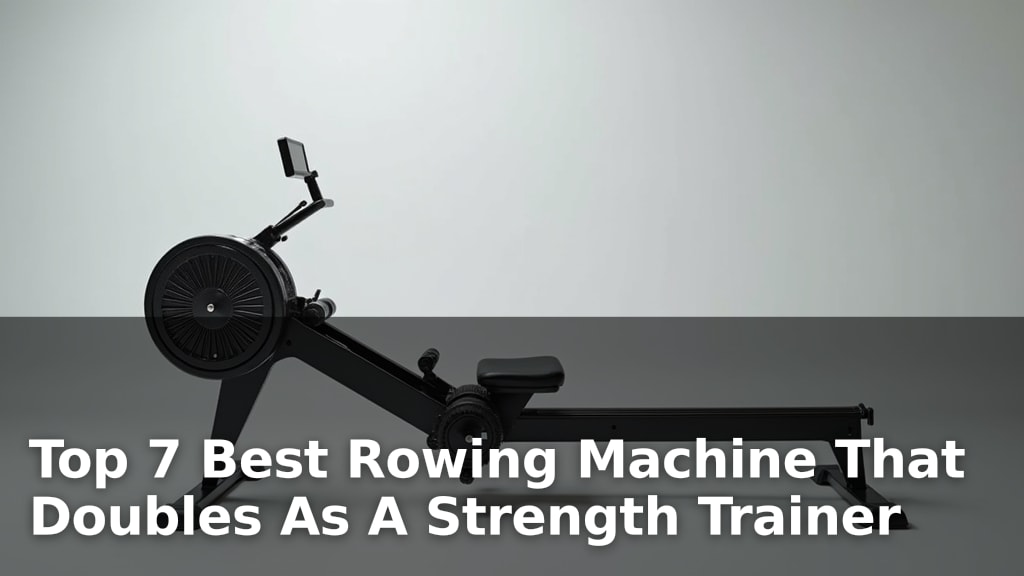
Rower vs Assault Bike for Football Conditioning: Which Is Better? (October 2026)
For HIIT football conditioning, choose a rower for coordinated full-body efforts or an assault bike for simple cycling bursts. Pick the one that fits your session and lets you repeat strong, controlled rounds.
On this page (8 sections)
- Rower vs assault bike HIIT football conditioning: which should you choose?
- Which machine better matches football's stop-start demands?
- How should you set football conditioning intervals?
- What technique matters when rowing under fatigue?
- How can you combine machine work with football training?
- What should you consider before choosing a home machine?
- Who should choose a rower, an assault bike or neither?
- Which should you choose for football conditioning?
For rower vs assault bike HIIT football conditioning, choose a rower for coordinated full-body intervals or an assault bike for simple cycling bursts. The right choice depends on the movement you want to train, how you plan recovery and which machine you can use with steady form.
A rower combines a leg drive with a trunk hinge and arm pull. For the shoulder role in rowing, see rowing and shoulder training.
An assault bike uses a cycling motion, typically with moving handles, so it can raise effort without requiring you to learn a rowing stroke.
Neither machine replaces football practice. Both can support general conditioning, but running, acceleration, changes of direction and sport-specific drills need their own place in a program.

 Best for compact rowing
Sunny Health & Fitness Compact Hydraulic Rower
Rower vs assault bike HIIT football conditioning: which should you choose?
Choose the rower for full-body, repeatable pulls; choose the assault bike for straightforward cycling intervals. The better option is the one that lets you reach your target effort and recover without losing control.
On a rower, your legs, trunk and arms work in sequence. That coordination makes rowing useful when you want a hard interval that includes upper- and lower-body effort, but technique becomes more important as fatigue builds.
For a closer look at shoulder involvement, see rowing and rotator cuff muscles.
For a compact rower with full-motion arms, see the Stamina BodyTrac Glider review.
On an assault bike, you keep pedaling and use the handles to add upper-body work. The movement is easy to understand, though hard intervals can still tire your legs and arms quickly.
For football, consider the purpose of the session. A machine can challenge your ability to repeat work, but it cannot teach you to accelerate, decelerate or react to an opponent.
How does HIIT on a rower compare with HIIT on an assault bike?
Rower intervals make stroke quality part of the workout, while assault bike intervals emphasize pedaling effort and cadence. Either can deliver hard work and recovery periods when you set a repeatable pace.
On a rower, push with your legs, swing through the trunk and finish with the arms. Reverse that sequence during recovery.
If you rush the movement or pull mainly with your arms, fatigue can make your stroke less efficient.
On an assault bike, you can change effort by pedaling faster and pushing or pulling the handles harder. This makes it easier to vary intensity quickly, but it is still possible to start too hard and lose output across later rounds.
Neither machine guarantees better conditioning. Use consistent work and recovery periods, then compare how well you repeat the same session over time.
Which machine better matches football's stop-start demands?
Either machine can train repeated hard efforts with recovery, but neither copies a football play. Choose according to your session goal, then include running and direction changes elsewhere in your plan.
Football mixes short bursts with movement and rest. Machine intervals can help you practice repeating effort, but drills with sprinting and changes of direction are needed to prepare for those demands directly.
A machine can make sense when weather, space or training variety makes running less practical. It also lets you work for a set time without needing a route or open field.
When does a rower fit football training?
A rower fits when you want intervals with coordinated upper- and lower-body effort. It also works in a home circuit that alternates rowing with separate strength movements.
The stroke takes practice, especially when effort rises. Press through your feet first, avoid yanking the handle with your arms and shorten the interval if your form becomes choppy.
For a refresher on how the legs, trunk and arms work together, read how to build strength for rowing. Strong, coordinated strokes make it easier to hold a steady rhythm under fatigue.
A rower may suit you if you want one machine for measured intervals and other home cardio sessions. For a connected rower option, read the Aviron Strong Series review.
The Best Rowing Machine That Doubles As A Strength Trainer guide covers equipment designed for mixed training.
When does an assault bike fit football training?
An assault bike fits when you want to move quickly between hard work and easy pedaling. Its familiar cycling pattern puts less emphasis on learning a rowing sequence.
Start at an effort you can repeat instead of sprinting every round. Once you know how your legs and arms respond, add work time, rounds or intensity gradually.
If you're comparing the machines for general intervals, see Is a Rowing Machine or Assault Bike Better for HIIT?. This post focuses on football conditioning and how to work it into a broader plan.
How should you set football conditioning intervals?
Use repeatable work and recovery periods, then adjust one part of the session at a time. Start with a manageable workload and finish each interval while you can still control your movement.
There isn't one interval prescription for every player. Training experience, the rest of your football program, current fitness and the season all affect how much conditioning makes sense.
For a simple starting structure, set a work period and a longer recovery period, then complete a small number of rounds. If your output and form stay steady, add a round or extend the work period in a later session, but don't change both at once.
Keep the hard work truly hard enough to serve your goal, but not so intense that every later interval becomes a survival effort. The best pace is one you can repeat with control.
What should you track during intervals?
Track effort duration, recovery time and how consistently you complete the rounds. For help choosing a workout measure, see time or reps for rowing workouts.
These simple notes help you judge progress without treating one display number as a measure of football ability.
On a rower, note stroke rate or distance if the display provides those measures. Compare sessions done on the same machine with the same work and recovery periods.
On an assault bike, record cadence or another available output measure. If one round falls far below the others, start the next session at a lower effort or take more recovery before adding work.
How much recovery should you take?
Take enough recovery to preserve the purpose of the workout. If the goal is repeated quality efforts, cutting rest too short can turn later rounds into poor technique and uncontrolled fatigue.
Ask a coach to fit hard intervals around practice, lifting and match schedules. More conditioning is not automatically better if it interferes with skill work or recovery.
What technique matters when rowing under fatigue?
Keep the rowing sequence controlled as effort rises. Smooth strokes are more useful than frantic pulls that break down when you get tired.
Start each drive by pressing through the feet. Let the trunk swing back after your legs begin to extend, then draw the handle toward your lower ribs.
On the recovery, extend your arms, hinge forward and bend your knees after the handle clears them. Let the seat move smoothly instead of rushing back to the catch.
Your arms contribute to the finish, but they shouldn't do all the work. If your elbows bend before the legs drive, slow down and reset the sequence.
You can read whether bicep curls on a rowing machine make sense if arm fatigue is changing how you approach the stroke. For grip mechanics, see how a supinated grip works the biceps.
A rowing stroke is a coordinated pull, not a curl exercise.
How can you combine machine work with football training?
Use machine intervals as one part of a varied plan, with football movement and strength training included separately. One tool can't cover sprinting, cutting, strength and recovery all at once.
You might pair a conditioning day with football-specific running and another day with machine intervals, depending on your schedule. Space hard sessions sensibly, and ease off if your movement quality or recovery starts to slip.
If you enjoy mixed cardio, combining 1000 skips and 15 min rowing offers another home workout structure. Jump rope adds repeated foot contacts, so scale it to your experience and available space.
If rowing feels too easy, adjust effort, interval length or stroke quality rather than adding movements mid-stroke. You can also learn what a water rower is when comparing different rowing resistance systems.
What should you consider before choosing a home machine?
Choose around your available space, setup and training habits. The useful machine is the one that fits your room and gets used regularly.
Check the full footprint, room to get on and off safely, noise and flooring. Think about where the machine will go between sessions, whether it needs power and whether you can keep it set up for the workouts you plan.
A rower also asks you to learn and repeat a stroke. If you prefer a familiar pedaling motion and quick changes in effort, an assault bike may suit you better.
Compact rowing option for measured intervals
The Sunny Health & Fitness Compact Hydraulic Rower suits a home setup for measured rowing intervals. It has 12 resistance levels, an LCD meter and an inclined rail that adds challenge on the drive.
Its dimensions are 58.1 x 20.1 x 24.8 inches, and its steel frame supports users up to 300 lb. Measure both the workout area and storage spot before choosing a compact machine.
Squat-focused option for strength circuits
The Sunny Health & Fitness Smart Row-N-Ride Glute suits squat-focused strength circuits, not standard rowing intervals. It offers adjustable squat positions and 3 resistance bands, and it folds for storage.
Use it for controlled strength work between separate cardio efforts if that movement fits your routine. It isn't a substitute for a rower or an assault bike when the goal is sustained machine intervals.
Who should choose a rower, an assault bike or neither?
Choose the rower if you want coordinated full-body work; choose the assault bike if you want a simpler cycling pattern. Skip both as your only conditioning tool if you need to prepare for football's running and change-of-direction demands.
A rower makes sense if you are willing to learn the stroke and want a machine that can support steady cardio as well as intervals. If repeated pulling irritates you or technique keeps breaking down, choose another option and get coaching before pushing harder.
An assault bike makes sense if you want to adjust effort quickly and prefer cycling. It may be a poor fit if the bike's footprint, movement or high-effort leg fatigue conflicts with your space or training needs.
Neither machine is the right choice if you won't use it consistently, can't fit it safely in your home or expect it to replace football drills. A planned running session, coached practice or another conditioning option may serve you better.
Which should you choose for football conditioning?
Pick the rower for coordinated full-body intervals and the assault bike for simple, repeatable cycling bursts. Keep running and direction-change work in your plan for football skills neither machine reproduces.
Choose the Sunny Health & Fitness Compact Hydraulic Rower if a compact rowing setup fits your home and you want measured intervals. Choose the Sunny Health & Fitness Smart Row-N-Ride Glute if your priority is squat-focused strength work between cardio efforts.
Use the machine that fits your space and lets you repeat quality efforts. For football conditioning, pair that work with practice, recovery and strength training, and let the session goal guide your choice.
Frequently asked questions
Is a rower or assault bike better for football conditioning?
A rower suits intervals that combine leg drive, trunk control and an upper-body pull, while an assault bike suits quick efforts with a cycling motion. Neither automatically recreates football play.
Choose based on the conditioning quality you want, your technique and the equipment you can use consistently.
How long should football conditioning intervals last?
Choose interval length around the work pattern you are preparing for and your current fitness. Short efforts with full recovery emphasize repeated bursts, while longer efforts challenge sustained output.
Start with a manageable number of rounds, keep technique steady and adjust one variable at a time.
Can rowing help with football conditioning?
Rowing can build general conditioning through repeated full-body efforts, but it does not reproduce sprinting, cutting or contact. Use it as one part of training, alongside football-specific practice and strength work.
Keep strokes controlled as effort rises so fatigue doesn't turn each pull into a rushed movement.
Can you use a hydraulic rower for HIIT?
Yes, a hydraulic rower can be used for timed work and recovery intervals. Its resistance knob lets you choose among 12 levels, but the resistance setting alone doesn't determine effort.
Track time, keep a repeatable stroke and stop or reduce effort if form breaks down.
Should football players use a rower or bike during recovery?
Either can work for lower-intensity movement if it feels comfortable and lets you keep effort easy. Use a pace where you can recover between hard sessions, and follow your coach's plan.
If pain, dizziness or unusual shortness of breath occurs, stop and seek appropriate help.