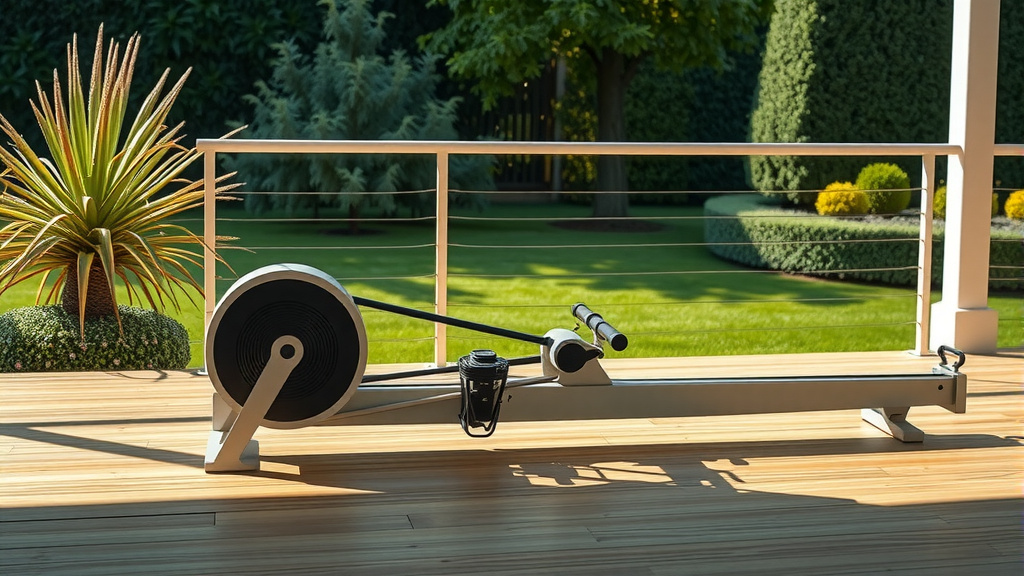
Can You Use a WaterRower Outside?
Using your WaterRower outside is only sensible in a dry, shaded, sheltered spot for a short session. Keep it indoors between workouts, since a roof alone won't control dampness, sun, or temperature swings.
On this page (6 sections)
Using your WaterRower outside can work for a short workout if you have a dry, shaded area protected from rain and wind. Keep the machine indoors between sessions, because outdoor conditions can expose its wooden frame, water tank, monitor, and other parts to moisture, sunlight, and temperature swings.
A covered porch or garage isn't automatically a suitable place. Check whether the space stays dry and moderate, and whether you can move the rower indoors afterward without making storage a hassle.
Is using your WaterRower outside a good idea?
Use a WaterRower outdoors only for a session in a dry, sheltered spot, then bring it inside. For regular use or storage, a stable indoor space is the more dependable choice.
A roof can block direct rain while leaving the machine exposed to damp air, windblown water, or hot sun. A patio beside a sprinkler or pool has similar risks, even if the rower itself isn't sitting in the rain.
WaterRowers combine a wooden frame with a water tank and monitor. Avoid wet ground, direct sun, standing water, and areas where the temperature changes sharply.
Check your model's manual for its care and storage instructions.
If you want an outdoor workout because the indoor room is crowded, consider whether the rower can be moved back inside each time. A machine left outside between sessions faces more exposure than one used briefly and stored indoors.
How do you choose a suitable outdoor spot?
Choose a level, dry, shaded area with protection from rain and wind, and a clear path back indoors. If the spot is damp, gets strong sun, or has extreme temperature swings, don't use it for the rower.
Start by looking at the floor. It should be stable and dry, with enough room for the machine and your full rowing stroke.
Avoid slick paving, uneven ground, doorways, and walkways where the rower could shift or obstruct people.
Next, check what happens around the area during a normal day. Sprinklers, roof runoff, windblown rain, and afternoon sun can reach places that look sheltered at first.
If the space is attached to the house, check for leaks and dampness before bringing equipment there.
Think about the return trip too. If you can't move the rower in safely after the workout, or if indoor storage is inconvenient enough that you will leave it outside, choose an indoor setup instead.
Can you keep a rowing machine outside between workouts?
Indoor storage is the better default for a WaterRower between workouts. Our guide to whether you can keep a rowing machine outside explains the broader issue, while the WaterRower's wood and tank call for particular care.
A dry garage may work if it stays reasonably stable and protects the machine from leaks and sun. An exposed patio or shed with damp air, temperature swings, or windblown moisture is a poor storage choice.
Follow your model's manual if its care instructions differ.
How should you set up and use a WaterRower outdoors?
Set the rower on a level, dry surface, check it before each session, and keep it clear of foot traffic. Move it indoors when you're done rather than leaving it outside overnight.
Before rowing, check the floor for water and confirm the machine sits steadily. Look over the frame, tank, monitor, and nearby connections for moisture or visible damage.
If anything is wet, damaged, or unstable, skip the workout until you've followed the manual's guidance.
Give the seat rail and moving parts enough clearance. Keep the machine away from doors, stairs, pool edges, and anything you could hit with the handle or your body.
Make sure you can see and reach the monitor without stretching or twisting during a stroke.
Set up in shade and avoid placing the tank in direct sunlight. Don't assume a quick session makes a wet or very hot surface safe.
If the area becomes exposed to rain or the floor gets slippery, stop and move the rower to a dry place.
For a primer on rowing form and the stroke sequence, see our guide to using a water rowing machine. A steady setup matters because you can focus on your stroke instead of adjusting your position around an awkward or unstable space.
How do you protect the rower after an outdoor workout?
Dry any moisture, inspect the machine, and store it inside after the session. Follow the manual for tank water care, cleaning, and maintenance.
Check the frame and the floor around it for droplets or splashes. If the manual allows, wipe damp surfaces with a soft cloth, keeping water away from the monitor and electrical connections.
Don't cover a damp machine, since a cover can hold moisture against it.
Keep the tank away from direct heat, cold, and sunlight, and follow the machine's instructions for water treatment. Don't let the tank freeze or heat up.
If the rower gets wet, or if you see a leak or damage, consult the manual before using it again.
Don't add lubricant or chemicals to the WaterRower just because a product is marketed for gym equipment. The right material and location matter, so only use a lubricant if WaterRower approves it for that specific part.
This mineral-oil gel is described for machinery and gym equipment, including parts that contact food. That broad use does not guarantee compatibility with a WaterRower's materials or moving parts, so check the machine's care guidance first.
What if indoor storage is the real problem?
Choose a rower that fits your indoor storage routine if weather makes outdoor storage tempting. Measure the space, doorways, and route to storage before deciding whether a folding or separable design will help.
A compact machine that folds can be easier to put away after each workout. The Best Foldable Rowing Machine guide compares options, and its guides to foldable rowers for small apartments and foldable rowers for college dorms address tighter spaces.
The Stamina Hydraulic Rowing Machine suits someone who needs a compact rower and wants a folding frame. Its 58.25 x 42.5 x 18.13 in footprint and 250 lb capacity give you concrete dimensions and a weight limit to check against your room and needs.
Skip it if you specifically want a water-resistance rower or need capacity above its stated limit.
A separable design may suit a home where the machine needs to move between workout and storage areas. The Concept2 RowErg separates into two pieces and has caster wheels, but measure its 9 x 4 ft recommended workout space before choosing it.
It uses air resistance rather than water, so skip it if the water feel is essential. For the water rower's sound, see water rowing machine noise levels.
For sound details, read the air rower decibel guide.
See our comparison of Hydrow and WaterRower if you're weighing a WaterRower against another connected rowing option. A different model won't solve an outdoor exposure problem by itself, but an indoor-friendly storage setup can.
Should you use your WaterRower outside or bring it in?
Use it outside only for a brief workout in a dry, shaded, sheltered space, then bring it indoors. Choose another storage plan if the machine would have to remain in damp air, direct sun, rain, or unstable temperatures.
Pick a foldable machine if limited indoor space is the obstacle and you can store it after use. Pick a separable rower if moving it in pieces suits your storage area.
Keep your WaterRower indoors if you don't have a reliably dry outdoor spot or a practical way to bring it back inside.
Before your next session, use this rule: dry floor, stable footing, no direct sun or windblown rain, and indoor storage afterward. For broader storage guidance, read whether you can keep a rowing machine outside.
Frequently asked questions
Can rain damage a WaterRower?
Rain can wet the frame, monitor, and other parts, so keep a WaterRower out of rain and away from splashes. A covered location can still be damp or exposed to windblown water.
If the machine gets wet, follow its care guidance before using it again.
Can I keep a WaterRower on a covered patio?
A covered patio may reduce direct rain and sun, but it doesn't control humidity, temperature swings, or windblown moisture. Check the machine's manual and choose indoor storage if the patio gets damp, hot, cold, or exposed to weather.
Bring the rower inside after each session if conditions are uncertain.
Can I leave water in a WaterRower tank outside?
Keep a WaterRower tank out of heat, cold, and sunlight. Follow the care instructions for water treatment and storage, and avoid letting the tank freeze or heat up.
Store the machine in a stable indoor space when you aren't rowing.
Is a WaterRower suitable for a garage?
A dry, temperature-stable garage can be more suitable than an exposed patio, but garages vary in humidity and temperature. Check the manual's storage guidance, keep the rower away from leaks and direct sun, and inspect the area for dampness before setting it up.