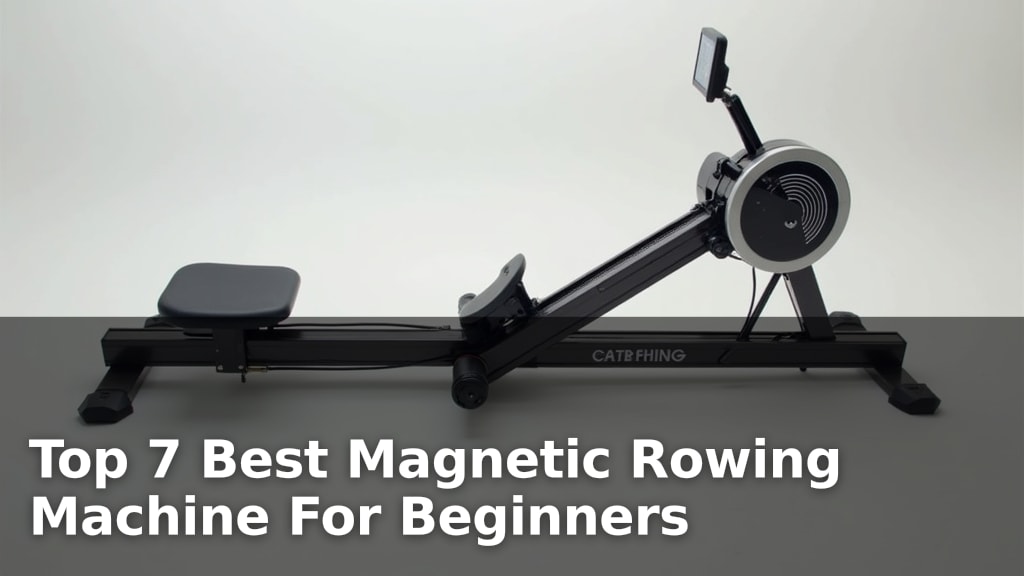
Which Is Better Rowing Machine Or Stationary Bike?
On this page (5 sections)
When comparing a rowing machine vs. a stationary bike, the rowing machine offers a full-body workout engaging over 85% of your muscles, while a stationary bike primarily targets your lower body and cardiovascular fitness.
The “better” choice truly depends on your fitness goals, existing physical limitations, and what type of exercise you find most enjoyable and sustainable for the long run.
TL;DR: Here’s a quick rundown to help you decide:
- Rowing machines provide a full-body workout, building strength and cardio simultaneously.
- Stationary bikes are excellent for cardiovascular health and lower-body focus, often easier on joints.
- Choose rowing for a comprehensive, high-intensity workout that challenges your entire body.
- Opt for biking if you prioritize joint comfort, sustained cardio, or specific lower-body toning.
- Both are effective for weight management and fitness, but their muscle engagement differs greatly.
Which Is Better Rowing Machine Or Stationary Bike?
Neither machine is universally “better” than the other; instead, they excel at different things. Your ideal pick aligns with your personal fitness journey and what you want from your workouts.
Think of it like choosing between a concert and a play—both are entertainment, but they offer vastly different experiences and appeals.
Understanding Your Fitness Goals First
Before you commit to either a rowing machine or a stationary bike, take a moment to consider what you really want to achieve. Are you aiming for muscle growth, weight management, or heart health?
Perhaps you are recovering from an injury or just looking for a fun way to stay active. Your goals will guide you to the perfect fit.
What Do Rowing Machines Do For You?
A rowing machine, often called an ergometer, simulates the motion of rowing a boat. It is a fantastic tool for a compound, full-body workout that many experts recommend (American Council on Exercise).
You use your legs, core, and upper body in a single, fluid movement. It’s like having several gym machines rolled into one.
Full-Body Muscle Engagement
When you row, your legs initiate the drive, engaging your quads, hamstrings, and glutes. Your core muscles stabilize your body, and your back, shoulders, and arms finish the stroke.
Research confirms that over 85% of your muscles can be active during a rowing session, making it a highly efficient exercise.
Cardiovascular Benefits of Rowing
Because so many muscles are working, your heart and lungs get a significant challenge. Rowing quickly elevates your heart rate, providing an excellent cardiovascular workout.
This boosts your stamina and can help improve your overall heart health. Many find it a very effective way to burn calories rapidly.
What Do Stationary Bikes Offer?
Stationary bikes come in various forms: upright, recumbent, and spin bikes. They primarily focus on your lower body and cardiovascular system, offering a different kind of exercise experience.
These bikes are a go-to for many people, from seasoned athletes to those just starting their fitness journey.
Lower Body Focus and Endurance
Biking heavily targets your quadriceps, hamstrings, glutes, and calves. You can build significant leg strength and muscle endurance with consistent pedaling.
It’s perfect if you want to focus on toning your lower half and building up leg power.
Joint-Friendly Exercise
One of the biggest perks of a stationary bike is its low-impact nature. Your feet remain on the pedals, reducing stress on your knees, hips, and ankles (Mayo Clinic).
This makes it an ideal choice if you have joint sensitivities or are recovering from certain injuries.
Rowing Machine vs. Stationary Bike: A Quick Comparison
Let’s put them side-by-side. This table helps break down the key differences you might be weighing when making your choice.
Consider what truly matters most for your individual fitness journey.
| Feature | Rowing Machine | Stationary Bike |
|---|---|---|
| Primary Muscles | Full-body (legs, core, arms, back) | Lower body (quads, glutes, hamstrings) |
| Cardio Intensity | High, quickly increases heart rate | Moderate to high, sustained effort |
| Impact on Joints | Low impact, but requires proper form | Very low impact, gentle on joints |
| Calorie Burn | Potentially higher due to full-body work | High, great for sustained sessions |
| Skill Required | Some technique needed for efficiency | Generally easy to pick up and use |
Calorie Burn: Which One Wins?
When it comes to burning calories, both machines are highly effective. However, because rowing engages more muscles, it often allows for a higher calorie burn per minute if performed with good intensity.
Many studies show that vigorous rowing can rival or even surpass biking in terms of energy expenditure (Harvard Medical School).
Impact on Joints: Who is the Champion?
For those with joint issues, the stationary bike is often the clear winner. Its seated position and circular motion put very little stress on your joints.
While rowing is also low-impact, improper form can sometimes strain the lower back or knees, so technique matters greatly (NIH).
Space and Portability Considerations
Think about where you’ll put your machine. Rowing machines tend to be longer, requiring more floor space, though many models can fold for storage.
Stationary bikes, especially upright or spin bikes, often have a smaller footprint, making them better for tighter spaces. Recumbent bikes are generally longer but still might fit better than a rower.
Enjoyment Factor: Finding Your Flow
This might be the most personal point. If you hate the exercise, you won’t do it! Do you prefer the rhythmic, flowing motion of rowing, or the steady, consistent pedal stroke of biking?
Some people find rowing meditative, while others love cycling along to music or watching a show. Choose what keeps you motivated.
Making Your Choice: A Quick Checklist
Still on the fence? Run through these quick questions to help solidify your decision. It’s all about finding your perfect fitness partner.
Which option calls out to you more? What aligns with your daily routine?
- Is full-body strength your top priority? Rowing leans this way.
- Are you sensitive to joint stress? A stationary bike is often safer.
- Do you want to burn maximum calories in less time? Rowing can offer this with good form.
- Is sustained, steady-state cardio your main goal? Biking is fantastic for this.
- How much space do you have at home? Consider the machine’s footprint.
- What activity do you genuinely find fun? Enjoyment equals consistency!
Conclusion
In the end, deciding which is better, a rowing machine or a stationary bike, truly comes down to you. Both are exceptional tools for improving your fitness, managing weight, and boosting your health.
The rowing machine offers a powerful, full-body challenge, building strength and cardio simultaneously. The stationary bike provides a fantastic lower-body and cardio workout, often with less impact on your joints.
Weigh your personal goals, physical needs, and what you’ll actually stick with. Whichever you choose, consistency is the true secret to success. Get moving, and enjoy the journey!
Are rowing machines harder than stationary bikes?
Many people find rowing machines to be more challenging initially because they require coordination of multiple muscle groups and proper technique. Stationary bikes, by contrast, are generally easier to get started with since the motion is more intuitive and primarily uses the lower body.
Can I get a good workout with just a stationary bike?
Absolutely! A stationary bike offers an excellent cardiovascular workout, strengthens your lower body, and can help with calorie burning. While it doesn’t work your upper body as much as a rower, you can still achieve significant fitness results and improve endurance with consistent biking.
Which machine is better for weight loss?
Both machines are highly effective for weight loss as they both burn a significant number of calories. Generally, a rowing machine might burn slightly more calories per minute due to its full-body engagement. However, the “better” machine is the one you will use consistently, as regular exercise is the key to weight management.
Is a rowing machine good for bad knees?
Rowing can be good for bad knees because it is a low-impact exercise, meaning your feet stay in contact with the machine. However, improper form, especially pushing off too hard with the legs or rounding the back, can place stress on the knees. Always prioritize correct technique and listen to your body (Cleveland Clinic).
How long should a beginner row or bike?
For beginners, we often recommend starting with 15-20 minute sessions, three to four times a week. You can gradually increase the duration and intensity as your fitness improves. Always remember to include a warm-up before and a cool-down after your workout, no matter the machine.