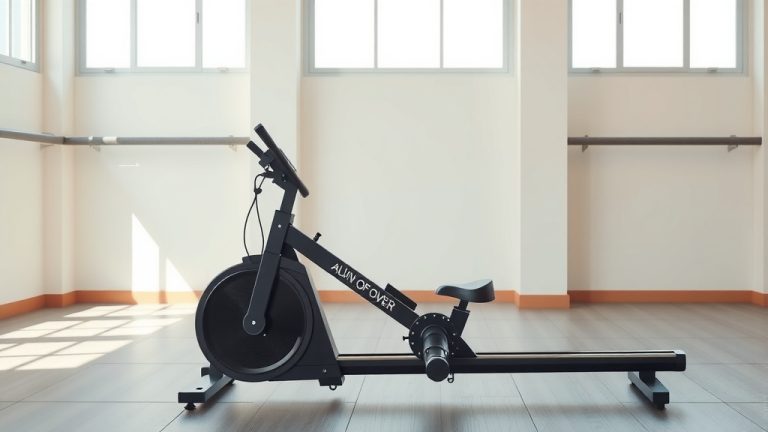
How To Use Rowing Machine At Gym?
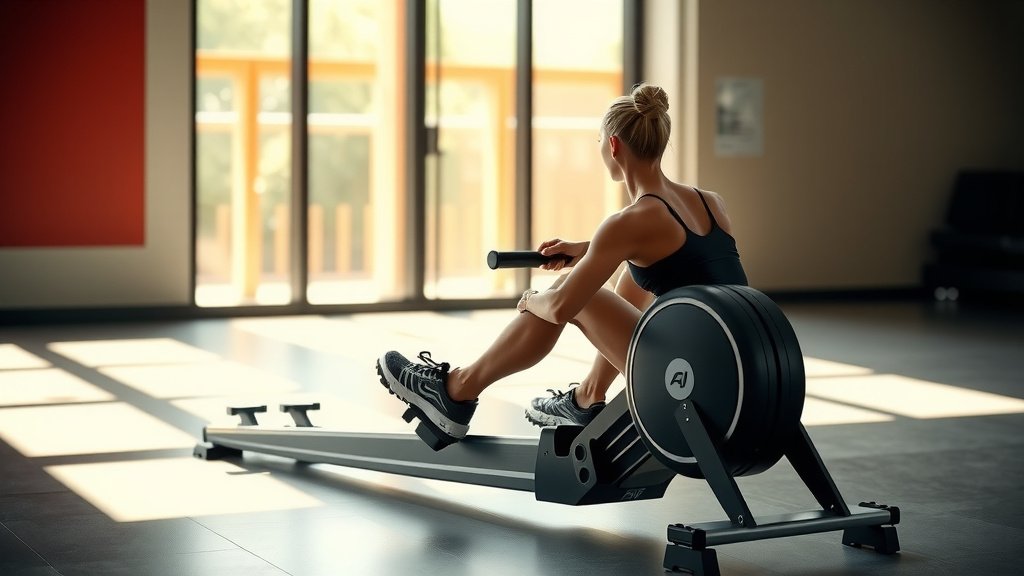
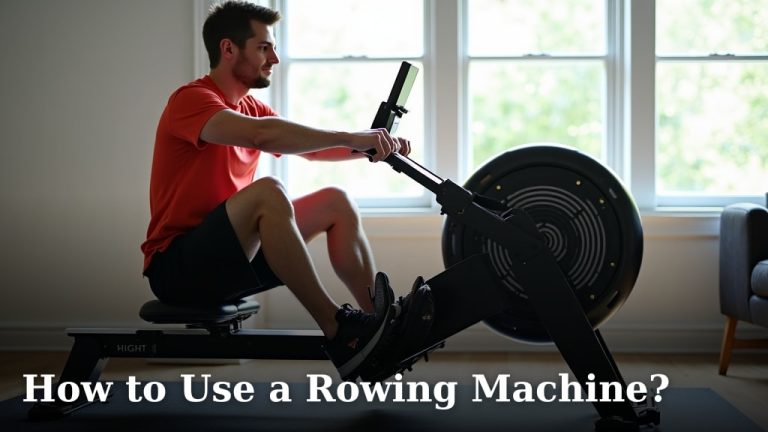
To use a rowing machine at the gym effectively, first adjust the foot straps and damper setting for your comfort. Then, master the four-phase stroke – the catch, drive, finish, and recovery – focusing on powerful leg pushes rather than just arm pulling.
Remember that proper form is key to maximizing your workout and preventing injury when you use rowing machine at gym, so take your time to learn the technique.
- Get set up: Adjust the machine and foot straps to fit you.
- Learn the stroke: Understand the catch, drive, finish, and recovery phases.
- Push with your legs: The power comes from your legs, not your arms or back.
- Maintain good posture: Keep your core strong and back straight throughout the movement.
- Practice consistency: Aim for smooth, controlled movements with a steady rhythm.
How To Use Rowing Machine At Gym?
Learning to use a rowing machine at the gym is a fantastic way to get a full-body workout. It works more muscles than almost any other single piece of gym equipment.
Many experts say rowing machines provide an outstanding mix of cardio and strength training (Mayo Clinic). Think of it as a complete fitness package wrapped in one smooth motion.
Getting Started: The Essential Setup
Before you even think about pulling, take a moment to set yourself up. This initial step is more important than you might realize.
A good setup makes all the difference for comfort and effective movement.
Your Feet and Foot Straps
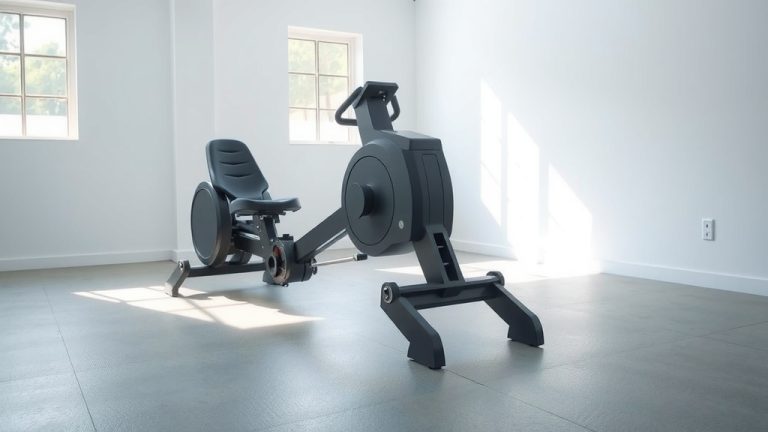
First, sit on the seat and place your feet onto the footrests. Position them so the strap goes across the widest part of your foot, right over the balls of your feet.
Tighten those straps snugly. You want your feet secure, but not pinched. Your heels might lift slightly during the stroke, and that is perfectly normal.
Understanding the Damper Setting
Look for a lever on the side of the fan cage, usually numbered 1 to 10. This is your damper setting, not a resistance setting in the traditional sense.
A higher number (like 8-10) feels like rowing a heavy boat through thick water. A lower number (like 3-5) feels like a lighter boat on smooth water.
We found that for most people, a setting between 3 and 5 is a good starting point for an effective workout. It gives you enough resistance without making you tire too quickly (Concept2).
Understanding the Rowing Stroke
The rowing stroke has four distinct phases. Mastering each one will help you get the most from your workout.
Think of it as a dance: fluid, powerful, and rhythmic. It’s legs, core, arms, then arms, core, legs to return.
The Catch: Ready, Set, Row!
Start in the “catch” position. Your knees are bent, shins vertical, and arms are extended straight in front of you.
Your back should be tall and tilted slightly forward from your hips. Your hands should be holding the handle with an overhand grip, fingers loosely wrapped.
The Drive: Power Through!
This is where the real work happens. Push off powerfully with your legs. Imagine pressing your feet through the foot stretcher.
As your legs straighten, lean back slightly from your hips and then pull the handle towards your upper abdomen, just below your ribs.
Many people mistakenly pull with their arms too early. Research often connects a powerful leg drive with greater efficiency and less strain on the back (NIH).
The Finish: Lean Back, Pull In
At the “finish” of the stroke, your legs are fully extended, your body is leaning back a little, and the handle is close to your body.
Your elbows should be pointing slightly out to the sides. Your core muscles are actively engaged here, keeping you stable.
The Recovery: Glide Back Smoothly
Now, reverse the drive action to return to the catch position. First, extend your arms straight forward.
Next, pivot your body forward from the hips. Only then do you allow your knees to bend, letting the seat slide forward.
Think “arms away, body over, knees up” to keep the flow smooth and controlled. This sequence is key to avoiding jerky movements.
Common Mistakes to Avoid
It’s easy to fall into bad habits on the rower. Don’t worry, we all do it at first!
Being aware of these common slip-ups helps you correct them quickly.
| Common Mistake | What It Looks Like | How to Fix It |
|---|---|---|
| Arm Pulling First | Arms bend before legs push | Focus on leg drive; arms pull last in the drive. |
| Hunching Back | Rounded upper back at catch or drive | Keep your chest lifted, shoulders back, and core strong. |
| Opening Up Too Early | Body leans back before legs extend | Legs, then body, then arms – maintain sequence. |
| “Shooting the Slide” | Legs extend fully, then body swings back | Push with legs AND lean back from hips together. |
Setting Your Workout Goals
Rowing is incredibly versatile. You can tailor your workout to many fitness objectives.
What are you trying to achieve today? Are you looking for a quick burst or a longer journey?
Interval Training on the Rower
If you want to boost your cardio and burn calories quickly, try interval training. This means short bursts of intense rowing followed by periods of rest or easy rowing.
For example, you might row hard for 1 minute, then row easily for 2 minutes, repeating this pattern several times. This approach is very effective for improving endurance (American College of Sports Medicine).
Steady-State Endurance
For building stamina and mental grit, steady-state rowing is perfect. This means rowing at a consistent, moderate pace for a longer duration, maybe 20-45 minutes.
You should be able to hold a conversation, though with some effort. This type of workout builds your aerobic base.
The Rower’s Benefits: Why Bother?
Why should you add rowing to your gym routine? The benefits are quite compelling.
It is a low-impact activity, meaning it’s kind to your joints, unlike running or jumping.
- Full-Body Workout: Engages legs, core, back, and arms.
- Cardiovascular Health: Strengthens your heart and lungs.
- Low-Impact: Easy on joints, great for injury recovery.
- Increased Stamina: Builds both muscular and cardiovascular endurance.
- Stress Relief: Rhythmic motion can be meditative and calming.
Proper Form Checklist
Before each session, or even during a short break, run through this quick mental checklist.
It helps reinforce good habits and keeps your form sharp.
- Are my feet secure in the straps?
- Is my back straight and tall, not hunched?
- Am I pushing strongly with my legs first?
- Are my arms extending forward before my knees bend on recovery?
- Is my breathing deep and controlled?
Listen to Your Body
While pushing yourself is good, always pay attention to what your body is telling you. Discomfort is normal, but pain is a warning sign.
If something hurts, stop, adjust your form, or take a break. Your fitness journey is a marathon, not a sprint.
Conclusion
Using a rowing machine at the gym might seem tricky at first, but with a little practice, you will master the technique. Remember to focus on the proper sequence: legs, body, arms on the drive, then arms, body, legs on the recovery.
This simple piece of equipment offers an incredible, full-body workout that is both effective and joint-friendly. Keep practicing, stay consistent, and you will quickly feel stronger and fitter.
What is the ideal damper setting for beginners?
For beginners, we often recommend starting with a damper setting between 3 and 5. This range provides enough resistance to feel the work without being overly challenging, allowing you to focus on learning proper form and technique before increasing the “drag” intensity.
How long should a beginner row for?
A good starting point for beginners is around 10-15 minutes, 2-3 times a week. As your fitness improves and your technique becomes more fluid, you can gradually extend your workout duration to 20-30 minutes or longer, always listening to your body.
Should my heels lift off the footrests?
Yes, it’s completely normal and often encouraged for your heels to lift slightly off the footrests during the “catch” phase of the stroke. This allows for a deeper compression and a more powerful leg drive, as long as your feet remain securely strapped in.
Is rowing bad for your back?
When performed with incorrect form, especially rounding the back or pulling too much with the arms, rowing can strain your back. However, with proper technique that emphasizes a strong leg drive and a stable, straight core, rowing is an outstanding exercise for strengthening your back and core muscles, often recommended by physical therapists (Cleveland Clinic).
How many calories can I burn on a rowing machine?
The number of calories you burn on a rowing machine depends on your weight, intensity, and duration. A person weighing 150 pounds can burn approximately 250-300 calories in 30 minutes of moderate rowing. More intense rowing will, of course, increase this number. It is a highly efficient calorie burner due to its full-body engagement.