Does Rowing Machine Build Glutes?
Yes, a rowing machine can absolutely build your glutes, particularly when you focus on proper form during the powerful drive phase of each stroke. It works to strengthen and sculpt your posterior chain, including your gluteal muscles.
The rowing motion effectively engages your glutes as you push back from the foot stretchers, making them a key muscle group in generating power for your workout.
Here’s the TL;DR on rowing for glutes:
- Rowing machines actively engage your glutes during the “drive” phase of the stroke.
- Proper form, like initiating the push with your legs and squeezing your glutes, is key for activation.
- While excellent for strength, rowing alone might not give maximal glute hypertrophy.
- Varying resistance and focusing on a powerful leg drive enhances glute work.
- It’s a fantastic full-body workout, so your glutes get attention alongside other major muscles.
Does Rowing Machine Build Glutes?
Absolutely, your rowing machine is a powerful tool for building and strengthening your glutes. When you push off the foot stretcher with the right technique, your glutes are doing significant work.
Many fitness experts agree that the leg drive in rowing is the core of its power, and your glutes are central to that movement (Mayo Clinic).
The Rowing Stroke: A Glute Powerhouse?
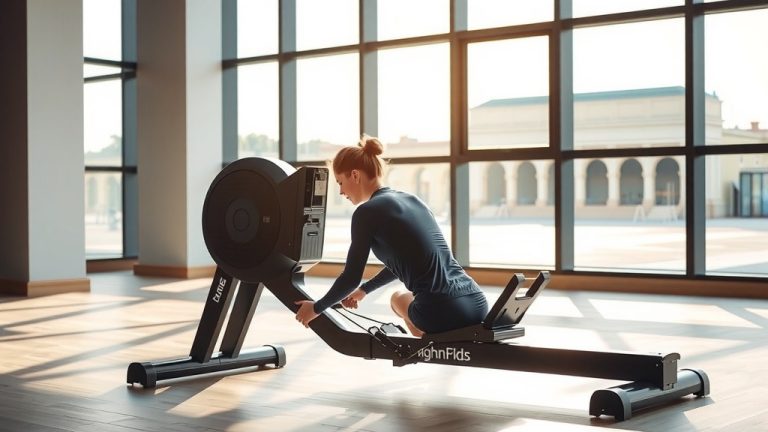
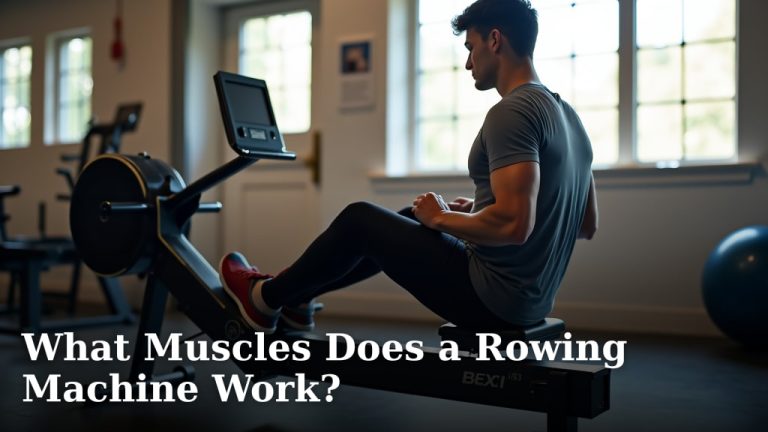
Think of the rowing stroke in four main phases: the catch, the drive, the finish, and the recovery. Your glutes truly shine during the “drive” phase.
This is when you explode backward, pushing with your legs to propel the seat and handle. It’s a bit like a powerful jump or squat movement.
The Drive: Where Glutes Shine
During the drive, you extend your hips and knees. This action heavily recruits your gluteal muscles. Imagine pushing the floor away from you – that’s the feeling.
We found that initiating the drive with your legs, rather than pulling with your arms first, makes your glutes work harder.
Glutes vs. Quads: A Power Play
While your quadriceps (thigh muscles) are undeniably active in rowing, your glutes act as a critical support and power generator. They work together.
The glutes help extend your hips, giving you that powerful, full-body push. It’s not just a quad exercise; it’s a full posterior chain engagement.
Maximizing Glute Activation on Your Rower
Want to really feel those glutes burn on the rowing machine? A few tweaks to your technique can make a world of difference. It’s all about intentional movement.
You can optimize your strokes to get more out of your posterior muscles. Let’s explore how.
Form is Your Friend, Always
Good form is non-negotiable for glute engagement. Start with a strong push from your feet, driving your heels down. Then, squeeze your glutes as you extend your legs.
Keep your core engaged throughout the movement. This helps transfer power and protects your back. Focus on a strong leg push before leaning back.
Don’t Rush the Return
The recovery phase, where you slide back towards the front, is just as important. Control your movement back to the catch position. Don’t let the flywheel pull you forward.
A controlled recovery builds strength and prepares you for the next powerful drive. It also means you’re not relying on momentum to get you back.
Resistance Levels Matter
Thinking about resistance? Higher resistance settings can make your glutes work harder. It’s like lifting a heavier weight in a squat.
However, don’t go too high if it compromises your form. A challenging but manageable resistance is best for muscle engagement.
Foot Straps: Tight but Not Too Tight
Your feet need to feel secure on the foot stretchers. Adjust the straps so the widest part of your foot is comfortable, not squashed.
This secure footing allows you to push off powerfully. You want your feet to feel connected to the machine.
Beyond Glutes: The Full-Body Advantage
While we’re focusing on glutes, remember that rowing is a fantastic full-body workout. It works a symphony of muscles from your legs to your arms and core.
This makes it incredibly efficient for overall fitness. It’s a great choice if you’re short on time but want to work many muscle groups.
| Muscle Group | Primary Role in Rowing |
|---|---|
| Glutes | Hip extension (the drive) |
| Quadriceps | Knee extension (the drive) |
| Hamstrings | Knee flexion, hip extension (recovery, drive) |
| Core (Abs, Obliques) | Stabilization, power transfer |
| Back (Lats, Rhomboids) | Drawing handle to body (the finish) |
| Arms (Biceps, Triceps) | Pulling handle, extending arms (finish, recovery) |
Is Rowing Enough for Glute Growth?
Rowing is excellent for glute strength and toning. For significant muscle hypertrophy (size increase), many experts suggest combining rowing with targeted strength training (NIH).
Think of squats, lunges, and deadlifts. Rowing complements these exercises beautifully by building foundational strength.
Adding Variety to Your Routine
To truly develop your glutes, consider a balanced routine. Add strength training days, perhaps a few times a week. This variation helps challenge your muscles differently.
Rowing can be your cardio and muscle endurance work, while weights target pure strength. This mix often gives the best results.
Your Glute-Boosting Rowing Checklist:
- Initiate the drive with a powerful leg push.
- Squeeze your glutes at the end of the drive phase.
- Maintain a strong, stable core throughout.
- Control the recovery back to the starting position.
- Use a resistance level that challenges your legs.
- Consider adding short, powerful bursts to your workout.
Common Glute-Rowing Mistakes to Avoid
Even with the best intentions, it’s easy to fall into habits that reduce glute activation. Awareness is the first step to correcting these.
Making small adjustments can unlock more glute power. Let’s look at a couple of common pitfalls.
Leaning Too Far Back
Sometimes people lean too far back at the finish of the stroke. This often means you’re using your lower back more than your glutes for leverage.
Aim for a slight lean, about 11 o’clock if the catch is 12 o’clock. This keeps the focus on your legs and glutes.
Not Engaging Your Core
A weak core means your power transfer isn’t as efficient. Your glutes might be pushing hard, but that power gets lost if your midsection isn’t stable.
Think of your core as the bridge between your upper and lower body. Keep it firm to ensure your glute power travels through.
Conclusion
So, does a rowing machine build glutes? Absolutely! With proper technique and a focus on that powerful leg drive, you can effectively strengthen and build your gluteal muscles. It’s not just a cardio machine; it’s a full-body strength and conditioning tool that puts your glutes to work.
Remember, consistency and good form are your best allies. Integrate rowing into a balanced fitness plan, and you’ll see those glutes get stronger and more defined. Enjoy the journey to a more powerful you!
Can I get a bigger butt just by rowing?
Rowing will strengthen and tone your glutes, potentially increasing their size to some extent. For significant hypertrophy (making your butt much bigger), you’ll often need to combine rowing with targeted resistance exercises like squats and lunges.
What part of the rowing stroke works the glutes most?
The “drive” phase of the rowing stroke most effectively works your glutes. This is when you powerfully push off the foot stretchers with your legs, extending your hips and knees to propel the seat backward.
How often should I row to build my glutes?
To build glutes with rowing, aim for 3-5 sessions per week, allowing for rest and recovery. Focus on proper form and vary your workout intensity and duration. Consistency is more important than excessive frequency.
Does resistance level affect glute activation on a rower?
Yes, higher resistance levels can increase glute activation, as they require more force to push back. However, always prioritize good form over simply using the highest resistance. A challenging but controlled resistance is most effective.
What’s one simple tip to activate my glutes more while rowing?
A simple tip is to initiate your drive by consciously pushing through your heels and squeezing your glutes as your legs extend. Think of “pushing the floor away” rather than pulling with your arms first.