How To Burn More Calories On Rowing Machine?
To burn more calories on a rowing machine, focus on increasing your workout intensity and duration. Incorporate high-intensity interval training (HIIT) and maintain proper rowing form.
Varying your stroke rate and resistance settings will significantly boost your energy expenditure and help you reach your fitness goals faster.
- Boost your calorie burn on the rowing machine by upping your intensity.
- Combine higher stroke rates with increased resistance for maximum effort.
- Include interval training in your routine to shock your body and burn more.
- Perfect your rowing technique; good form equals better efficiency and more calories burned.
- Stay consistent with your workouts and progressively challenge yourself.
How To Burn More Calories On Rowing Machine?
You can burn more calories on a rowing machine by consistently challenging your body. This means combining higher intensity with varied workout structures and always focusing on excellent form.
The Power of the Rowing Machine
The rowing machine is a fantastic full-body workout. It engages about 86% of your muscles in a single stroke, from your legs and core to your back and arms. This comprehensive muscle engagement is why it’s a calorie-burning powerhouse (Harvard Health Publishing).
Because you use so many muscle groups, your body requires a lot of energy to keep going. This makes rowing incredibly efficient for calorie expenditure.
Understanding Calorie Burn Basics
How many calories you burn depends on several things. Your body weight, workout intensity, and the duration of your session all play a role. A heavier person typically burns more calories doing the same workout than a lighter person (Mayo Clinic).
However, everyone can maximize their burn by adjusting how they row. It’s all about making smart choices with your routine.
Mastering Your Technique for Maximum Burn
Good technique isn’t just for safety; it’s also key for calorie burning. Proper form ensures you use your muscles efficiently, preventing wasted energy.
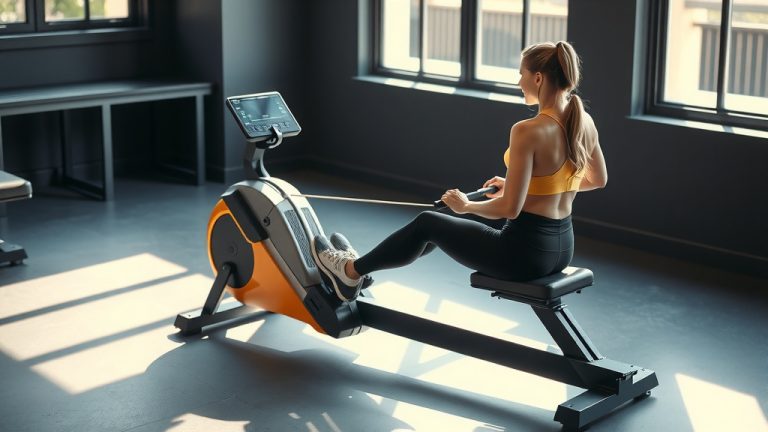
When you row correctly, your legs do most of the work, followed by your core and then your arms. This powerful sequence translates to a more effective workout.
The Catch, Drive, Finish, and Recovery
Think of rowing as a dance of four parts. The “catch” is at the front, ready to push. The “drive” is your powerful leg push back.
The “finish” involves leaning back slightly and pulling the handle to your chest. Then the “recovery” brings you smoothly back to the start. Each part matters.
Focusing on Leg Drive
Your legs are your biggest muscles, and they are responsible for about 60% of the power in each stroke. We found that a strong, explosive leg drive significantly increases calorie output.
Pushing off with power from your heels will activate your glutes and quads more fully. This leads to greater energy use and a higher calorie burn.
Amp Up the Intensity: Stroke Rate and Resistance
To really see those calorie numbers climb, you need to challenge yourself. There are two main levers you can pull on the rowing machine: stroke rate and resistance.
Finding the right balance for you is what makes a difference. Don’t be afraid to experiment a little.
Increasing Your Stroke Rate
Stroke rate is how many strokes you take per minute. A higher stroke rate means more continuous effort. Try to maintain a rate between 25 and 30 strokes per minute for a sustained, intense workout.
However, don’t sacrifice form for speed. A fast, sloppy stroke is less effective than a slightly slower, powerful one.
Adjusting the Damper Setting
The damper setting controls the airflow into the flywheel, mimicking boat drag on water. A higher damper setting means more resistance, requiring more effort per stroke.
Many experts say a setting of 4 to 6 is optimal for a balanced workout, offering good resistance without being overly taxing on your lower back. Experiment to find your sweet spot.
Smart Workout Structures for Higher Calorie Burn
Simply rowing at the same pace every day might lead to a plateau. Your body gets used to the routine. Changing up your workout structure is a fantastic way to keep your metabolism guessing and increase your calorie burn.
Think of your body like a car; sometimes you need to rev the engine, other times cruise. Variety is the spice of fitness life.
High-Intensity Interval Training (HIIT)
HIIT involves short bursts of maximum effort followed by brief recovery periods. This type of training is incredibly effective for calorie burning, even after your workout ends (the “afterburn effect” or EPOC).
Try rowing hard for 1 minute, then resting or rowing lightly for 30 seconds. Repeat this cycle 8-10 times. Research often connects HIIT with significant fat loss (NIH).
Steady-State Cardio
This involves rowing at a moderate, consistent pace for a longer duration. While not as intense as HIIT, steady-state cardio builds endurance and contributes to overall calorie expenditure.
Aim for 30-60 minutes at a pace where you can talk but are still slightly breathless. This is great for building your aerobic base.
Pyramid Workouts
Pyramid workouts are a fun way to vary intensity. You might start with 5 minutes easy, then 4 minutes moderate, 3 minutes hard, 2 minutes very hard, 1 minute all-out.
Then reverse the pyramid back down. This keeps your body engaged and prevents boredom.
Sample Workout Comparison
Here’s a quick look at how different workout styles can impact your session:
| Workout Style | Intensity Level | Typical Duration | Calorie Burn Potential |
|---|---|---|---|
| Steady-State Cardio | Moderate | 30-60 minutes | Good, sustained |
| High-Intensity Interval Training (HIIT) | High (intervals) | 20-30 minutes | Very High, with afterburn |
| Long Distance (LSD) | Low to Moderate | 60+ minutes | High (due to duration) |
Listen to Your Body and Progressive Overload
It’s tempting to go all out every time, but listening to your body is essential. Overtraining can lead to injuries or burnout, slowing your progress.
Always warm up properly before a session and cool down afterward. These small steps make a big difference in recovery.
Gradual Increases in Challenge
To keep burning more calories, you need to apply the principle of progressive overload. This means gradually increasing the demands on your body over time. Don’t just do the same workout every day.
Perhaps you add 5 minutes to your session, increase your stroke rate slightly, or bump up the resistance. Small, consistent changes add up.
Consistency is Your Best Friend
The most important factor in burning calories and seeing results is consistency. Regular workouts, even shorter ones, are better than sporadic, super-long sessions.
Aim for 3-5 rowing sessions a week. This regular activity keeps your metabolism active and builds endurance.
Quick Checklist Before Your Rowing Session
Prepare for your workout to make sure it’s as effective as possible:
- Hydrate well with water before you start.
- Do a 5-minute warm-up, including light rowing and dynamic stretches.
- Check your foot straps; they should be snug over the widest part of your foot.
- Ensure the damper setting is appropriate for your planned intensity.
- Have a plan: will you do HIIT, steady-state, or a pyramid?
Beyond the Machine: Supporting Your Goals
While rowing is a phenomenal tool, your overall lifestyle also impacts calorie burn. What you do off the machine supports your efforts on it.
Getting enough sleep and managing stress are often overlooked, but they play a role in recovery and metabolism.
Fueling Your Body Right
A balanced diet is crucial for supporting your energy levels and recovery. We found that eating enough protein helps with muscle repair and keeps you feeling full.
Focus on whole, unprocessed foods, and stay well-hydrated throughout the day. Your diet directly fuels your workouts.
Conclusion
Burning more calories on your rowing machine is within your reach. It’s a combination of smart technique, varied intensity, and consistent effort. Focus on a powerful leg drive, experiment with stroke rate and damper settings, and mix in different workout types like HIIT.
Remember to listen to your body, apply progressive overload, and fuel yourself properly. With these strategies, you’ll transform your rowing sessions into highly effective calorie-burning powerhouses.
How many calories can you burn on a rowing machine in 30 minutes?
The number of calories burned varies, but a person weighing around 150 pounds can burn approximately 200-300 calories in 30 minutes of moderate-intensity rowing. Increasing the intensity with faster strokes or higher resistance can push this number even higher.
Is rowing better than running for calorie burn?
Both rowing and running are excellent for calorie burn. Rowing, however, engages more muscle groups (full-body), potentially leading to a slightly higher calorie burn per minute for some individuals. It’s also lower impact, which is great for joint health.
Does a higher damper setting mean more calories burned?
A higher damper setting means more resistance, requiring more effort per stroke. While this can increase calorie burn, going too high can lead to poor form and potential injury. A moderate setting (4-6) combined with good technique and stroke rate is often more effective for sustained calorie expenditure.
How often should I row to burn more calories?
For significant calorie burning and fitness improvements, aim for 3 to 5 rowing sessions per week. Consistency is key. You can vary the duration and intensity of these sessions to keep challenging your body and prevent plateaus.
Can rowing help with fat loss specifically around the stomach?
Rowing is a full-body exercise that contributes to overall fat loss, including visceral fat (belly fat), through calorie expenditure. You cannot spot-reduce fat from specific areas, but consistent rowing as part of a healthy lifestyle will reduce body fat all over.