Bowflex Max Trainer vs Rowing Machine: Which to Choose? (November 2026)
Choose the Bowflex Max Trainer for a stepper-like cardio motion, or a rowing machine for seated strokes that use your legs, core and arms. The right fit depends on the movement you prefer and the space and setup you can manage.
On this page (8 sections)
- Bowflex Max Trainer vs rowing machine: how do they move?
- Which machine gives you the workout you want?
- Which machine is easier to learn?
- How much room does each machine need?
- How do resistance and workout tracking compare?
- Which one fits your comfort and workout preferences?
- How should you compare upkeep and power needs?
- Which should you choose for home cardio?
Choose the Bowflex Max Trainer for a stepper-like cardio motion, or a rowing machine for seated strokes that use your legs, core and arms. The better choice depends on the movement you prefer, how you want to train and where the machine will fit.
A Max Trainer keeps you upright and moving through a stepping pattern. A rower has you seated, sliding back and forth while you push through your legs and pull a handle.
Neither style is automatically better for fitness. Consider how each one feels to use, the learning curve, room needs and the kind of routine you'll stick with.
 Best for replacing a compatible power adapter
PWR+ Pwr AC Adapter for Bowflex Max
 Best for dual-rail rowing at home
Merach Q1S Magnetic Rowing Machine Indoor
Bowflex Max Trainer vs rowing machine: how do they move?
The Max Trainer uses a standing stepper-like motion, while an indoor rower uses repeated seated strokes. That difference shapes how each workout feels and what you need to coordinate.
On a Max Trainer, you stand on the footplates and move your legs through a stepping pattern while holding the handles. The Bowflex Max Trainer line includes several models, so check your model's manual for its controls, workout options and setup.
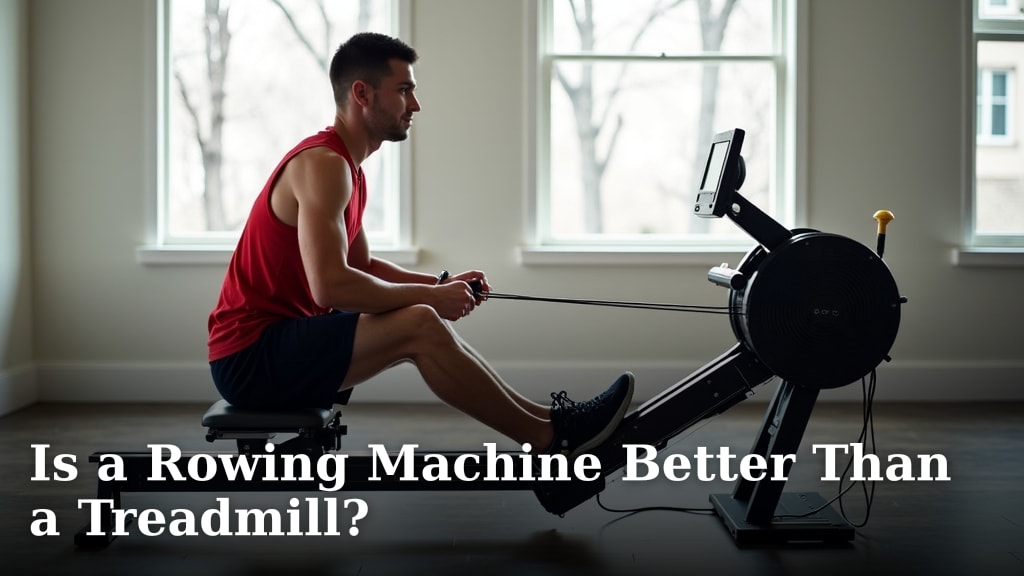
On a rower, your feet stay secured on the footrests as the seat moves along the rail. For a comparison of rowing arm styles, see full-motion versus standard rowers.
You push with your legs, swing your torso back, then draw the handle toward your body.
What does a rowing stroke involve?
A rowing stroke combines a leg drive with a controlled pull and return. Learn the sequence at an easy pace before trying to row quickly or add long sessions.
Start with bent knees and a forward reach, then press through your legs. As your knees straighten, bring your torso back and pull the handle toward your lower ribs.
Reverse the sequence on the way forward: extend your arms, hinge your torso toward the monitor, then bend your knees as the seat rolls forward. Keep the handle path smooth and avoid rounding your back to reach farther.
If the movement is new, review these rowing form basics before building your pace. Comfort and control matter more than chasing speed at the start.
What does a Max Trainer workout involve?
A Max Trainer workout centers on staying upright and maintaining a steady stepping rhythm. Its movement may suit you if you want a standing cardio session without the repeated forward-and-back travel of a rower.
The arms and legs move together as you work through the stepping pattern. Pay attention to the machine's instructions, handle positions and resistance controls for your specific model.
A rower asks for more attention to stroke order and timing. The Max Trainer is a different movement, but that doesn't mean one is always easier: comfort, balance and familiarity all affect how manageable a session feels.
Which machine gives you the workout you want?
Choose by the movement you can sustain and the muscles you want involved in each session. Both machines can make cardio part of a home routine, but their demands aren't interchangeable.
You can also compare a rowing machine and recumbent bike for home cardio.
Rowing combines repeated leg pushes with trunk movement and handle pulls. That makes it a coordinated whole-body action, but good form is part of making the movement feel controlled.
The Max Trainer keeps you standing and stepping. If you prefer upright movement, or dislike sliding back and forth, that pattern may be a better fit.
Your effort also depends on how you use the machine. For another cardio comparison, see rowing versus walking calories.
Pace, resistance, session length and rest periods change the challenge, so don't assume a machine's name tells you how hard every workout will feel.
For another equipment comparison, see which is better, a rowing machine or treadmill. That choice also depends on whether you prefer a seated, repeated stroke or a walking and running pattern.
Which machine is easier to learn?
The Max Trainer may feel familiar to someone who has used a stepper, while rowing takes practice to coordinate. A short, easy session is a useful way to judge whether the motion suits you.
On a rower, beginners often rush the pull or slide forward before extending their arms. Slow strokes give you time to learn the order and keep your movement smooth.
The Max Trainer has a simpler movement pattern to describe, but you still need to get used to its footplates, handles and controls. Follow the manual, and start at an effort level that lets you move steadily.
If you have balance concerns or discomfort with either motion, use a stable setup and stop if the movement feels unsafe. A machine that is easy to step onto and use correctly is more useful than one with features you won't use.
How much room does each machine need?
Measure the full exercise area, not just the machine footprint. Include space to get on and off, move your arms and keep clear of walls, furniture and doorways.
A rower needs length for its rail, seat travel and handle reach. The Merach Q1S measures 65 x 19.3 x 24.8 inches, and its recommended exercise space is 1.6 x 5.7 ft.
The Sunny rower measures 64 x 19.3 x 27 inches, with a 45.7-inch slide rail. It can be stored upright, which may help reclaim floor space when you're done, provided you have a suitable storage spot.
A Max Trainer generally occupies a taller, more upright area than a rower, but exact dimensions vary by model. Check the measurements for your specific machine and leave room for safe access.
If you're deciding between walking and rowing in a small home, compare the walking pad vs rowing machine options. A walking pad has a different movement and storage profile, so compare the exact footprint and your use space.
How do resistance and workout tracking compare?
A rower's resistance and monitor vary by model, while Max Trainer controls and feedback depend on the exact model. Check the features you plan to use before choosing between particular machines.
The Merach Q1S uses magnetic resistance with 16 levels. Its app can show workout data such as distance, time, calories, speed, heart rate and cadence; the machine also has an LCD display.
The Sunny rower also has 16 magnetic resistance levels and an LCD monitor. Its display includes time, distance, estimated calories, stroke count, strokes per minute and 500-meter split, while Bluetooth connects it to the SunnyFit app.
Those functions may help you follow a session, but don't treat displayed calories as an exact measure of your effort. If you want guided sessions, check which app features and devices you need before setting up the machine.
For the Max Trainer, compare the console and workout features on the model you're considering. Don't assume that every M-series version has the same controls or feedback.
Which one fits your comfort and workout preferences?
Choose the machine whose position and movement feel manageable for your body and your routine. Comfort is personal, so consider access, posture and how long you can keep moving at an easy pace.
A rower lets you sit, but you repeatedly bend and straighten your knees and move your torso. If you have trouble getting down to a low seat or rising from it, think through that access before buying.
A Max Trainer keeps you standing and stepping, which may be easier to enter for some people. It still requires balance and sustained leg movement, so standing isn't a guarantee that it will feel more comfortable.
If you have ongoing pain, balance limits or a health concern, ask a qualified clinician what type of exercise is appropriate. Stop if a workout causes sharp pain, dizziness or unusual shortness of breath.
How should you compare upkeep and power needs?
Check the manual and the exact model's power requirements before planning where it will go. Some Max Trainer models require an adapter, while the rowers described here use magnetic resistance and battery-powered displays.
The PWR+ adapter is compatible with select Bowflex Max models M3, M5, M6, M7 and M8, but only when the machine requires a 2.1 mm x 5.5 mm tip. Confirm the connector and model before choosing a replacement.
The AQDD connector is made for Bowflex Max M3, M5, M6, M7 and M8 models. It is a power connector component, so consider it only if your issue matches that kind of connection repair.
For either type of machine, keep the area around moving parts clear and follow the care directions in the manual. A rower's rail and seat need unobstructed travel, while a Max Trainer needs stable footing and room for the handles.
Which should you choose for home cardio?
Pick the Bowflex Max Trainer if you prefer standing, stepper-like movement; pick a rower if you want seated strokes with leg drive and handle pulls. Let movement preference and available space guide the decision.
Choose the Merach Q1S if you want a dual-rail rower with magnetic resistance, app data and a 350 lb maximum weight recommendation. Choose the Sunny rower if vertical storage, a device holder and SunnyFit connection better fit your space and routine.
If you're still comparing cardio types, read is a rowing machine better than a treadmill and is a rowing machine better than a treadmill. Those comparisons can help you decide whether rowing suits your preferred pace and movement.
For a broader overview of rowing options, use how to choose a rowing machine. Choose the machine you can set up safely and see yourself using on a regular schedule.
Frequently asked questions
Is the Bowflex Max Trainer a rowing machine?
No. The Bowflex Max Trainer uses a stepping and elliptical-style motion, while a rower has a sliding seat and handle for repeated strokes.
Both can support cardio workouts, but the movement and coordination demands differ.
Which is easier to learn, the Max Trainer or a rower?
A Max Trainer may feel more familiar if you already use a stepper or elliptical. Rowing asks you to coordinate the drive and recovery, with legs, trunk and arms working in sequence.
Start gently and learn the movement before increasing effort.
Does a rowing machine need more room than a Bowflex Max?
It depends on the exact machines and how they store. Measure the rower's full working length, seat travel and handle reach, then check its storage position; also include room to step onto and off the Max Trainer.
Can a rowing machine replace a Max Trainer workout?
A rower can provide a cardio workout with repeated leg drives and handle pulls, but it won't reproduce the Max Trainer's stepping motion. Choose based on which movement you can do comfortably and want to repeat as part of your routine.
What should I choose if I want a quieter home workout?
Resistance type and machine design affect sound, so compare exact models. The Merach Q1S and Sunny rower use magnetic resistance, and their brands describe them as quiet; follow each manual and consider noise through shared floors and walls.