Can a Supinated Grip Build Biceps on a Rowing Machine?
A supinated, or underhand, grip can make your biceps work during a rowing stroke, but it won't isolate them or guarantee muscle growth. Rowing still depends on leg drive, a firm torso, and a controlled arm pull.
On this page (6 sections)
- Can a supinated grip help a rowing machine build biceps?
- What changes when you row with an underhand grip?
- How should you row to keep the arms from taking over?
- When should you stop using an underhand hold?
- What equipment can support a biceps-focused plan?
- Can a rowing machine build biceps with a supinated grip?
A supinated, or underhand, grip can make your biceps work during a rowing stroke, but it won't isolate them or guarantee muscle growth. Rowing still depends on leg drive, a firm torso, and a controlled arm pull.
The grip changes how you hold the handle. It doesn't change the stroke into a curl: your legs start the drive, your torso swings back, and your arms finish the pull.
Can a supinated grip help a rowing machine build biceps?
It can involve the biceps, but it isn't a reliable shortcut to bigger arms. The biceps bend your elbows, so they help bring the handle toward you.
Your back, shoulders, forearms, trunk, and legs also contribute to the stroke.
“Supinated” means your palms face up, or toward you, depending on how you hold the handle. Many rowing machine handles are designed for a neutral or overhand hold.
Don't twist your wrists or grip in a way that feels awkward just to make the handle underhand.
Muscle growth depends on more than grip. The resistance and effort need to suit your training, and your body needs enough repeated work and recovery over time.
A rowing workout can support general fitness, but no hand position alone guarantees biceps growth.
For the broader picture, read does a rowing machine build biceps and does a rowing machine work biceps. Those cover the muscle's role in a standard stroke.
What changes when you row with an underhand grip?
Your hand and forearm position changes; the basic rowing sequence stays the same. Keep your wrists aligned with your forearms, hold the handle securely, and let your elbows bend only after your legs and torso have started the drive.
An underhand hold may make the pull feel different in your arms. That feeling doesn't prove that your biceps are doing all the work or that the grip will build more muscle.
A strong pull that starts with your arms can also shorten the leg drive and put more strain on your upper body.
Use the handle as its maker intended. If it doesn't let you hold it underhand without wrist strain or a loose grip, use the normal hand position instead.
Is a supinated grip the same as bicep curls on a rowing machine?
No. A rowing stroke is a coordinated pull, while a curl focuses on bending your elbows against resistance.
In a row, your arms finish the drive after your legs push and your torso moves back.
If you want to try bicep curls on a rowing machine, check whether your machine and its instructions allow that exercise. Don't improvise a setup that makes the handle or seat unstable.
How should you row to keep the arms from taking over?
Drive with your legs first, then swing your torso, and finish by drawing the handle toward your lower ribs. Reverse the sequence on the way forward: arms extend, torso tips forward, then knees bend.
At the catch, keep your shins near vertical and your arms long. Push through your feet without locking your knees, then hinge back from the hips before bending your elbows.
On recovery, return smoothly instead of letting the handle pull you forward. A controlled stroke gives you time to keep your wrists steady and notice whether the grip feels uncomfortable.
If you want to develop general rowing strength, see strength training for rowing. To structure intervals and effort, CrossFit rowing workouts can help you plan sessions around the rower.
When should you stop using an underhand hold?
Stop if the grip causes pain, numbness, tingling, or makes you lose control of the handle. Switch to a comfortable grip and lower the effort while you check your setup.
Don't pull harder to overcome a grip that feels wrong. If discomfort continues after you stop, or you have an injury that affects your wrists, elbows, or shoulders, ask a qualified health professional for guidance.
If you're comparing muscle groups, see whether swimming or a row machine can build shoulders. Different exercises use the upper body in different ways, and neither requires forcing an uncomfortable hand position.
For another shoulder question, see whether rowing exercises the rotator cuff.
What equipment can support a biceps-focused plan?
A rower can provide whole-body training, while separate strength tools can make focused arm work easier to plan. For a sport-specific angle, see whether professional golfers train with rowing machines.
Choose equipment that matches the movement you intend to do and fits your available space.
The Sunny Health & Fitness Compact Hydraulic Rower has 12 resistance levels and an inclined rail that adds lower-body challenge. Its coordinated rowing stroke engages legs, glutes, core, back, shoulders, and arms.
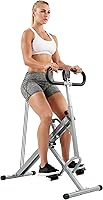
The Sunny Health & Fitness Smart Row-N-Ride Glute is a squat-assist trainer with adjustable resistance bands and a connected app. Its listed focus is squat form and full-body training, so it isn't a dedicated biceps machine.
Can a rowing machine build biceps with a supinated grip?
Use an underhand grip only if your rower's handle supports it comfortably; don't count on it to isolate or grow your biceps. If you want more focused arm training, add curls with equipment designed for that movement, and keep rowing for whole-body conditioning.
Choose a comfortable, secure hand position and let the legs start each stroke. For more on the muscles involved, start with does a rowing machine build biceps.
Frequently asked questions
Can an underhand grip on a rowing machine build biceps?
An underhand grip can involve the biceps as you bend your elbows, but rowing is a whole-body movement and does not isolate that muscle. Building visible muscle also depends on resistance, effort, training frequency, recovery, and your starting point.
Use a grip that feels secure and keep the stroke controlled.
Is a supinated grip better for biceps on a rower?
It may change how your arms and forearms feel during the pull, but it doesn't turn a rowing stroke into a biceps curl. There isn't enough here to promise that an underhand grip builds more biceps than a neutral or overhand grip.
Choose a hand position your machine allows and that feels comfortable.
Should I use an underhand grip for every rowing workout?
No. Use the handle position intended for your rower, and don't rotate or force your wrists to create an underhand hold if the handle doesn't support it.
A neutral, secure grip is a sound default.
Stop if the position causes pain, numbness, or loss of control.
What exercise isolates the biceps better than rowing?
A biceps curl targets elbow bending more directly than a rowing stroke, which shares work across the legs, trunk, back, shoulders, and arms. You can do curls with suitable weights or resistance bands.
Keep rowing for cardiovascular and whole-body training, and use a separate strength plan for focused arm work.