How to Do Wide Grip Upright Rows
A wide grip upright row uses a wider hand position and a controlled lift to train the shoulders and upper back. Keep the weight light, lead with your elbows, and stop before shoulder discomfort.
On this page (8 sections)
- How do you do a wide grip upright row?
- Why use a wide grip for upright rows?
- How heavy should wide grip upright rows be?
- What are the most common form mistakes?
- How can you make the exercise safer?
- How do you program wide grip upright rows?
- What should you do after wide grip upright rows?
- Is a wide grip upright row right for you?
A wide grip upright row uses a wider hand position and a controlled lift to train the shoulders and upper back. Keep the weight light, lead with your elbows, and stop before shoulder discomfort.
You can do the exercise with dumbbells or a barbell. Dumbbells let each arm find its own path, while a barbell can make the hand position easy to keep consistent.
How do you do a wide grip upright row?
Stand tall, hold the weights in front of your thighs, and pull them upward with your elbows moving out and up. Stop when your hands reach the lower chest or your elbows approach shoulder height, then lower slowly.
- Stand with your feet about hip width apart.
- Hold dumbbells with your palms facing your thighs.
- Set your hands slightly wider than shoulder width if using a barbell.
- Brace your stomach and keep your chest lifted.
- Pull by driving your elbows up and out.
- Pause briefly without shrugging hard.
- Lower the weights under control until your arms are straight.
Keep your knees soft, but don't turn the movement into a squat. Your torso should stay mostly still from the first repetition to the last.
If you use dumbbells, start with both weights level at your thighs. If you use a barbell, check that your hands are spaced evenly before the first repetition.
Why use a wide grip for upright rows?
A wider grip changes the arm path and usually reduces how high your hands need to travel. That can make the exercise feel different from a close grip upright row, but it does not remove the need for careful shoulder control.
The main muscles are the side and front portions of the shoulders, along with the upper back and trapezius. Your arms assist the lift, while your trunk works to keep your posture steady.
Wide grip upright rows fit well in a shoulder or upper-back session. You can pair them with best standing dumbbell exercises when you want a workout that keeps you on your feet.
Should you use dumbbells or a barbell?
Use dumbbells when you want each arm to move independently, and use a barbell when you prefer one shared load. Neither tool is automatically better for every shoulder.
Dumbbells may be easier to adjust around your shoulder path. A barbell can make the grip width clear, but both hands must follow the same bar.
Choose the tool that lets you keep your wrists straight, shoulders relaxed, and range of motion comfortable. If you train at home, a weight bench buying guide can help you plan the rest of your dumbbell area, even though this exercise is performed standing.
How heavy should wide grip upright rows be?
Choose a weight that allows 8–15 smooth repetitions without swinging or pulling past a comfortable height. The final repetitions should feel challenging, but your elbows and wrists should keep the same path.
Start with a lighter load than you might use for a row or deadlift. The upright row has a shorter movement and places the weight higher on your body, so control matters more than using heavy dumbbells.
The PowerBlock Elite EXP 90 Adjustable Dumbbells suit home lifters who want a pair that can move through 16 weight increments from 5 lb to 50 lb per hand.
Use the smallest increase that keeps your form steady. If the next setting makes you shrug, swing, or shorten the lowering phase, return to the previous load.
What are the most common form mistakes?
The biggest mistakes are using too much weight, pulling too high, and letting the shoulders roll forward. Fix the setup before adding repetitions or load.
Pulling the elbows too high
Your elbows do not need to rise far above shoulder height. Stop earlier if your shoulders feel crowded, pinched, or strained.
Swinging the torso
A forward or backward lean often means the weight is too heavy. Reduce the load and pause at the top so the shoulders, rather than momentum, control the lift.
Bending the wrists
Keep your wrists as straight as possible. If they fold sharply toward your forearms, change the grip or choose lighter weights.
Shrugging through every repetition
Some upper-trapezius work is normal, but an aggressive shrug can make the motion feel cramped. Keep your neck relaxed and let the elbows guide the lift.
Dropping the weights
Lower the dumbbells or barbell slowly. The lowering phase helps you control the shoulder position and keeps the exercise from becoming a series of fast pulls.
For another upper-back movement with a different arm path, compare how to do standing dumbbell rows. Rows usually pull the elbows back rather than up.
How can you make the exercise safer?
Warm up your shoulders, test the movement with no weight, and use a pain-free range. A warm-up can include arm circles, light raises, and several slow practice repetitions.
Keep the weights close to your body without scraping your torso. Breathe out as you pull and breathe in as you lower, or use a steady breathing pattern that prevents you from holding your breath.
Do not force a deep range because a guide or workout says the bar should reach a certain height. Your comfortable stopping point matters more than touching the chin or upper chest.
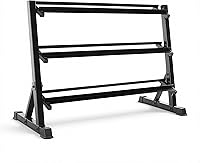
The CAP 2-Tier & 3-Tier Dumbbell Rack for Home Gym holds dumbbells on angled shelves and gives a dedicated place to return weights between sets.
Place any rack on a flat, level surface and keep enough room around it to lift weights without twisting. Put dumbbells away after the session so they do not become a trip hazard.
How do you program wide grip upright rows?
Use wide grip upright rows as a controlled accessory exercise after your main strength work. Two or three sets of 8–15 repetitions can be enough when the movement stays smooth.
You can use them after presses, rows, or lower-body exercises in a full-body workout. Leave enough rest to repeat the same range without swinging.
If you feel shoulder discomfort, stop and test a smaller range with less weight. If that still feels wrong, choose a different shoulder exercise such as a standing press or a raise.
The standing dumbbell shoulder press trains the shoulders with the weights moving overhead rather than upward in front of the torso. It can be a useful alternative if upright rows do not suit your shoulder path.
For lighter sessions, the JFIT Dumbbell Pairs or Sets include pairs of 3 lb, 5 lb, and 8 lb neoprene dumbbells with a rack. For another dumbbell buying option, see CAP Barbell dumbbell sets.
The hex-shaped ends help prevent rolling between sets. Keep the set where you can pick up and return each pair without reaching across a busy floor.
What should you do after wide grip upright rows?
Lower the weight, relax your shoulders, and note whether the movement felt smooth before repeating it in your next workout. Mild effort in the shoulders and upper back is expected, but sharp or persistent pain is a reason to stop.
Avoid stretching aggressively into a painful position after the set. A few easy shoulder movements and normal breathing are enough for a simple cool-down.
You can add a standing curl to a full dumbbell circuit, but it trains the arms rather than replacing the upright row. See what a standing dumbbell curl is if you want to compare the two movements.
If your workout also includes rowing-machine sessions, review how to grip a rowing machine and how long you should row on a rowing machine for separate technique and training guidance.
Is a wide grip upright row right for you?
Choose the wide grip upright row if you can lift with a steady torso, relaxed neck, straight wrists, and comfortable shoulders. Pick a lighter dumbbell set when you are learning, and increase the load only when every repetition stays controlled.
The PowerBlock set suits gradual load changes. The JFIT set suits lighter practice weights, while the CAP rack helps organize dumbbells when storage is the main problem.
Stop the exercise if pain changes your movement or continues after you finish. The best version is the one that trains your shoulders without forcing a range your body cannot control.
Frequently asked questions
What is a wide grip upright row?
A wide grip upright row is a shoulder and upper-back exercise where you pull dumbbells or a barbell upward with your hands set wider than shoulder width. The wider position can reduce how high your elbows need to travel, but you should still stop before discomfort and use a load you can control.
How wide should your hands be on an upright row?
Start with your hands slightly wider than shoulder width and adjust only if the movement feels smooth. A wider grip changes the arm path, but it doesn't make the exercise automatically safer.
Keep your wrists neutral, elbows below or around shoulder height, and stop if you feel pinching.
Are wide grip upright rows good for shoulders?
Wide grip upright rows can train the deltoids and upper back when performed with a controlled range of motion. They are not a required shoulder exercise, so replace them with a raise or press if the movement causes pain.
Persistent shoulder symptoms deserve advice from a qualified health professional.
Can beginners do wide grip upright rows?
Beginners can try wide grip upright rows with very light dumbbells after learning the motion. Practice without weight first, keep the torso still, and use slow repetitions.
If you cannot keep your shoulders comfortable or your wrists straight, choose another exercise and build strength gradually.