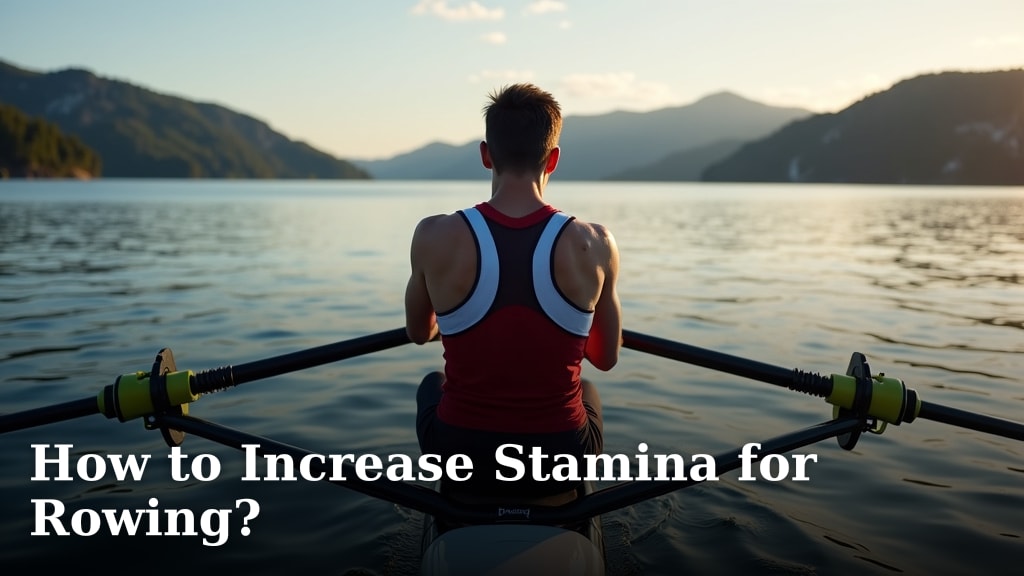
What Is a Realistic Rowing Goal for 30 Days?
On this page (5 sections)
Setting a realistic rowing goal for 30 days means aiming for consistent progress, not perfection. You can realistically expect to improve your endurance and technique significantly in a month with dedication. Many people find they can row for longer durations and feel stronger by the end of this period.
This 30-day challenge is a great way to build a solid foundation for your rowing journey. It’s about establishing a sustainable habit and seeing tangible improvements in your overall fitness and rowing form. Don’t worry if you’re a beginner; research shows that consistent effort yields great results for most people.
- Consistency is key for achieving rowing progress.
- Focus on improving technique and endurance.
- Set achievable milestones, not just one big goal.
- Listen to your body and avoid overtraining.
- Celebrate your small wins along the way!
Let’s break down what you can realistically aim for in 30 days and how to get there without burning out. We’ve found that a structured approach makes all the difference.
Setting Achievable Rowing Progress in 30 Days
So, you’re ready to hop on the rowing machine and see what a month can do? That’s fantastic! Many people wonder what kind of progress is realistic when you’re aiming for a 30-day rowing goal. You don’t need to become an Olympic athlete overnight, but you can definitely build a strong foundation. We found that focusing on consistency and technique is where the magic happens.
Your 30-Day Rowing Roadmap: What to Expect
Think of this month as your rowing boot camp. It’s designed to get you comfortable, stronger, and more efficient. You might be surprised at how much can change in just four weeks. We’ve seen people gain confidence and stamina surprisingly quickly.
Improving Your Rowing Endurance
One of the most noticeable changes you’ll see is in your stamina. Initially, you might only be able to row for 10-15 minutes before feeling tired. By the end of 30 days, with consistent effort, many people find they can comfortably row for 20-30 minutes or even longer. This is a great indicator of improved cardiovascular fitness (CDC).
This jump in endurance isn’t about pushing yourself to exhaustion every session. It’s about gradual, steady increases. You’ll start to feel less breathless and more in control. Your muscles will also adapt to the sustained effort, becoming more efficient at using oxygen. This allows you to keep going for longer without hitting a wall.
Sharpening Your Rowing Technique
Rowing looks simple, but mastering the technique makes a huge difference. A good stroke feels smoother and uses your body more effectively. In 30 days, you can absolutely refine your form. You’ll learn to engage your legs, core, and arms in the right sequence.
We’ve found that paying attention to the ‘catch,’ ‘drive,’ ‘finish,’ and ‘recovery’ phases can transform your rowing. The catch is when you’re at the front, ready to pull. The drive is the powerful push back with your legs. The finish is when your legs are extended and you pull the handle towards your chest. The recovery is the smooth return to the catch position.
Getting this sequence right means you’re not just moving the handle; you’re using your whole body. This leads to a more powerful stroke and less strain on your lower back. Many beginners rush this process, but a month is enough time to consciously practice and improve each phase.
Realistic Goals for Different Rowing Levels
What’s realistic for one person might not be for another. Let’s break down some potential goals based on where you’re starting from. We want to make sure your targets are challenging but totally achievable.
Beginner Rowers: Building the Foundation
If you’re brand new to rowing, your main goal for the first 30 days is consistency and learning the basics. Don’t worry about speed or distance just yet. Focus on getting on the machine regularly.
Goal Examples for Beginners:
- Row 3-4 times per week.
- Aim for 15-20 minutes of rowing per session.
- Focus on learning the correct stroke sequence. Watch videos or ask a trainer if possible.
- Try to maintain a steady pace without much variation.
- Track your progress in a simple log. Note how you felt.
We found that beginners often experience the biggest leap in confidence in the first month. Just showing up and moving is a huge win! You’re teaching your body a new skill and building a habit.
Intermediate Rowers: Increasing Volume and Intensity
If you’ve been rowing for a little while, you can aim for more. This might mean longer rows, slightly faster paces, or incorporating some basic intervals. You’re ready to push your limits a bit more.
Goal Examples for Intermediate Rowers:
- Row 4-5 times per week.
- Increase your rowing duration to 25-35 minutes per session.
- Try rowing at a slightly higher intensity for short bursts (e.g., 30 seconds faster, 1 minute easier).
- Focus on improving your power output or ‘split time’ (the time it takes to row 500 meters).
- Incorporate one longer, steady-state row each week.
Research suggests that building on an existing base allows for quicker gains. Your muscles and cardiovascular system are already primed for the work. This means you can challenge them to adapt further.
Advanced Rowers: Fine-Tuning and Performance
For those who are already quite comfortable on the rower, the focus shifts to optimizing performance. This could mean working on specific weaknesses, increasing overall volume, or improving speed over longer distances.
Goal Examples for Advanced Rowers:
- Row 5-6 times per week.
- Incorporate longer rows (40+ minutes) or higher intensity interval training.
- Work on improving your Personal Best (PB) for common rowing distances like 2000m or 5000m.
- Focus on specific technique drills to improve efficiency.
- Consider adding cross-training days for active recovery.
Many competitive rowers use a 30-day period for a specific training block. They might aim to increase their lactate threshold or improve their anaerobic capacity. It’s all about targeted improvements.
Creating Your 30-Day Rowing Plan
A plan makes all the difference. Without one, it’s easy to drift. Let’s map out how you can structure your month for the best results. Think of this as your personal blueprint.
Scheduling Your Workouts
Consistency trumps intensity, especially in the beginning. Aim for regularity. If your schedule is packed, shorter, more frequent sessions are better than one long session every two weeks. We found that scheduling your rowing like any other important appointment works best.
A good starting point for most people is 3-4 sessions per week. Listen to your body, though. If you feel overly sore or fatigued, take an extra rest day. Overtraining can quickly derail your progress and lead to injury. Guidelines often suggest 24-48 hours of rest between intense workouts for muscle recovery (NIH).
The Importance of Warm-ups and Cool-downs
Don’t skip these! A proper warm-up prepares your muscles and heart for the work ahead. A cool-down helps your body recover and can reduce muscle soreness. Think of them as essential bookends to your workout.
Warm-up (5-10 minutes): Start with light cardio, like easy rowing or dynamic stretches such as arm circles and leg swings. This increases blood flow and gets your joints ready.
Cool-down (5-10 minutes): Gradually decrease your rowing intensity to a very easy pace. Follow this with static stretching, holding each stretch for 20-30 seconds. Focus on your hamstrings, quads, calves, and back.
Tracking Your Progress Effectively
How do you know if you’re improving? You need to track it! This doesn’t need to be complicated. A simple notebook or a spreadsheet will do wonders.
What to Track:
- Date and Time: Simple but necessary.
- Duration: How long did you row?
- Distance: If your machine tracks it, note it down.
- Average Pace/Split: This is a key metric for intensity.
- Rate of Perceived Exertion (RPE): On a scale of 1-10, how hard did it feel?
- How you felt: Energized? Tired? Sore?
We found that looking back at your log after a few weeks is incredibly motivating. You’ll see concrete evidence of how far you’ve come. It’s like looking at a map of your fitness journey.
A Sample 30-Day Rowing Schedule Framework
To give you a clearer picture, here’s a flexible framework. You can adjust the days and durations to fit your life. This is designed to build consistency and gradual improvement.
Week 1: Focus on Form and Consistency
- Day 1: 15 min easy rowing, focus on catch and drive.
- Day 2: Rest.
- Day 3: 15 min easy rowing, focus on recovery.
- Day 4: Rest.
- Day 5: 20 min easy rowing, putting it all together.
- Day 6 & 7: Rest or light activity.
Week 2: Increase Duration Slightly
- Day 8: 20 min easy rowing.
- Day 9: Rest.
- Day 10: 20 min rowing, try holding a steady pace.
- Day 11: Rest.
- Day 12: 25 min easy rowing.
- Day 13 & 14: Rest or light activity.
Week 3: Introduce Slight Intensity Variation
- Day 15: 25 min rowing.
- Day 16: Rest.
- Day 17: 25 min rowing, include 3 x 30-second bursts at a faster pace.
- Day 18: Rest.
- Day 19: 30 min easy rowing.
- Day 20 & 21: Rest or light activity.
Week 4: Consolidate and Push a Little
- Day 22: 30 min rowing.
- Day 23: Rest.
- Day 24: 30 min rowing, include 4 x 30-second bursts.
- Day 25: Rest.
- Day 26: 30-35 min easy rowing.
- Day 27-30: Rest or light activity, reflecting on your progress.
This is just a template. If you feel strong, you can add a minute or two to your sessions. If you feel tired, it’s okay to do less. The goal is sustainable progress, not burnout. Many fitness experts emphasize listening to your body’s signals.
Conclusion
You’ve learned that a realistic rowing goal for 30 days is about building a consistent habit and seeing measurable improvements in your endurance and technique. You can expect to row longer and feel stronger, no matter your starting point. Remember to listen to your body and celebrate your progress, big or small. The key is to set achievable milestones and stick to a plan that works for you. Your next step is to schedule your first rowing session this week and start tracking your journey!
Frequently Asked Questions
How often should I row to see progress in 30 days?
For most people, aiming for 3-4 rowing sessions per week is a great starting point. Consistency is more important than intensity, especially in the first month. This frequency allows for adequate rest and recovery between workouts, preventing burnout and promoting steady improvement.
What if I can only row for 10 minutes at a time?
That’s perfectly fine when starting! A realistic goal for a beginner might be to increase that to 15-20 minutes comfortably by the end of 30 days. Focus on your form during those 10 minutes and gradually add a minute or two each week as your stamina builds.
Should I focus on distance or time for my 30-day goal?
For beginners, focusing on time on the rower is usually more realistic and less intimidating than targeting specific distances. As you build endurance, you can start paying attention to distance or pace. The goal is to build a sustainable habit, so time is a great initial metric.
How can I tell if my rowing technique is improving?
You’ll notice your rowing feels smoother and requires less effort for the same pace. You might also feel less fatigue in your lower back and more engagement in your legs and core. Watching videos of proper technique and even recording yourself can help you spot improvements.
Is it possible to get injured if I row too much in 30 days?
Yes, overtraining can lead to injury. It’s crucial to listen to your body and incorporate rest days. If you feel sharp pain or excessive soreness, take a break. Gradually increasing your duration and intensity, as outlined in the sample schedule, helps minimize risk.