Can Rowing Machines Tone Your Arms?
On this page (6 sections)
Yes, rowing machines absolutely can tone your arms, but not in the way you might expect. The rowing motion engages several arm muscles, leading to definition and strength rather than bulk. It’s a fantastic full-body workout that includes your biceps, triceps, and forearms.
You might be surprised to learn how much of the rowing stroke involves your upper body. While often seen as a leg exercise, a significant portion of the power and control comes from your back and arms. This consistent engagement helps sculpt and strengthen your arm muscles over time, contributing to an overall fitter physique.
- Rowing machines can tone your arms.
- The rowing stroke works biceps, triceps, and forearms.
- You’ll get strength and definition, not bulk.
- It’s a great full-body workout.
Let’s dive into the specifics of how rowing impacts your arm muscles and what you can expect from this effective exercise.
How Rowing Machines Impact Your Arm Muscles
Rowing machines are amazing for a full-body workout, and yes, that includes your arms! When you row, you’re not just using your legs. A good chunk of the effort comes from your upper body, especially your back and arms. This means your arm muscles get a real workout with every stroke.
You’re probably wondering exactly which arm muscles get involved. We’ll break it down for you. It’s a combination of pulling and stabilizing that really helps to sculpt and strengthen your arms.
The Role of Your Biceps in Rowing
Your biceps are the muscles on the front of your upper arm. They’re key players in the “finish” phase of the rowing stroke. This is when you pull the handle towards your body, near your chest.
Think about it like this: as you lean back slightly and pull, your biceps contract. This movement helps bring the handle in. It’s a powerful, controlled pull that helps develop those muscles.
Triceps Engagement During the Stroke
Now, let’s talk about your triceps. These are on the back of your upper arm, opposite your biceps. While not as obvious as the bicep pull, your triceps are definitely working too.
They engage during the “recovery” phase. This is when you extend your arms forward to prepare for the next stroke. Your triceps help push the handle away from your body, getting you ready to pull again. It’s a subtle but important part of the stroke.
Forearm Muscles and Grip Strength
Don’t forget your forearms! These muscles get a fantastic workout from rowing. Why? Because you’re holding onto the handle the entire time.
This constant grip is excellent for building forearm strength and endurance. Strong forearms are great for many daily activities, not just rowing. They help with carrying groceries or opening stubborn jars (Cleveland Clinic).
Understanding the Rowing Stroke for Arm Activation
To really tone your arms, it helps to understand the rowing stroke. It’s a fluid motion with distinct phases. Each phase uses your arm muscles in different ways. Getting your technique right makes a big difference.
We’ve found that proper form isn’t just for preventing injuries; it’s also how you maximize muscle engagement. If you’re relying too much on your arms, you might tire quickly. But if you’re using your whole body, your arms will still get a great workout.
The Catch Phase
This is the start of the stroke. You’re at the front of the machine, knees bent, arms extended. Your hands are gripping the handle.
Even here, your forearms are engaged. They’re holding onto the handle, preparing for the pull. It’s about setting up for power, not yet delivering it.
The Drive Phase
This is where the real power comes from. You push off with your legs, then swing your back, and finally, pull with your arms.
Your biceps and back muscles work together during the pull. The legs initiate, but your arms finish strong. It’s a coordinated effort that makes rowing such an effective full-body exercise.
The Finish Phase
At the finish, you’re leaning back slightly, core engaged, and the handle is at your chest. Your arms are fully contracted.
This is peak bicep and forearm engagement. You’ve completed the powerful pull. Hold this position briefly before moving into recovery.
The Recovery Phase
This is the reverse of the drive. Your arms extend first, then your body swings forward, and finally, your legs bend as you slide back to the catch.
Your triceps are active here, pushing the handle away from your body. It’s a controlled extension, not just letting go. This helps balance the arm workout.
Benefits Beyond Arm Toning
While we’re focusing on arms, it’s important to remember that rowing offers so much more. You’re getting a complete workout that benefits your entire body.
Many experts emphasize rowing as an excellent cardiovascular exercise (American Council on Exercise). It gets your heart rate up, burns calories, and improves your overall fitness. Toned arms are just one of the great side effects!
Full-Body Muscle Engagement
Rowing works about 86% of your muscles across nine major muscle groups. Your legs, core, back, and arms all contribute to each stroke.
This means you’re building strength and endurance everywhere. It’s an efficient way to get fit, especially if you’re short on time.
Cardiovascular Health Improvements
Regular rowing sessions can significantly improve your heart and lung health. It’s a low-impact exercise, which means it’s easier on your joints than running.
You can adjust the intensity to suit your fitness level, making it great for beginners and seasoned athletes alike. Your heart will thank you for it!
Weight Management and Calorie Burn
Because it’s a full-body workout, rowing burns a lot of calories. This makes it an excellent tool for weight management or fat loss.
Combine it with a healthy diet, and you’ll see great results. Losing body fat can also help reveal the muscle definition you’re building in your arms.
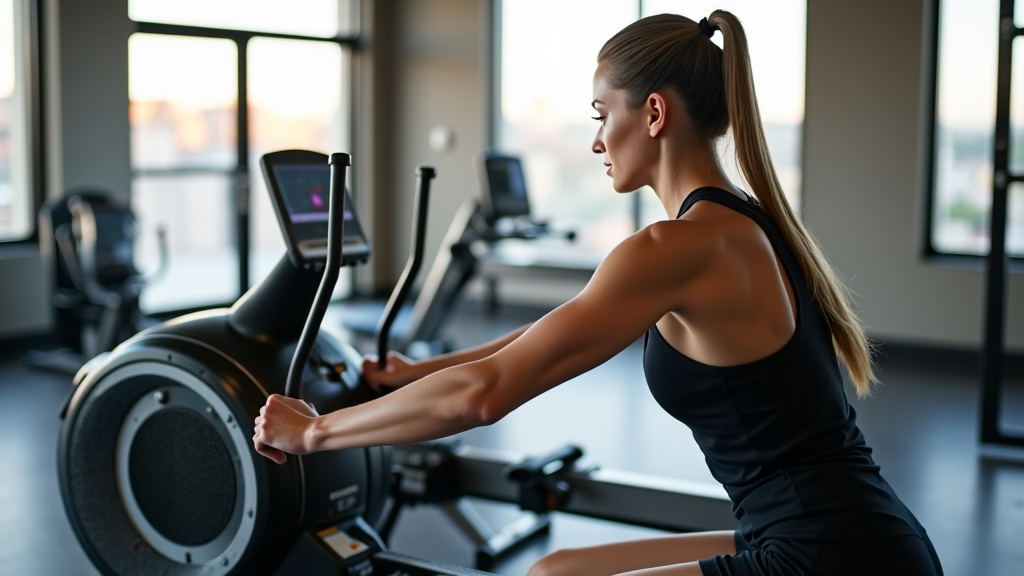
Maximizing Arm Toning on Your Rowing Machine
So, you want those toned arms? There are a few things you can do to get the most out of your rowing machine. It’s not just about getting on and pulling.
Focusing on technique and adding variety can supercharge your arm-toning efforts. Remember, consistency is key!
Focus on Proper Form and Technique
This is perhaps the most important tip. Incorrect form can lead to less effective muscle engagement and potential injuries. Your arms should finish the stroke, not initiate it.
We recommend watching instructional videos or even getting a quick session with a coach. Small adjustments can make a big difference in how your arms feel and look.
- Start with your legs pushing.
- Engage your core and swing your back.
- Finish the stroke with a powerful arm pull.
- Extend arms first in recovery.
- Slide forward smoothly.
- Maintain a firm but relaxed grip.
Vary Your Workouts and Intensity
Don’t do the same workout every time. Your muscles adapt quickly. Varying your intensity and workout structure can keep your arms guessing and growing.
Try interval training, longer steady-state rows, or even focusing on higher stroke rates for shorter bursts. This challenges your arm muscles in different ways.
Incorporate Strength Training for Arms
While rowing builds strength, adding some targeted arm exercises can really boost your results. Think about a couple of sessions a week.
This doesn’t mean heavy lifting if that’s not your goal. Even bodyweight exercises or light dumbbells can make a difference. Complementary exercises like bicep curls, tricep dips, and forearm exercises will help.
Consider Different Grip Styles (If Applicable)
Some rowing machines or accessories allow for different grip styles. For example, a wider grip might engage your back muscles more, but a narrower grip could emphasize your biceps and forearms.
Experiment safely to see what feels right and what challenges your arm muscles in new ways. Always prioritize comfort and safety (National Institutes of Health).
| Arm Muscle | Primary Role in Rowing | How to Emphasize (Technique) |
|---|---|---|
| Biceps | Pulling the handle towards the body (Finish phase) | Focus on a strong, controlled pull at the end of the stroke. |
| Triceps | Extending arms forward (Recovery phase) | Deliberately push the handle away and extend arms fully. |
| Forearms | Maintaining grip on the handle throughout the stroke | Ensure a firm, consistent grip without overtightening. |
Conclusion
So, can a rowing machine tone your arms? Absolutely! While it’s a fantastic full-body workout, you now know that your biceps, triceps, and forearms get a significant workout. You’ll build strength and definition, not bulk. Focus on proper technique, vary your routine, and consider adding some targeted arm exercises. This approach will maximize your results. Get ready to enjoy stronger, more sculpted arms as part of your overall fitness journey!
Frequently Asked Questions
Will rowing make my arms bulky?
No, rowing is an endurance exercise that promotes muscle definition and strength, not significant bulk. You’ll develop lean, toned arm muscles through consistent effort.
How often should I row to tone my arms?
Aim for 3-5 sessions per week, with each session lasting 20-45 minutes. Consistency is more important than extreme duration for toning your arms.
Can I just use my arms when rowing to tone them faster?
While it might seem logical, relying solely on your arms is inefficient and can lead to injury. For best arm toning and overall results, always use the full-body rowing stroke with proper form.
Does resistance level affect arm toning?
Yes, higher resistance levels will challenge your arm muscles more, potentially leading to faster toning. However, always prioritize good form over high resistance, especially when starting out.
Are there specific rowing workouts for arm focus?
You can incorporate intervals with a higher stroke rate or slightly higher resistance for short bursts. Also, focus extra on the pull and recovery phases to specifically engage your biceps, triceps, and forearms.