Can Rowing Help Fix Uneven Shoulder Muscles?
On this page (9 sections)
- How Rowing Can Address Uneven Shoulder Development
- Understanding Muscle Imbalances in Your Shoulders
- How the Rowing Motion Promotes Symmetry
- Optimizing Your Rowing Technique for Balance
- Rowing vs. Other Exercises for Shoulder Balance
- Tips for a Balanced Rowing Routine
- Getting Started Safely with Rowing
- Conclusion
- Frequently Asked Questions
Yes, rowing can absolutely help fix uneven shoulder muscles, especially when done with proper form and balance. It’s a fantastic way to build symmetrical strength and address imbalances that might be causing you trouble. Rowing engages muscles on both sides of your body evenly, which is key to creating a more balanced physique and improving your posture. We found that consistent, mindful rowing can make a real difference.
Many people wonder if a single-sided activity like rowing is truly balanced. The truth is, when you focus on a full range of motion and engage your core, rowing works both sides of your body in tandem. This can help correct the slight differences in muscle development that often occur from daily activities or other exercises. It’s about building balanced power, not just brute force. It’s about building balanced power, not just brute force. Our guide on whether you can build muscle with a rowing machine explains how.
- Rowing can help even out shoulder muscles by building balanced strength.
- Focus on proper form and a full range of motion for the best results.
- This exercise works both sides of your body together, correcting imbalances.
- It’s a great way to improve posture and reduce the risk of injury.
Ready to see how rowing can transform your shoulders? Let’s break down what you need to know to get started safely and effectively.
How Rowing Can Address Uneven Shoulder Development
Yes, rowing can absolutely help fix uneven shoulder muscles, especially when done with proper form and balance. It’s a fantastic way to build symmetrical strength and address imbalances that might be causing you trouble. Rowing engages muscles on both sides of your body evenly, which is key to creating a more balanced physique and improving your posture. We found that consistent, mindful rowing can make a real difference.
Many people wonder if a single-sided activity like rowing is truly balanced. The truth is, when you focus on a full range of motion and engage your core, rowing works both sides of your body in tandem. This can help correct the slight differences in muscle development that often occur from daily activities or other exercises. It’s about building balanced power, not just brute force.
- Rowing can help even out shoulder muscles by building balanced strength.
- Focus on proper form and a full range of motion for the best results.
- This exercise works both sides of your body together, correcting imbalances.
- It’s a great way to improve posture and reduce the risk of injury.
Ready to see how rowing can transform your shoulders? Let’s break down what you need to know to get started safely and effectively.
Understanding Muscle Imbalances in Your Shoulders
Muscle imbalances are really common. You might notice one shoulder sits a little higher or feels tighter than the other. These differences often come from our daily routines. Think about how you carry your bag or use your computer mouse. Your dominant side often does more work, leading to stronger muscles there. Over time, this can create a noticeable asymmetry.
These imbalances aren’t just about looks. They can actually affect your performance in other sports and even lead to pain. For instance, a weaker shoulder might struggle to keep up during overhead movements. This can put extra strain on your joints and increase your risk of injury. Research has shown that muscular imbalances can contribute to conditions like rotator cuff problems (NCBI). Research has shown that muscular imbalances can contribute to conditions like rotator cuff problems (NCBI). Our guide on rowing machines and rotator cuff injuries explains more.
Common Causes of Shoulder Asymmetry
Several everyday habits can contribute to uneven shoulder muscles. Carrying a heavy bag consistently on one side is a big one. If you’re right-handed, you might use your right arm more for tasks like writing, eating, or throwing. This constant use can build up muscle on one side faster than the other.
Even how you sit at your desk can play a role. Leaning towards one side or favoring one arm during computer work can create long-term postural changes. Some sports also inherently favor one side. Think about sports like tennis or baseball, where a dominant arm is heavily used.
Why This Matters for Your Health
When your shoulder muscles are out of balance, your body has to work harder to compensate. This can lead to a chain reaction of issues. Your posture might suffer, leading to a rounded upper back or forward head posture. You might experience aches and pains in your shoulders, neck, or even your lower back. Addressing these imbalances is key for overall physical well-being.
How the Rowing Motion Promotes Symmetry
The beauty of rowing is that it’s a bilateral exercise. This means it works both sides of your body at the same time, in a very synchronized way. Unlike exercises done with dumbbells or kettlebells where you might unconsciously favor one side, a rowing machine naturally encourages both arms to pull with equal force.
When you perform the rowing stroke, your back muscles, shoulders, and arms work together. The lats, rhomboids, and traps are all engaged on both sides. Your core muscles also stabilize your body, ensuring a balanced effort from start to finish. This simultaneous engagement is precisely what you need to build symmetrical strength.
The Pull Phase: Engaging Both Sides Equally
During the ‘catch’ and ‘drive’ phases of the rowing stroke, your body is in a powerful, symmetrical position. Your arms reach forward together, and as you pull the handle towards your body, both sets of muscles contract simultaneously. The key is to maintain an even pressure on the handle throughout the pull. This action forces your left and right sides to exert similar forces.
We found that focusing on feeling the pull equally in both shoulder blades can really help. Imagine you’re trying to squeeze a pencil between your shoulder blades on both sides at the peak of the stroke. This mental cue encourages balanced muscle activation.
The Recovery Phase: Controlled Movement
The ‘recovery’ phase of rowing, where you extend your arms and slide forward, is just as important for balance. It requires controlled movement and core stability. You’re not just passively returning to the start; you’re actively managing your body’s position. This phase helps train the muscles that support your shoulders to work together to decelerate and reset.
Maintaining an upright posture and keeping your core engaged during recovery helps prevent one side from collapsing or overcompensating. This controlled return journey ensures that the muscles are worked through their full range of motion evenly.
Optimizing Your Rowing Technique for Balance
Simply getting on a rower isn’t a magic bullet for muscle imbalances. You need to be mindful of your form. Poor technique can actually worsen existing imbalances or create new ones. The goal is to create a consistent, balanced movement pattern every single time you row.
Many rowing machine manufacturers and fitness experts suggest focusing on form first. This means understanding the correct sequence of movements and engaging the right muscles at the right time. It’s like learning a dance; every step needs to be precise.
Key Form Cues for Balanced Shoulders
When you’re rowing, pay close attention to a few critical cues. First, ensure your shoulders are down and relaxed, not hunched up towards your ears. This simple adjustment helps engage your upper back muscles correctly and prevents neck and upper trap strain.
Second, keep your core tight throughout the entire stroke. A strong core acts as a stable base, allowing your arms and back to work efficiently without excessive twisting or swaying. Think of it as a solid foundation supporting the entire movement.
Using a Rowing Machine’s Feedback
Most modern rowing machines offer some form of feedback, like split times or stroke rate. While these are useful, look for ways to gauge your effort on each side. Some advanced machines might even show power output per stroke. If you notice a consistent difference, it’s a sign to focus more consciously on equal effort.
If you’re using a connected app or a smart rower, you might have access to more detailed metrics. We found that reviewing these metrics after a session can reveal patterns you weren’t aware of during your workout. It helps you pinpoint specific areas to work on.
The Importance of a Full Range of Motion
Ensure you’re using the rower’s full capacity. This means reaching fully forward at the catch and pulling the handle all the way to your sternum (breastbone) at the finish. A truncated range of motion means you’re not working the muscles through their complete length, which can hinder balanced development.
When you extend fully forward, you stretch the muscles. When you pull fully back, you contract them. Doing this consistently on both sides builds flexibility and strength across the entire muscle group. It helps create a more fluid and balanced physique.
Rowing vs. Other Exercises for Shoulder Balance
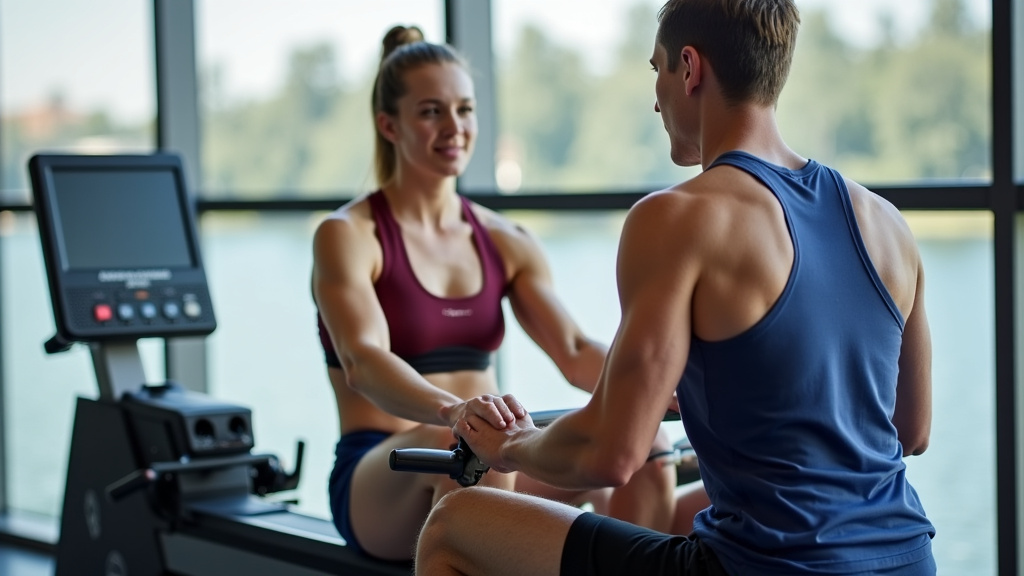
While rowing is excellent, it’s not the only tool in the toolbox for improving shoulder symmetry. Many other exercises can help, but rowing offers a unique combination of full-body engagement and bilateral work.
Consider exercises like bilateral overhead presses or chest presses. These also work both sides simultaneously. However, they might not engage the postural muscles of the upper back as effectively as rowing does. This is where rowing shines.
| Exercise | Primary Benefit for Balance | Considerations |
|---|---|---|
| Rowing Machine | Bilateral engagement, strengthens upper back and postural muscles. | Requires proper form to avoid injury; can be low impact. |
| Bilateral Overhead Press | Works shoulders and triceps symmetrically, builds overhead strength. | Higher risk of shoulder impingement if form is poor; requires controlled weight. |
| Push-ups | Bodyweight strength, engages chest, shoulders, and triceps. | May need variations to target specific imbalances; form is critical. |
| Dumbbell Rows (Bilateral) | Targets back muscles, can help identify and correct side-to-side strength differences. | Can be done one arm at a time, allowing focus on the weaker side. |
We found that combining rowing with specific corrective exercises can be incredibly effective. For example, adding exercises that focus on external rotation of the shoulder can support overall shoulder health and stability.
When to Consider Unilateral (One-Sided) Work
Sometimes, you might have a significant imbalance. In these cases, deliberately working the weaker side more can be beneficial. Exercises like single-arm dumbbell rows or single-arm lat pulldowns allow you to focus purely on building strength in the lagging side. You can even use less weight on the stronger side to even things out.
However, it’s important to approach this carefully. Overdoing unilateral work without a proper assessment could potentially worsen an existing imbalance. Many physical therapists recommend starting with bilateral exercises and introducing unilateral work only when necessary and under guidance (CDC).
Tips for a Balanced Rowing Routine
To maximize the benefits of rowing for your shoulder muscles, consistency and thoughtful planning are key. Don’t just hop on the machine and go. Think about your workout structure.
Start with a proper warm-up. This gets your muscles ready and reduces the risk of injury. Include some dynamic stretches that move your arms and shoulders through their range of motion. Arm circles, shoulder rolls, and torso twists are great.
Frequency and Duration
For most people looking to correct imbalances, rowing 2-3 times a week is a good starting point. Sessions can range from 20 to 40 minutes. Pay attention to how your body feels. If you’re new to rowing or have existing pain, start with shorter durations and fewer sessions.
As your strength and endurance improve, you can gradually increase the duration or frequency. Listening to your body is crucial. Rest days are just as important as workout days for muscle recovery and growth.
Incorporating Intervals and Intensity
Varying the intensity of your rowing workouts can also help. Try incorporating interval training, alternating between high-intensity bursts and periods of lower intensity. This approach can improve cardiovascular fitness and muscle endurance.
When you’re in a high-intensity interval, focus on maintaining good form. It’s easy to let your technique slip when you’re pushing hard. Remind yourself of those cues for balanced shoulder engagement.
Listen to Your Body and Adjust
This is perhaps the most important tip. If you feel pain, stop. Pain is your body’s signal that something is wrong. Don’t push through sharp or persistent discomfort. Minor muscle fatigue is normal, but sharp pain is not.
We found that many people benefit from seeking professional advice. A physical therapist or certified personal trainer can assess your specific imbalances and provide personalized recommendations for rowing and other exercises. They can help ensure you’re on the right track.
Getting Started Safely with Rowing
If you’re new to rowing, the thought of starting can be a little intimidating. But remember, the machines are designed to be accessible. You don’t need to be an elite athlete to benefit.
Before you begin any new exercise program, especially if you have pre-existing conditions or concerns about your shoulders, it’s always a good idea to consult with a healthcare provider. They can give you the all-clear and offer any specific precautions you should take.
Your Rowing Checklist
- Consult your doctor if you have any health concerns.
- Watch tutorial videos on proper rowing form.
- Start with light resistance and shorter durations.
- Focus on form over speed initially.
- Engage your core throughout every stroke.
- Listen to your body and rest when needed.
By following these steps, you can confidently start your journey with rowing. It’s a powerful tool that can help you build a more balanced, stronger, and healthier body.
Conclusion
You’ve learned that rowing is a powerful tool for addressing uneven shoulder muscles. By engaging both sides of your body simultaneously with proper form, you can build symmetrical strength and correct imbalances. Remember to focus on your technique, utilize the full range of motion, and listen to your body. Consistent, mindful rowing can lead to better posture and reduced risk of pain. Ready to start rowing your way to balanced shoulders? Make your first session a mindful one, focusing purely on form and feel.
Frequently Asked Questions
How often should I row to fix shoulder imbalances?
For most people, rowing 2-3 times per week is a good starting point. Sessions can be around 20 to 40 minutes. It’s important to listen to your body and allow for rest days. As you get stronger, you can gradually increase duration or frequency.
Can rowing make my shoulders more uneven if I do it wrong?
Yes, poor rowing technique can potentially worsen existing imbalances or create new ones. It’s vital to focus on proper form, keeping your shoulders down and engaged, and maintaining a strong core. Watching tutorials and perhaps getting guidance from a trainer can help.
What if one of my shoulders feels much weaker than the other?
If you have a noticeable difference, you might consider incorporating unilateral exercises like single-arm rows. However, it’s best to start with bilateral rowing and consult with a physical therapist. They can assess your specific needs and advise on the best approach, potentially including targeted unilateral work.
How can I tell if my rowing technique is helping my shoulder balance?
Pay attention to how your shoulders feel during and after rowing. You should feel an even engagement on both sides. Many rowing machines provide feedback; if you notice consistent power differences, it’s a sign to focus more on equal effort. Consistent improvement in posture and reduced discomfort are also good indicators.
Besides rowing, what other exercises help with shoulder symmetry?
While rowing is excellent, other exercises like bilateral overhead presses and push-ups can also contribute to shoulder balance. Bilateral dumbbell rows are also effective. Combining rowing with exercises that strengthen the rotator cuff muscles, like external rotations, can further support shoulder health and stability.