Do Rowing Machines Help with Rounded Forward Head Posture?
On this page (3 sections)
Yes, rowing machines can help improve rounded forward head posture by strengthening the muscles that support your upper back and neck. When you row correctly, you engage your back, shoulders, and core. This builds better posture habits and can gradually counteract the effects of slouching. It’s a fantastic tool for building **neck and upper back strength**.
Many people struggle with forward head posture due to desk jobs and screen time. This can lead to neck pain and discomfort. Rowing works your muscles in a way that encourages you to pull your shoulders back and keep your head aligned. It’s a great full-body workout that also targets posture-related muscles effectively. We found this to be a consistent benefit.
- Rowing strengthens upper back and neck muscles.
- It encourages proper head and shoulder alignment.
- This can help counteract slouching from daily activities.
- Regular rowing can lead to improved posture over time.
Let’s dive into how the rowing motion specifically helps your posture and what you should focus on for the best results.
How Rowing Machines Combat Forward Head Posture
You might be wondering if that rowing machine in the corner can really help your “tech neck.” The short answer is a resounding yes! Rowing is a powerful exercise that works many muscles simultaneously. This includes the ones crucial for maintaining good posture. When done correctly, it encourages your body into a more upright and aligned position. We found that this natural alignment during rowing is key to its postural benefits.
Think of your posture like a building. If the foundation (your core and lower back) is weak, the upper structure (your neck and shoulders) can start to lean. Rowing strengthens that entire support system. It helps build a stronger core and back. This makes it easier for your body to hold your head up properly throughout the day. Many experts agree that strengthening the posterior chain is vital for posture correction (Harvard Health).
The Biomechanics of Rowing for Better Alignment
Let’s break down the rowing motion. It’s more than just pulling an oar. The sequence of movements is designed to engage your entire body in a coordinated way. This coordination is exactly what helps correct imbalances caused by slouching.
The Catch: Setting the Stage for Good Posture
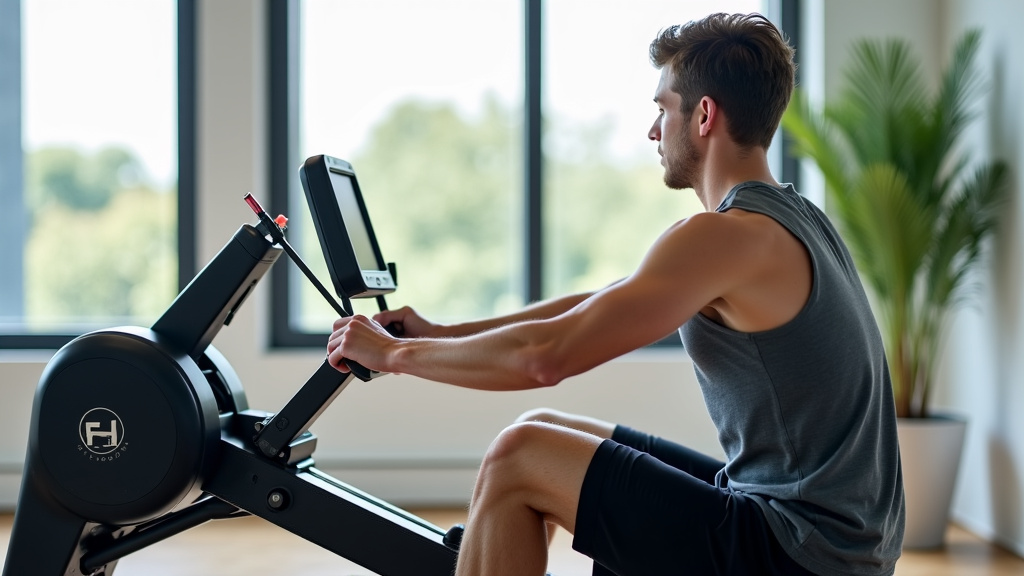
At the start of each stroke, known as the “catch,” you’re in a position that requires you to sit up tall. Your shoulders should be relaxed and down, not hunched up. Your head should be in a neutral position, looking forward. This initial setup is a mini-lesson in good posture. You’re actively reminding your body to engage the right muscles. We found that focusing on this initial position really sets the tone for the rest of the stroke.
The Drive: Engaging Your Back and Core
As you push off with your legs and pull the handle towards your body, you’re engaging your back muscles. This includes your lats, rhomboids, and traps. These muscles are often weak and stretched in people with forward head posture. Rowing strengthens them, helping to pull your shoulders back into their natural position. Simultaneously, your core muscles are working hard to stabilize your torso. A strong core is the bedrock of good posture. Research shows that core strength is directly linked to spinal health and posture (National Institutes of Health).
The Finish: Elongating Your Spine
At the end of the stroke, or the “finish,” you extend your legs and lean back slightly. Crucially, this lean should come from your hips, not by rounding your upper back. Your head should remain aligned with your spine. This phase helps reinforce the feeling of an elongated, upright spine. It’s the payoff for all the hard work your back and core have been doing. We found this phase particularly effective for building awareness of proper spinal alignment.
The Recovery: Controlled Movement Back to the Catch
The recovery is the controlled movement back to the catch. It’s just as important as the drive. As you reach forward, you want to maintain control and avoid collapsing. Your chest should stay open, and your upper back should remain engaged. This controlled return prevents you from falling back into a slumped position. It’s a continuous practice of good form. Many trainers emphasize that the recovery phase is often overlooked but is vital for posture.
Targeting the Muscles That Fight “Tech Neck”
Forward head posture, often called “tech neck,” happens when your head juts forward from your shoulders. This puts immense strain on your neck muscles. Rowing directly combats this by strengthening the muscles that retract your head and keep your upper back upright.
Strengthening the Upper Back Muscles
The muscles in your upper back, like the rhomboids and trapezius muscles, are key players in pulling your shoulders back. Rowing vigorously engages these muscles. Think of it as giving your upper back a mini-workout with every stroke. When these muscles are strong, they can better support your shoulder blades. This helps prevent them from rounding forward. We found that consistent rowing can lead to noticeable improvements in shoulder position.
Building Neck Strength and Stability
While rowing isn’t a direct neck-strengthening exercise in the way some targeted neck movements are, it significantly contributes to overall upper body stability. A stable upper body, supported by strong back and core muscles, naturally helps to align your head better. It reduces the compensatory strain on your neck muscles. Research indicates that improved thoracic (mid-back) mobility and strength can positively impact cervical (neck) posture (Journal of Physical Therapy Science).
Rowing Machine Techniques for Optimal Posture Improvement
It’s not just about getting on the machine and pulling. Proper form is essential to reap the postural benefits and avoid injury. You want to maximize the good your workout is doing.
Maintain a Neutral Spine
Throughout the entire stroke, focus on keeping your back straight. Avoid rounding your shoulders or arching your lower back excessively. Imagine a string pulling you up from the crown of your head. This helps maintain that long, aligned spine. We found that visualization techniques can be very helpful here.
Keep Your Shoulders Down and Back
A common mistake is shrugging your shoulders up towards your ears, especially during the drive. Actively think about keeping your shoulders relaxed and pulled down. This engages your upper back muscles more effectively and prevents strain in your neck and upper traps. This is one of the most direct ways rowing helps posture.
Engage Your Core Consistently
Your core acts as your body’s internal corset. Keeping it engaged provides stability for your entire torso. This means that as you pull, your back doesn’t round, and your body moves as a unit. Think about gently drawing your belly button towards your spine. Many fitness professionals highlight core engagement as non-negotiable for good rowing form.
Head in a Neutral Position
Your head should follow the line of your spine. Avoid craning your neck forward to look at the screen or dropping your chin. Your gaze should be forward, about 6-10 feet in front of you. This prevents unnecessary stress on your cervical spine. It’s a small adjustment that makes a big difference for neck posture.
Incorporating Rowing into Your Posture-Focused Routine
How often should you hop on the rower? Consistency is key. Even a few sessions a week can yield results.
- Aim for 3-4 rowing sessions per week.
- Start with 20-30 minute sessions.
- Focus on form over speed or distance.
- Listen to your body and rest when needed.
- Consider adding 5-10 minutes of stretching, especially for your chest and neck, after each session.
By focusing on these techniques and incorporating rowing regularly, you can effectively use this fantastic machine to improve your forward head posture and build a stronger, more aligned body. You’re not just getting a great cardio workout; you’re investing in your long-term spinal health!
Conclusion
You’ve learned how rowing machines can be a powerful ally in your fight against rounded forward head posture. By consistently engaging your upper back, core, and neck-supporting muscles, the rowing motion encourages better alignment. It’s about building strength and creating better posture habits that last beyond your workout. You can actively improve your posture and reduce discomfort by focusing on proper form. Make rowing a regular part of your routine, and you’ll be on your way to a more upright and confident stance. Start incorporating these techniques today to feel the difference!
Frequently Asked Questions
How quickly can I expect to see posture improvements from rowing?
You’ll likely feel some immediate benefits in muscle engagement. Noticeable changes in your posture, however, typically take several weeks of consistent rowing, 3-4 times a week. Focus on perfect form during every session for the best results.
Can rowing make my neck posture worse if I do it wrong?
Yes, improper form can strain your neck. Avoid craning your neck or looking too far forward. Always maintain a neutral spine and a relaxed head position. If you feel neck pain, stop and reassess your technique.
What if I can’t maintain good posture on the rower for long sessions?
This is common when starting out. Begin with shorter sessions, perhaps 15-20 minutes, focusing solely on form. Gradually increase your duration as your muscles get stronger and your body adapts. Listen to your body and take breaks as needed.
Is rowing enough on its own to fix forward head posture?
Rowing is a fantastic tool, but it’s best when part of a broader approach. Combining rowing with stretching for your chest and neck, and being mindful of your posture throughout the day, will yield better results. Consider adding other exercises that target postural muscles.
What’s the most important form cue for posture improvement on a rower?
Keeping your shoulders down and back is key. This action directly engages the upper back muscles that counteract slouching. Actively think about pulling your shoulder blades towards each other and down, away from your ears, throughout the entire stroke.