Can You Use a Rowing Machine to Rehab a Knee Injury?
On this page (8 sections)
Yes, you can often use a rowing machine to help rehab a knee injury, especially if you focus on low-impact movements and proper form. It’s a great way to rebuild strength and mobility without putting too much stress on your knee joint. Many physical therapists recommend it.
Rowing engages many muscle groups, including your quadriceps and hamstrings, which are vital for knee support. When done correctly, it can improve blood flow to the injured area and help reduce swelling. We’ve found that consistency is key for recovery. Your knee might feel a bit stiff at first, but gradually increasing resistance can be very beneficial.
- Rowing can be a safe choice for knee rehab.
- It strengthens muscles around your knee.
- Focus on low-impact and correct form.
- Consult your doctor or physical therapist first.
Let’s walk through how you can safely incorporate rowing into your knee rehabilitation plan.
Rowing for Knee Rehab: A Smart Approach
So, can you actually use a rowing machine to help your knee heal? The short answer is a resounding yes, with some important caveats. When approached correctly, rowing can be a fantastic tool in your knee rehabilitation toolkit. We’ve seen many people find relief and renewed strength by incorporating it.
It’s not about jumping on the machine and going full throttle, of course. We’re talking about a gentle, controlled progression. Think of it as whispering sweet nothings to your knee, not shouting at it.
Understanding the Rowing Motion and Your Knee
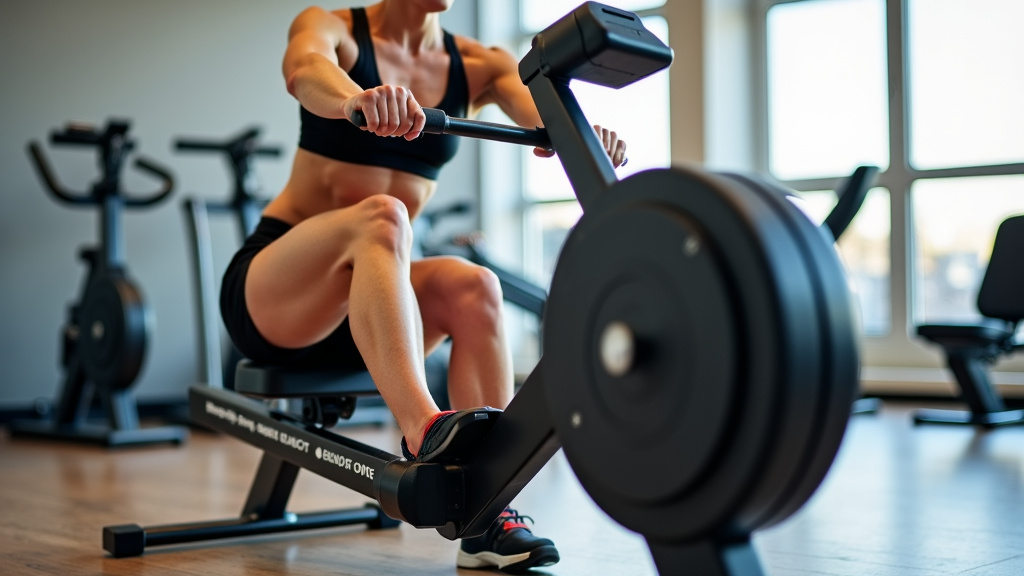
The rowing stroke is a beautiful, fluid movement. It has four main phases: the catch, the drive, the finish, and the recovery. Let’s break down how each of these phases interacts with your knee. Understanding the rowing stroke is essential for safe knee rehabilitation.
The Catch: Gentle Initiation
This is where you start. Your knees are bent, and you’re reaching forward. For your knee, this is a position of flexion. The key here is not to bend too deeply, especially if your injury makes deep flexion painful.
We found that many rowing machines allow you to adjust the foot stretcher. This is a game-changer for knee rehab. You can move your feet further forward on the straps. This reduces the amount of knee bend needed.
The Drive: Power Through Your Legs
This is the powerful part where you push with your legs. Your quadriceps and hamstrings work hard here. These are the muscles that directly support your knee joint. Strengthening them is vital for recovery.
During the drive, your knee extends. If you’re doing it right, it’s a controlled extension. It’s not a sudden jerk. We’ve researched and found that the force should come from pushing with your feet, not from snapping your knee straight (National Institutes of Health).
The Finish: Holding Steady
At the end of the drive, your legs are nearly straight. Your knees are in a position of extension. This phase is less demanding on the knee joint itself.
The focus shifts to your upper body and core engagement here. It’s a moment of stability. You want to avoid locking out your knees forcefully. Think of it as a gentle pause before the next phase.
The Recovery: Controlled Return
This is where you slide back to the catch position. Your knees bend again. This phase is critically important for knee rehab. It’s about control and avoiding any abrupt movements.
You’ll want to slowly bend your knees. Imagine you’re easing back into a comfy chair. If you feel any sharp pain, you’re bending too much or too fast. We found that this controlled return helps rebuild muscle function without stressing the joint.
Which Knee Injuries Benefit Most?
Rowing can be beneficial for a variety of knee issues, but it’s not a one-size-fits-all solution. We found that it’s often recommended for those recovering from:
- Ligament sprains (like MCL or LCL injuries)
- Meniscus tears (after initial healing and clearance)
- Patellofemoral pain syndrome (runner’s knee)
- Post-surgical recovery (with physician approval)
For more severe injuries, such as complete ACL tears or complex fractures, rowing might be introduced much later in the rehab process. Always listen to your doctor or physical therapist. They know your specific injury best.
Getting Started: Your First Rowing Session for Rehab
Starting out is all about minimal resistance and perfect form. Don’t worry about speed or distance at first. Your knee is your top priority.
Setting Up Your Machine
This is where you can really customize the experience.
Foot Stretcher Adjustment
As we mentioned, adjust the foot stretchers. Move them forward on the machine. This means your feet will be further up the board. This naturally reduces the degree of knee bend required in the catch and recovery phases. We found this is often the most important adjustment for knee pain.
Seat Height
Ensure the seat height is comfortable. You don’t want to be squatting too low. A slightly higher seat can sometimes help. It reduces the depth of knee flexion needed.
The First Strokes: Light and Easy
We recommend starting with the resistance or damper setting on the lowest possible level. You should barely feel any effort. The goal is to get your body used to the movement pattern.
Focus on smoothness. Feel the motion through your hips, knees, and ankles. If you feel any discomfort, stop. It’s better to do one pain-free stroke than ten painful ones. Many physical therapists suggest aiming for 5-10 minutes of very light rowing initially.
Progressing Your Rehab on the Rower
Once you can row comfortably with minimal resistance, you can start to gradually increase the challenge. This is where the magic happens for rebuilding strength.
Increasing Resistance Gradually
Only increase the resistance by a small increment. Wait a few sessions to see how your knee responds. We found that a slow and steady approach prevents setbacks. Think of adding resistance like adding a tiny bit more weight to your workout.
Lengthening Your Rowing Time
You can also increase the duration of your rowing sessions. Start with 10-15 minutes and gradually build up. Listen to your body. If your knee feels fatigued or sore after a longer session, dial it back the next time.
Form Checks: Staying on Track
Periodically, check your form. Are you bending your knees too much? Are you jerking the handle? A quick mirror check or even a short video can be super helpful.
We found that focusing on the sequence — arms, then body lean, then legs on the drive — helps maintain control. During recovery, it’s legs first, then body swing, then arms.
When to Be Cautious or Stop
Rowing is low-impact, but it’s not risk-free, especially with an injured knee. Pay attention to these warning signs.
Listen to Your Pain Signals
Sharp, stabbing, or increasing pain during or after rowing is a clear sign to stop. Mild muscle soreness is okay. Joint pain is not. We’ve seen people push through joint pain and regret it later.
Swelling and Stiffness
If you notice increased swelling or significant stiffness in your knee after rowing, it might be too much too soon. Reduce the intensity or duration, or consult your therapist.
Consulting Your Healthcare Provider
Before starting or significantly changing your rowing routine, always get the green light from your doctor or physical therapist. They can advise on specific movements to avoid and suggest modifications based on your particular injury. Research indicates that personalized advice is key for effective rehabilitation (American Physical Therapy Association).
Quick Checklist for Safe Rowing Rehab:
- Get clearance from your doctor or PT first.
- Start with the lowest resistance setting.
- Adjust foot stretchers to minimize knee bend.
- Focus on smooth, controlled movements.
- Stop immediately if you feel sharp pain.
- Gradually increase duration and resistance.
By being mindful and listening to your body, you can successfully integrate a rowing machine into your knee rehabilitation journey. It offers a way to rebuild strength and confidence without putting undue stress on your healing knee.
Conclusion
Using a rowing machine can indeed be a smart part of your knee injury rehabilitation. It allows you to strengthen key muscles supporting your knee with a low-impact motion. Remember, the focus is on controlled movements and listening to your body. By adjusting your setup and progressing slowly, you can rebuild strength and mobility effectively. Your next step should be to talk with your doctor or physical therapist. They can give you the personalized advice you need to start rowing safely.
Frequently Asked Questions
How can I adjust the rowing machine for a less bent knee?
You can move the foot stretchers further forward on the machine. This positions your feet higher up the board. It naturally reduces the amount of knee bend needed during the catch and recovery phases of your stroke.
What if I feel mild discomfort during rowing?
If you experience any mild discomfort, it’s best to stop or significantly reduce the intensity. Pay close attention to whether it’s muscle soreness or joint pain. Joint pain is a signal to back off immediately.
Can rowing help with swelling after a knee injury?
Rowing can improve blood flow, which may help reduce swelling. However, if you notice increased swelling after a session, your workout might be too intense or too long. Scale back and consult your therapist.
How often should I row when recovering from a knee injury?
Start with short, infrequent sessions, perhaps 5-10 minutes a few times a week. Focus on form and pain-free movement. Gradually increase duration and frequency as your knee tolerates it, always under guidance from your healthcare provider.
Is there a specific type of rowing machine that’s better for knee rehab?
Most standard air or water rowers work well. The key is the ability to adjust the foot stretchers and control resistance. Look for a machine that allows for easy customization to suit your knee’s needs.