How to Do Tabata Intervals on a Rowing Machine?
On this page (10 sections)
- Mastering Tabata on Your Rowing Machine
- Understanding the Tabata Protocol
- Setting Up Your Rowing Machine for Tabata
- Executing Your Tabata Rowing Intervals
- Tips for Success and Safety
- Tabata Rowing: What to Expect
- Sample Tabata Rowing Workout Structure
- Frequently Asked Questions About Tabata Rowing
- Conclusion
- Frequently Asked Questions
You can definitely do Tabata intervals on a rowing machine for a killer workout. This high-intensity method involves short bursts of maximum effort followed by brief rest periods. It’s a fantastic way to boost your cardiovascular fitness and burn calories quickly.
Rowing machines are ideal for Tabata training because they provide a full-body exercise. You engage your legs, core, and arms all at once. This makes your Tabata sessions incredibly efficient and effective for overall conditioning.
- Tabata is 20 seconds of work, 10 seconds of rest.
- Repeat this cycle 8 times for one Tabata set.
- Rowing machines offer a great full-body workout.
- Proper form is key to prevent injury.
Ready to get started? Let’s walk through exactly how to set up and perform Tabata intervals on your rowing machine step by step. Our guide on how to set up and use a rowing machine for beginners can help.
Mastering Tabata on Your Rowing Machine
You’re ready to take your rowing workouts to the next level. Tabata intervals offer a powerful way to boost your fitness. We’ll guide you through setting up and executing these intense bursts. Get ready for a challenging, efficient workout.
Understanding the Tabata Protocol
At its core, Tabata is a simple yet demanding protocol. It’s named after Dr. Izumi Tabata, who researched its effectiveness. The structure is quite specific.
The 20-10 Rule
The standard Tabata protocol consists of 20 seconds of maximal effort exercise. This is followed by 10 seconds of rest. You repeat this work-rest cycle eight times. This completes one Tabata set, totaling four minutes.
Why It’s So Effective
This high-intensity, short-duration format is designed to push your aerobic and anaerobic systems. Research has shown it can significantly improve both cardiovascular fitness and VO2 max. It’s a quick way to get a substantial workout in.
Setting Up Your Rowing Machine for Tabata
Before you start rowing, proper setup is key. You want to be able to transition quickly between work and rest. Your rowing machine’s monitor will be your best friend here.
Adjusting Resistance
For Tabata, you’ll want a moderate to high resistance level. It should be challenging enough that you can’t maintain your top speed for the full 20 seconds. But it shouldn’t be so high that your form breaks down immediately. Experiment to find what feels right for you. Many rowers suggest a resistance that feels like a 6 or 7 on a 1-10 scale. Learn about the ideal resistance level for your rowing machine.
Using the Monitor
Your rower’s monitor can help you track time accurately. Most modern rowers have interval timers. You can often program custom intervals. If yours doesn’t, you’ll need a separate timer or stopwatch. A simple phone app works well. The key is precise timing for the 20 seconds of work and 10 seconds of rest.
Executing Your Tabata Rowing Intervals
Now for the main event! Performing Tabata on a rower requires focus and intensity. Remember, the goal is maximal effort during the work intervals.
The Rowing Stroke: A Quick Refresher
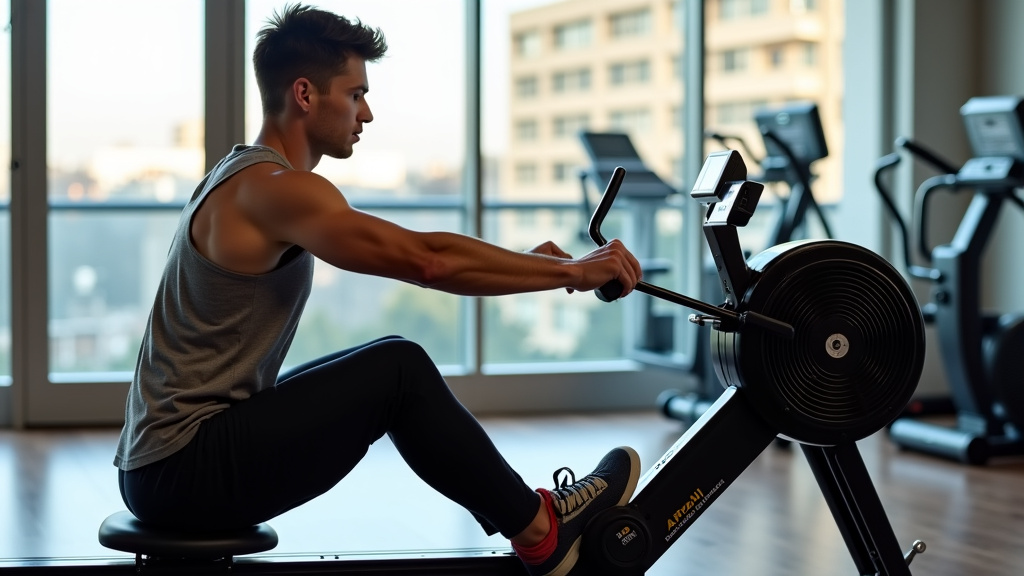
Before diving into high intensity, let’s ensure your form is solid. Proper technique prevents injury and makes your workout more effective. The rowing stroke has three main phases:
- The Catch: Start with your knees bent, shins vertical, arms extended, and back straight.
- The Drive: Push powerfully with your legs, then lean back slightly with your core, and finally, pull the handle towards your chest with your arms.
- The Finish: Extend your legs and torso fully, with arms pulled to your chest.
- The Recovery: Extend your arms, lean forward from your hips, and bend your knees to return to the catch position.
Focus on a smooth, fluid motion. The legs do most of the work. Keep your core engaged throughout.
Performing the Intervals
Let’s break down how to perform one Tabata set:
- Start the Timer: Begin your 20-second work interval.
- Row with Max Effort: Row as hard and fast as you possibly can. Focus on maintaining good form even at high intensity. Aim for powerful leg drives and a strong pull. Don’t worry about distance or split times yet; just focus on power.
- Immediate Rest: As soon as the 20 seconds are up, stop rowing completely.
- Ten Seconds of Rest: Use this brief period to catch your breath. Take a deep breath and reset. Do not move.
- Repeat: As soon as the 10 seconds are over, start the next 20-second sprint.
You will do this eight times in total. This makes one Tabata set. This process might sound simple, but the intensity will make it challenging.
How Many Sets?
For a complete Tabata workout, you’ll typically perform 4 to 8 Tabata sets. This means you’re doing between 16 and 32 minutes of actual work intervals. With the rest periods, a full Tabata workout can be around 20-40 minutes. You can space out the sets with a minute or two of steady-state rowing or complete rest in between.
Tips for Success and Safety
Tabata is tough! Here are some tips to help you get the most out of your workout while staying safe.
Warm-Up is Non-Negotiable
Never jump straight into maximal effort. A proper warm-up prepares your muscles and cardiovascular system. Start with 5-10 minutes of light rowing. Gradually increase intensity. Include some dynamic stretches for your legs, arms, and back. This helps prevent injuries and makes your work intervals more effective.
Listen to Your Body
This is high-intensity training. It’s okay if you can’t complete every single interval at 100% effort, especially when you’re new to it. Focus on giving your best effort for the given time. If you feel sharp pain, stop immediately. Pushing through pain can lead to serious injuries.
Hydration Matters
You will sweat a lot during Tabata intervals. Keep water nearby and sip it during your rest periods and between sets. Staying hydrated is vital for performance and recovery.
Cool-Down is Also Key
After your last Tabata set, don’t just stop. Spend 5 minutes cooling down with very light rowing. This helps your heart rate gradually return to normal. Follow up with some static stretching, holding each stretch for 20-30 seconds. This aids muscle recovery.
Tabata Rowing: What to Expect
Are you curious about the results you can achieve? Tabata training offers several benefits, backed by research.
Fitness Improvements
Consistent Tabata training can lead to significant improvements in your aerobic capacity and muscular endurance. Studies have shown it can be just as effective as longer cardio sessions for improving fitness, but in much less time (Tabata, et al.).
Calorie Burn
Because of the high intensity, Tabata workouts burn a lot of calories in a short period. You’ll also experience the “afterburn effect,” where your body continues to burn calories at an elevated rate for hours after your workout. This makes it a great tool for weight management.
Mental Toughness
Pushing through those 20-second bursts of maximum effort builds mental resilience. You learn to push past discomfort and mental barriers. This can translate to other areas of your life.
Sample Tabata Rowing Workout Structure
Here’s a template to get you started. Feel free to adjust it based on your fitness level.
| Phase | Duration | Activity | Notes |
|---|---|---|---|
| Warm-up | 5-10 minutes | Light to moderate rowing, dynamic stretches | Focus on gradually increasing heart rate. |
| Tabata Set 1 | 4 minutes | 20s Max Effort / 10s Rest (8 rounds) | Give it everything you’ve got! |
| Active Recovery | 1-2 minutes | Very light rowing | Catch your breath before the next set. |
| Tabata Set 2 | 4 minutes | 20s Max Effort / 10s Rest (8 rounds) | Maintain intensity. |
| Active Recovery | 1-2 minutes | Very light rowing | Stay hydrated. |
| Tabata Set 3 | 4 minutes | 20s Max Effort / 10s Rest (8 rounds) | Push through! |
| Active Recovery | 1-2 minutes | Very light rowing | You’re almost there. |
| Tabata Set 4 | 4 minutes | 20s Max Effort / 10s Rest (8 rounds) | Finish strong! |
| Cool-down | 5 minutes | Very light rowing, static stretching | Allow heart rate to return to normal. |
This structure provides a solid 30-35 minute workout. As you get fitter, you can increase the number of Tabata sets from 4 to 8. You can also slightly increase the resistance. Just remember to keep that form perfect.
Frequently Asked Questions About Tabata Rowing
You might still have some questions. Here are a few common ones we hear:
What if 10 seconds isn’t enough rest?
That’s perfectly normal when you start. The Tabata protocol is intense! If 10 seconds feels too short to recover, try to make the 20-second work interval slightly less than your absolute maximum. You want to be able to give a good effort but still recover enough to go again. Over time, your recovery will improve. You can also extend the rest to 15 or 20 seconds if needed, but this deviates from the classic protocol. Many experts recommend sticking to the 10-second rest to truly challenge your anaerobic system (Mayo Clinic).
How often can I do Tabata rowing?
Due to its high intensity, Tabata is best done 1-3 times per week. Your body needs time to recover. Doing it too often can lead to overtraining and burnout. Pair Tabata days with moderate-intensity cardio or strength training days for a well-rounded fitness plan. Listen to your body; rest days are as important as workout days.
Can I do Tabata rowing if I’m a beginner?
Yes, but with modifications! Start with fewer Tabata sets (e.g., 2-3 sets) and focus on proper form. You might not achieve maximal effort in every 20-second interval, and that’s okay. The goal is to gradually build up your intensity and endurance. Consider rowing at a slightly lower resistance initially. Always consult with a doctor before starting any new intense exercise program, especially if you have pre-existing health conditions.
What’s the difference between Tabata and HIIT?
Tabata is a specific type of High-Intensity Interval Training (HIIT). All Tabata is HIIT, but not all HIIT is Tabata. Standard HIIT can have various work-to-rest ratios (like 30s on/30s off, or 45s on/15s off) and durations. The strict 20 seconds on, 10 seconds off for 8 rounds is what defines Tabata. Tabata is known for being particularly intense and time-efficient.
Conclusion
You’ve now got the blueprint for crushing Tabata intervals on your rowing machine. Remember, this intense workout is about giving maximum effort for short bursts. Focus on perfect form, listen to your body, and don’t forget your warm-up and cool-down. You’re ready to build incredible fitness and mental toughness in just minutes. So, hop on your rower, set that timer, and get ready to experience a truly powerful workout. Your fitter, stronger self awaits!
Frequently Asked Questions
How can I adjust the rowing machine’s resistance for Tabata?
You’ll want a moderate to high resistance level. It should be tough enough that you can’t maintain top speed for the full 20 seconds, but not so high that your form breaks down. Many find a 6 or 7 on a 1-10 scale works well.
What if I can’t maintain max effort for the whole 20 seconds?
That’s perfectly normal when you’re starting out! The goal is to give your best possible effort for those 20 seconds. Don’t worry if it’s not 100% every time. Focus on consistency and gradually increasing your power as your fitness improves.
How many Tabata sets should I do in one workout?
A typical Tabata workout includes 4 to 8 sets, totaling 16 to 32 minutes of work. You can space these sets out with a minute or two of light rowing. Start with fewer sets and build up as you get fitter.
Is Tabata rowing safe for someone new to exercise?
While Tabata is intense, beginners can do it safely with modifications. Start with fewer sets and focus on form. You might not reach maximum effort immediately. Always consult your doctor before starting and stop if you feel any sharp pain.
What’s the biggest benefit of rowing for Tabata?
The rowing machine provides a full-body workout, engaging your legs, core, and arms simultaneously. This makes your Tabata sessions incredibly efficient, hitting multiple muscle groups and boosting your cardiovascular fitness rapidly.