How to Fix a Water Rowing Machine Strap That Will Not Rewind
To rewind a water rowing machine strap, stop rowing, inspect the strap path, and let the handle return slowly. If it still will not retract, check the manual for safe access to the recoil mechanism before adjusting or replacing parts.
On this page (8 sections)
- How do you rewind a water rowing machine strap safely?
- Why does a rowing machine strap stop retracting?
- How can you check the strap path?
- Should you lubricate the strap or its return mechanism?
- When should you replace a bungee or other return part?
- When should you stop troubleshooting?
- How can you prevent the strap from sticking again?
- What is the safest fix for a strap that will not rewind?
To rewind a water rowing machine strap, stop rowing, inspect the strap path, and guide the handle back slowly. If it still will not retract, consult the model manual before opening the housing or adjusting the recoil parts.
A twisted strap or a strap rubbing against a guide may be visible without tools. A weak or broken recoil part can require a model-specific repair, so don't pull harder to force it back.
How do you rewind a water rowing machine strap safely?
Let the handle return under control while you watch the strap. Keep fingers, clothing, and loose items clear of the handle and strap path.
- Stop rowing and sit or stand where you can see the strap.
- Check whether it is twisted, folded, or caught at the entry guide.
- If the path is clear, guide the handle toward its resting position without letting it snap back.
- Check whether the strap winds evenly and the handle stays retracted.
- Stop if it binds, slips, frays, or leaves slack.
Don't pull the strap out to its limit or open the housing as a first step. The manual should identify safe access points and any model-specific reset procedure.
Why does a rowing machine strap stop retracting?
A strap that will not rewind usually points to a path problem or an issue with the recoil system. The visible strap can show whether it is twisted or rubbing, but it may not reveal a damaged internal part.
Common things to check include:
- Twist or fold: A strap can bunch at the guide and resist winding.
- Obstruction: A strap edge, clothing, or debris may interfere with its path.
- Misalignment: A strap may rub if it has moved off its intended route.
- Recoil problem: A spring, bungee, or other return part may be loose, worn, or broken.
A water tank provides resistance, while the strap and return parts manage the handle movement. If your rower also feels weak or the resistance behaves oddly, see Why Is My Rowing Machine Resistance Not Working?.
Could a loose strap be the cause?
Yes, slack can keep the strap from winding neatly, but don't tighten it by guesswork. Follow your model's instructions for inspecting or adjusting tension.
If the strap itself looks loose, compare the signs with our guide to a rowing machine belt loose. A strap and a belt may use different parts and repair steps, so match the advice to your machine.
Stop if the strap is frayed, torn, or pulling unevenly. A damaged strap can fail during a stroke and should be replaced with the correct part for the model.
How can you check the strap path?
Inspect only the visible path first, and keep the strap straight as you guide the handle back. Look for twists, trapped fabric, rubbing, or an edge that has slipped from a guide.
Unplug or isolate the machine only if its manual instructs you to do so. Keep the tank upright, and don't move or tip a filled rower to reach the mechanism.
Don't pry off covers or put fingers near a spring under tension. If the strap disappears into an enclosed housing, use the manual's diagram or ask the manufacturer how to inspect it safely.
What if the strap rewinds unevenly?
Uneven winding suggests a twist, obstruction, or alignment issue. Stop the handle before the strap bunches tightly, then check the visible section and guide.
Don't pull the strap sideways to force it into place. Side loading may make it rub more or damage its edge.
If a clear, straight strap still winds poorly, a pulley or internal guide could be out of position. Get model-specific service instructions before changing the routing.
Should you lubricate the strap or its return mechanism?
Only lubricate a part if the machine's manual names that part and specifies a suitable lubricant. Don't spray the strap, guide, pulley, or enclosed recoil mechanism based on a general equipment recommendation.
Lubricants are not interchangeable. For example, WD-40 Specialist Silicone Lubricant is described for tracks, cables, pulleys, and equipment, while Petrol-Gel Food Grade Equipment Lubricant NSF is described for machinery parts and gym equipment.
The 1DFAUL lubricant is described for treadmill belts, not rowing machine straps. Don't use it on a rower unless the maker confirms it is suitable for the specific part.
Wipe off any accidental lubricant only by a method the machine maker allows. If lubricant has reached the strap or a surface used for grip, don't row until you get model-specific guidance.
When should you replace a bungee or other return part?
Replace a recoil part only after identifying the correct component and following the rower's service instructions. A bungee may look simple, but its length, attachment points, and tension can vary by model.
If the manual identifies a bungee as the return part, our rowing machine bungee cord replacement guide explains what to consider before replacing one. Don't substitute a generic cord or stretch a spring to make it fit.
Stop using the rower if the return part is frayed, cracked, detached, or under unusual tension. Contact the manufacturer or a qualified repair service if the part is enclosed or you can't confirm the correct replacement.
When should you stop troubleshooting?
Stop and contact the maker if the strap is damaged, the handle snaps back, the recoil part is exposed, or the mechanism stays jammed after a visible-path check. Don't keep rowing with a strap that will not return normally.
Have the model name and a clear description of the symptom ready. A photo of the visible strap route may help support staff identify the right manual or part.
For broader checks across rower types, see How To Fix Rowing Machine?. If you're comparing equipment because your current rower needs major repairs, review the Best Water Rowing Machine guide.
How can you prevent the strap from sticking again?
Return the handle smoothly and follow the care schedule in your rower's manual. Avoid letting the handle snap back, twisting the strap, or storing items where they can press against its path.
After a workout, check that the strap rests evenly and the handle stays in place. Clean visible dust only with a method approved for the strap material.
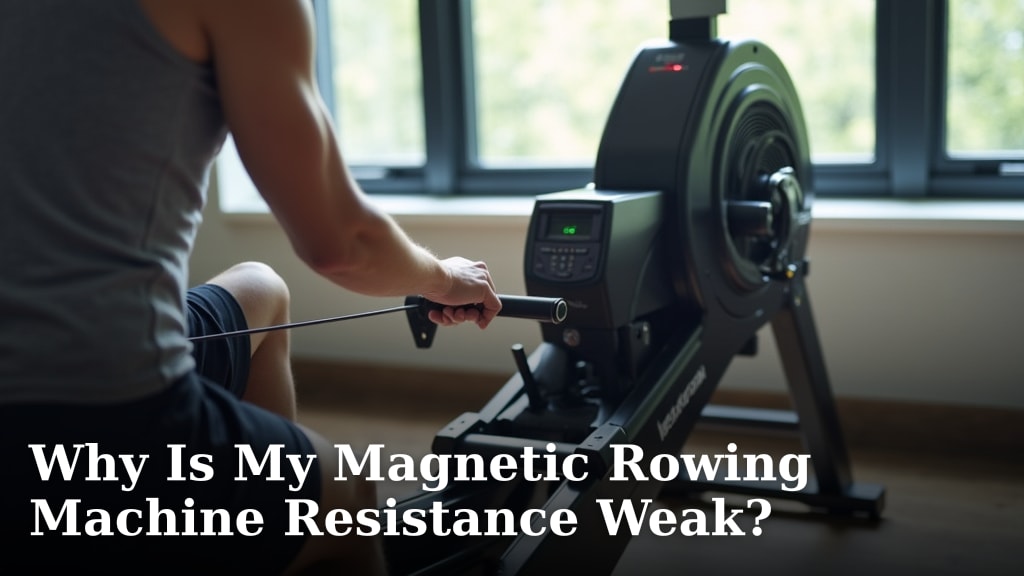
Choose a lubricant only when the manual names the part and confirms the type. If friction or resistance symptoms continue, compare them with Why Is My Magnetic Rowing Machine Resistance Weak? to see how resistance issues differ by rower design.
What is the safest fix for a strap that will not rewind?
Start with a slow return and a visual check for twists or obstructions. If the strap remains slack, damaged, or jammed, stop and use the manual or manufacturer support to identify the recoil part.
Use lubricant only when the manual specifies it, and never treat treadmill belt oil as a default rower product. Replace only the part approved for your model, then confirm the strap winds evenly before resuming a workout.
Frequently asked questions
Why will my water rowing machine strap not rewind?
A strap may fail to rewind because it is twisted, caught, routed incorrectly, or because the recoil system has lost tension or has a damaged part. Stop using the rower, inspect the exposed strap path, and check the manual before opening the housing or adjusting a spring.
Can I pull the rowing machine handle out to reset it?
Don't yank or force the handle. Guide it out only as far as the manual permits, then let it return slowly while watching for rubbing or tangles.
If the strap remains slack or the handle does not retract, stop and contact the maker or a repair service.
Should I lubricate a rowing machine strap?
Don't lubricate the strap unless the rower's manual specifically calls for it. Oil or spray can change how the strap moves, attract residue, or reach parts that should stay dry.
Clean the strap and guide only by the method the maker allows.
Is a water rower strap the same as a bungee cord?
No. The strap transfers your pull to the drive mechanism, while a bungee cord or recoil element may help return the handle, depending on the rower design.
Check your model's parts diagram before ordering a replacement, since parts and repair steps vary.